Trending
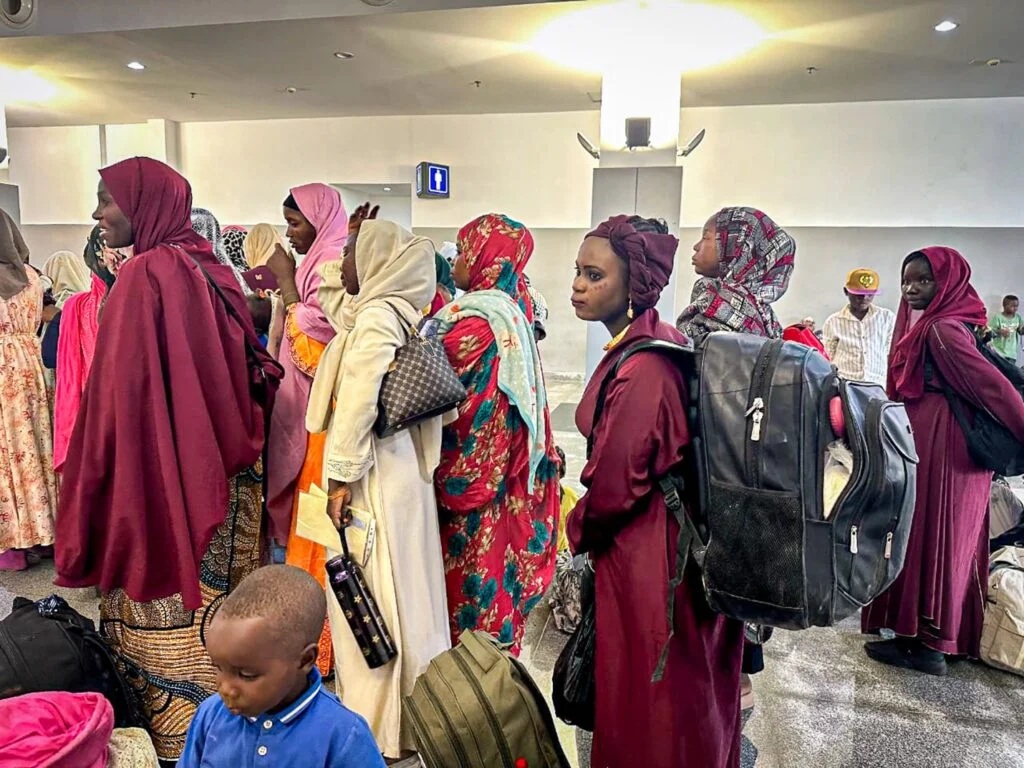
The International Organisation for Migration (IOM) has successfully evacuated no fewer than 179 stranded Nigerians from Sudan, according to Elijah Elaigwu, the Senior Communication Assistant of IOM, in a statement on Thursday.
The evacuation was coordinated under the European Union-backed Assisted Voluntary Return and Reintegration (AVRR) programme, in collaboration with the National Commission for Refugees, Migrants and Internally Displaced Persons (NCFRMI), the Nigerian Immigration Service (NIS) and other partners.
The migrants arrived at the Mallam Aminu Kano International Airport in Kano on Tuesday, having travelled from Port Sudan.
According to Elaigwu, their evacuation marked the first organised repatriation of Nigerian migrants from Sudan in 2026 and the fourth since 2025.
Many of the migrants were victims of Sudan’s ongoing conflict. They were faced with food shortages, limited access to healthcare and rising protection risks.
“These are people who have lived through months of fear and uncertainty, unsure of when or how they would make it home,” Refaat Mohamed, IOM Chief of Mission in Port Sudan, was quoted as saying.
“Getting them back safely is not just about transport. It is about dignity. It is about making sure that, even in a crisis, people are treated as human beings first.”
Elaigwu said the returnees received a reception from the IOM and assistance, including health checks, psychosocial support, temporary accommodation, and onward transportation to their communities.
The conflict in Sudan is one of the most serious humanitarian crises in the world. It began as a power struggle between two military leaders and has since turned into a devastating war affecting millions of civilians.
The current war started on April 15, 2023, after tensions between Sudan’s army and a paramilitary group erupted into open fighting.
The war remains largely unresolved, with sporadic ceasefires failing and fighting continuing across several regions. Humanitarian agencies warn that Sudan could become one of the world’s worst hunger and displacement crises if the conflict continues.