Trending
Although there was a slight increase in foreign capital inflows through Foreign Direct Investment (FDI) in the third quarter of 2024, Nigeria’s total capital importation decreased significantly by 51.90%, falling to $1.25 billion from $2.60 billion recorded in the second quarter of 2024.
Capital importation refers to the inflow of foreign funds aimed at supporting investment, trade, and manufacturing within a country.
According to the National Bureau of Statistics (NBS), capital inflows through FDI increased from $29.83 million, which represented 1.15% of total capital importation in Q2 2024, to $103.82 million, or 8.29%, in Q3 2024.
Read More : Shettima Reiterates Calls For UN Reform
While the total capital importation for Q3 2024 stood at $1,252.66 million, the figure represents a significant year-on-year growth of 91.35% compared to the $654.65 million recorded in Q3 2023.
The report highlighted that Foreign Portfolio Investments (FPI) dominated capital importation, amounting to $899.31 million and accounting for 71.79% of the total. This was followed by Other Investments, which contributed $249.53 million, or 19.92%.
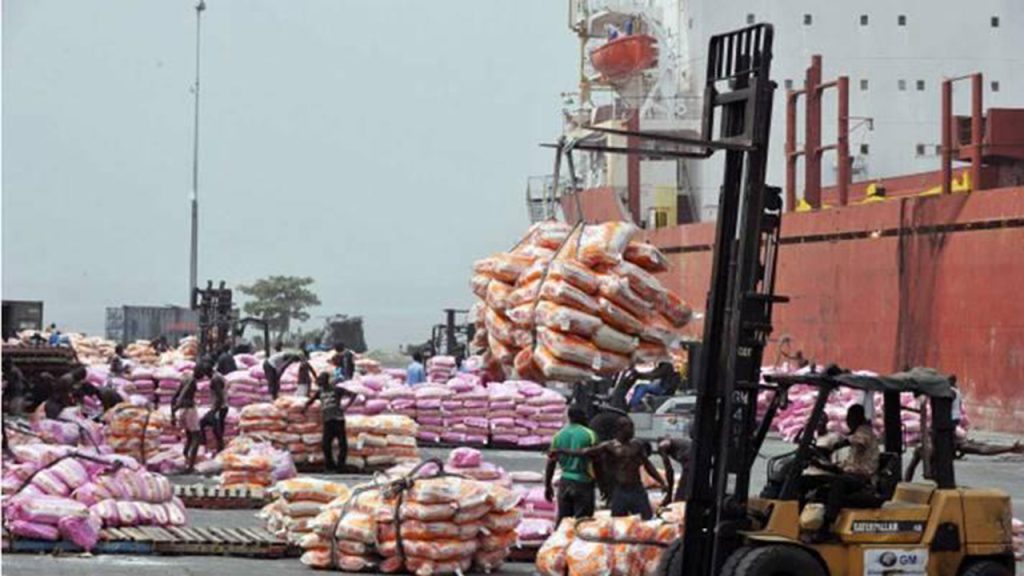
The banking sector emerged as the leading recipient of capital inflows during the period under review.
“The banking sector recorded the highest with $579.48 million, representing 46.26% of total capital imported in Q3 2024, followed by the financing sector, valued at $294.55 million or 23.51%, and the production/manufacturing sector with $189.22 million, about 15.11%,” NBS said.
Read More : Abia Arrests 86 Over Sanitation Violations
In terms of origin, capital importation was predominantly sourced from the United Kingdom, which accounted for $502.60 million or 40.12% of the total. This was followed by the Republic of South Africa at $185.03 million (14.77%) and the United States at $163.86 million (13.08%).
Lagos State retained its position as the top destination for foreign capital among Nigerian states, attracting $650.41 million or 51.92% of the total. Abuja (FCT) followed closely with $600.02 million, representing 47.90%, while Kaduna State accounted for $1.95 million or 0.16%. Enugu and Ekiti states recorded $184.22 million and $96.60 million, respectively.
The report also noted that Stanbic Chartered Bank received the highest share of capital importation among banks, recording $385.62 million or 30.78 per cent during the period. Stanbic IBTC Bank Plc followed with $382.08 million (30.50 per cent), while Citibank Nigeria Limited recorded $192.88 million, accounting for 15.40 per cent.