Trending

Africa’s young users are drawing global fintech and crypto giants upstream, as platforms race to shape early financial habits through supervised savings tools and family-centric digital products.
Africa’s next generation is emerging as the new battleground for digital finance, as global crypto exchanges and African fintechs race to shape how children save, learn and interact with money.
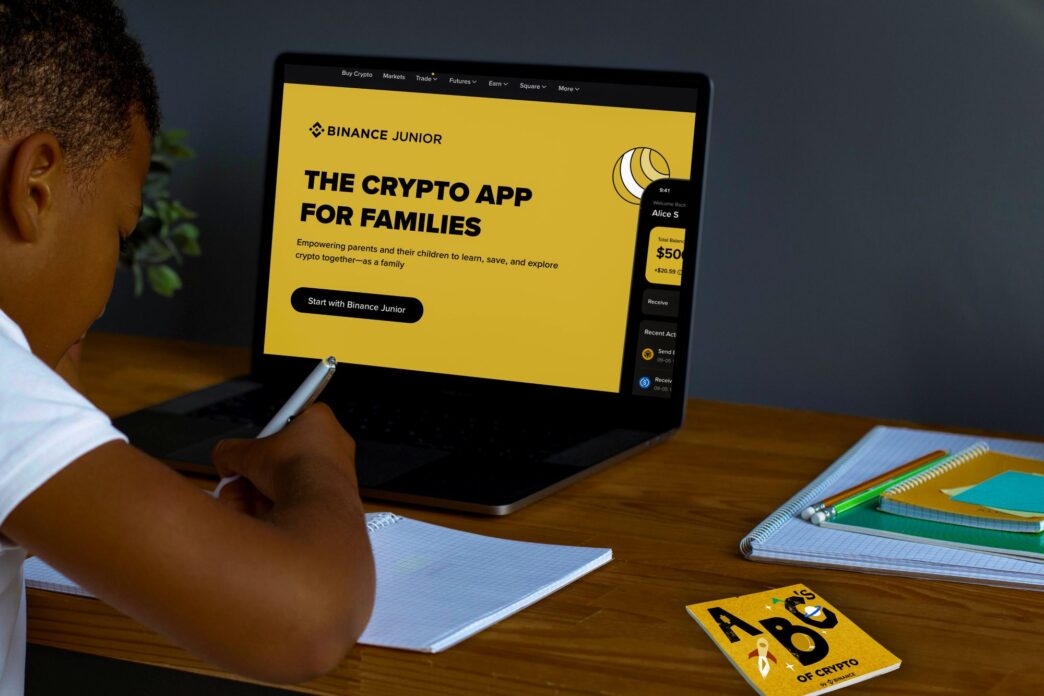
Chinese crypto platform, Binance, has now entered that race. This month, the exchange launched Binance Junior, a parent-controlled savings app for users aged six to seventeen that introduces digital assets in a supervised, education-first setting. The launch comes with a second product, an illustrated A-to-Z “ABC’s of Crypto” book aimed at making crypto concepts accessible to mainstream households.
Read More : White House Hosts AI Leaders on Regulation
According to sector analysts, financial platforms have been “more deliberate in offering youth financial education.”
“Over the past three years, we’ve seen a decisive shift from one-off financial-literacy campaigns toward structured, long-term tools designed specifically for minors,” according to Moses Kimathi, a Nairobi-based digital-finance researcher.
“Platforms are realising that the first financial behaviours a child forms, how they save, how they understand value, how they make digital payments, tend to persist well into adulthood. Whoever supports that learning curve today is likely securing a customer for the next decade.”
He also believes it reflects a broader shift inside the crypto industry, where platforms are pivoting from speculative trading toward long-term customer acquisition built around low-risk, family-centric financial habits.
Binance Junior blends supervised savings with simplified learning modules. The children’s book converts crypto jargon into everyday language that parents and teens can navigate together. The company says growing global demand for basic crypto knowledge prompted the learning push. The book is available in fifteen languages, in both digital and limited print formats. Binance Co-CEO Yi He frames the products as a way to integrate Web3 knowledge into daily life, much as mainstream payment apps entered households. The goal is to make crypto literacy a family conversation rather than a technical niche.
This strategy aligns with a broader shift across Africa’s financial sector, where youth-focused savings products are expanding quickly and reshaping expectations around early financial literacy. In late 2024, Stanbic Bank Ghana unveiled a Youth Banking Proposition offering a trustee-managed savings account for children aged 0–17, plus a dedicated youth account for 18–25-year-olds, creating a complete lifecycle banking path from early childhood to young adulthood.
Other banks are moving in similar ways. Absa Bank Tanzania recently introduced a Youth Savings Account for 18–30-year-olds, built around fee-free digital banking, debit card access, and mobile-first onboarding. Ecobank has expanded its footprint through a partnership with Junior Achievement Africa under the “Junior Savers” initiative, bringing financial literacy and structured savings tools to school-aged users across multiple West and Central African markets.
Newer models are emerging, too. In January 2025, Liberia launched a youth-focused entrepreneurship investment bank backed by the African Development Bank, signalling that youth financial inclusion is becoming part of broader economic planning, not just retail banking. Digital savings platforms are also seeing sharp growth, with parents increasingly creating structured savings wallets for children. PiggyVest now reports more than 5 million users, many of whom use sub-accounts to save for dependents.

Safaricom’s M-PESA Go, launched in late 2022, allows 10–17-year-olds to access a supervised mobile-money wallet with parental controls. According to Safaricom’s 2023 report, the company had onboarded nearly 2.9 million child-linked wallets, underscoring strong uptake among its younger user base.
Asset-management players are adjusting too. Kenya’s Zimele Unit Trust reports growing uptake of its low-risk Junior Fund, driven by parents seeking structured, regulated ways to introduce minors to formal finance. Binance’s latest launch coincides with broader blockchain adoption in Africa. On-chain cryptocurrency activity surged 52% year-on-year across Africa in the 12 months to June 2025, according to Chainalysis Global.
Cross-border transfers remain expensive, with fees averaging 7.9% for a US$200 transaction. Blockchain solutions now allow users to send money instantly at a fraction of the cost, a lifeline for small businesses and migrant workers.
In South Africa, for instance, formal remittances to neighbouring SADC countries reach R19 billion annually, while informal flows add another R3.4 billion, according to FinMark Trust. SADC data places total remittances at R21.9 billion.
Real estate is also being reimagined. In Khayelitsha, Cape Town, a pilot project registers around 1,000 previously unregistered government-subsidised homes on a blockchain-based property register, creating a tamper-proof, decentralised log of ownership that could eventually integrate with national deeds systems. Healthcare adoption is emerging, too.
Frere Provincial Hospital in the Eastern Cape is piloting Hyperledger Fabric for electronic health records, enabling secure storage of patient histories, improved data interoperability and greater patient control.
Investment in Africa’s blockchain ecosystem is rising. According to the CV VC 2024 African Blockchain Report, South Africa captured 18% of blockchain venture capital funding in Africa, and blockchain made up 7.4% of all VC funding on the continent, above its global share of 3.2%. Many projects now focus on practical applications—such as identity verification, land registries, and financial inclusion, rather than speculative crypto plays.
Read More : Bill Gates Calls For AI Regulation
Credit: Bonface Orucho, Bird Story Agency