Trending
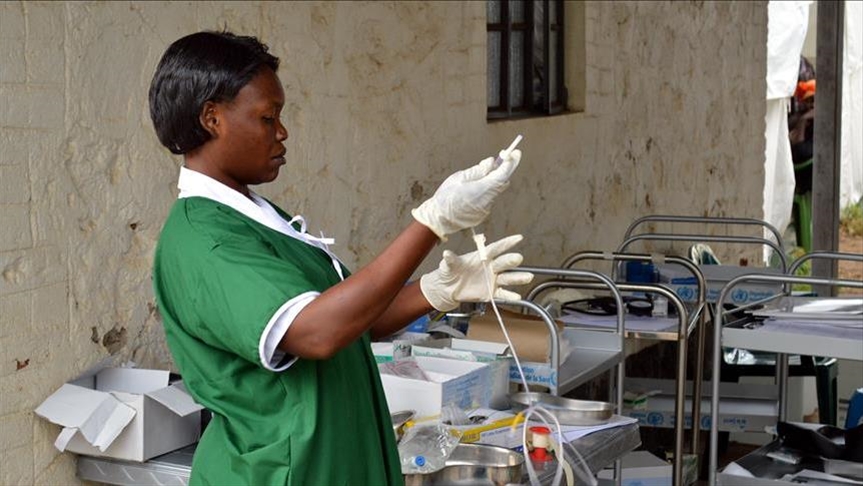
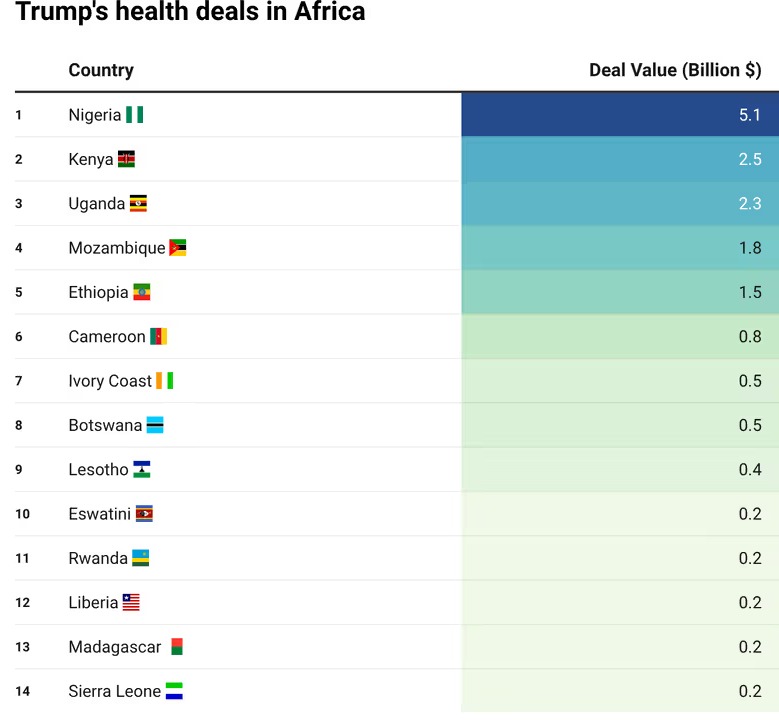
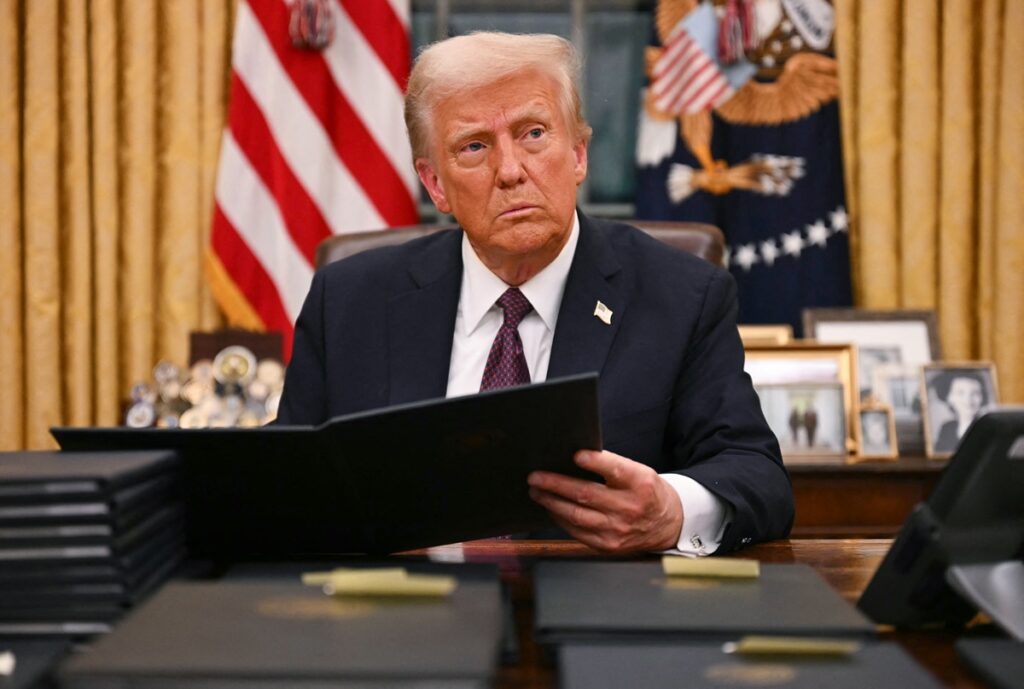
The United States has signed major health agreements with several African countries, committing more than $16 billion in combined funding and local co-investment under President Donald Trump’s America First Global Health Strategy.
The deals were signed after the U.S. withdrew from the World Health Organisation, marking a shift from global health institutions to direct country-to-country partnerships.
Below are the agreements arranged from lowest to highest total value.
Read More : Africa Targets Cheaper Cross-Border Flights
Sierra Leone — $173 million
Sierra Leone signed a health agreement valued at more than $173 million. The United States will front-load more than $30 million in 2026 to strengthen disease surveillance, laboratory capacity, the health workforce, and data systems, while Sierra Leone gradually increases its own funding. By 2030, the country is expected to take over most commodity and workforce costs. The agreement targets malaria reduction, HIV diagnosis, and outbreak preparedness.
Madagascar — $175 million
Madagascar’s agreement is valued at more than $175 million. U.S. funding focuses on malaria, maternal and child health, and global health security, while transitioning community health workers to national ownership. The deal aims to improve antenatal care, maintain zero new polio cases, and strengthen outbreak response systems.
Liberia — $176 million
Liberia signed a five-year agreement worth $176 million, with the United States providing up to $125 million and Liberia committing nearly $51 million. The deal supports HIV/AIDS, malaria, maternal and child health, and global health security, and is designed to move Liberia toward self-reliance.
Rwanda — $228 million
Rwanda’s agreement is valued at $228 million. The United States plans to provide up to $158 million, while Rwanda will contribute $70 million. The deal supports HIV/AIDS and malaria control, disease surveillance, and a transition away from NGO-led systems toward national ownership.
Eswatini — $242 million
Eswatini signed a $242 million agreement, with the United States committing $205 million and Eswatini contributing $37 million. The focus is on HIV prevention, disease surveillance, data systems, and access to new American-made HIV prevention drugs.
Lesotho — $364 million
Lesotho’s five-year agreement is valued at $364 million. The United States plans to provide $232 million, while Lesotho will invest $132 million. The deal supports HIV/AIDS treatment, health workforce development, data systems, and outbreak response.
Botswana — $487 million
Botswana signed an agreement worth more than $487 million. The United States committed $106 million, while Botswana pledged over $380 million. The agreement focuses on sustaining HIV epidemic control, workforce reform, and modernising health data and surveillance systems.
Ivory Coast — $480 million
Ivory Coast signed a $480 million health agreement to strengthen HIV, malaria, maternal and child health, and health security. The country will contribute about $292 million, covering roughly 60 per cent of the total cost.
Cameroon — Nearly $850 million
Cameroon’s agreement totals nearly $850 million, with the United States providing about $400 million and Cameroon pledging $450 million. The deal supports frontline health workers, medicines, laboratories, data systems, disease surveillance, and long-term health system strengthening.
Ethiopia — $1.466 billion
Ethiopia signed a $1.466 billion agreement, with the United States committing just over $1 billion and Ethiopia contributing $450 million. The deal covers HIV/AIDS, tuberculosis, malaria, polio eradication, maternal and child health, and outbreak preparedness.
Mozambique — $1.8 billion
Mozambique entered a $1.8 billion agreement focused on HIV prevention, malaria control, and maternal and child health. The country is committed to increasing its health spending by almost 30 % over five years.
Uganda — Nearly $2.3 billion
Uganda signed a five-year agreement worth nearly $2.3 billion. The United States plans to invest up to $1.7 billion, while Uganda has committed more than $500 million. The deal targets infectious diseases, health system strengthening, digital health, and faith-based healthcare providers.
Kenya — $2.5 billion
Kenya followed with a $2.5 billion agreement, becoming the first African country to negotiate a new partnership under the America First model. The United States plans to provide $1.6 billion, while Kenya pledged $850 million.
Nigeria — $5.1 billion
Nigeria signed the largest agreement, valued at $5.1 billion. The United States committed nearly $2.1 billion, while Nigeria pledged close to $3 billion.
According to the U.S. Department of State, the agreement will expand “essential preventative and curative services for HIV, TB, malaria, maternal and child health and polio.” The deal places special emphasis on faith-based healthcare providers, particularly Christian-run clinics and hospitals.
The State Department said the agreement was negotiated alongside reforms by the Nigerian government to prioritise the protection of Christian communities from violence and includes funding to support Christian health facilities.