Trending
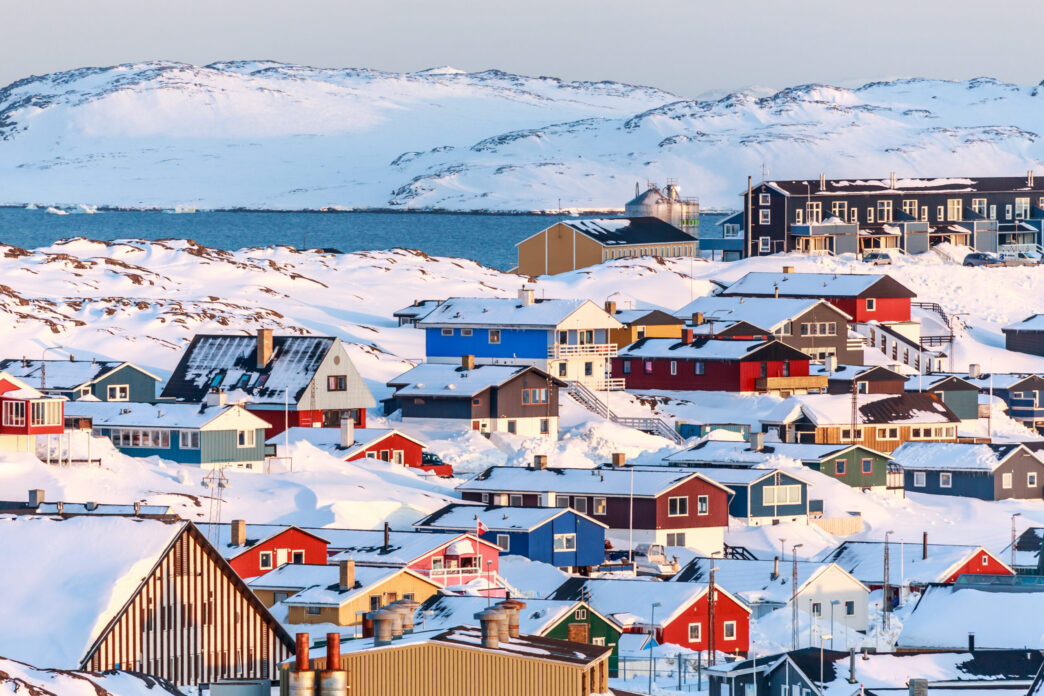
US President Donald Trump has repeatedly warned that China could gain a strategic foothold in Greenland, even suggesting the United States might need to take the Arctic island by force from NATO ally Denmark to prevent Beijing’s influence.
Analysts, however, say China’s presence in the region remains limited and falls far short of the threat Trump has argued.
Here is what we know about Beijing’s presence in the Arctic:
Trump has claimed that without US action, Greenland would have “Chinese destroyers and submarines all over the place,” but analysts say Beijing’s Arctic military footprint is minimal.
“Greenland is not swarming with Chinese and Russian vessels. This is nonsense,” said Paal Sigurd Hilde of the Norwegian Institute for Defence Studies.
Since Russia invaded Ukraine in 2022, China has modestly increased its Arctic military activity elsewhere in the region, largely through cooperation with Moscow.
“China’s only pathway to gaining significant influence in the Arctic goes through Russia,” Hilde said.
China and Russia have expanded joint coast guard and Arctic operations, including a bomber patrol near Alaska in 2024. China also operates a small number of icebreakers equipped with deep-sea mini-submarines and uses satellites for Arctic monitoring, capabilities that could have military applications. Beijing says these activities are intended for scientific research.
Is China’s influence Growing?
These activities could become “potential security concerns if China’s military or military-linked assets establish a regular presence in the region,” said Helena Legarda of the Mercator Institute for China Studies.
“China has clear ambitions to expand its footprint and influence in the region, which it considers an emerging arena for geopolitical competition,” she said.
China launched its Polar Silk Road Strategy in 2018 as part of its broader Belt and Road Initiative and has said it aims to become a “polar great power” by 2030.
Beijing has set up research stations in Iceland and Norway, while Chinese companies have invested in projects such as Russian liquefied natural gas and infrastructure in Scandinavia.
In recent years, however, China has faced resistance. Attempts to buy an abandoned naval base in Greenland and an airport in Finland failed.
The United States is reported to have pressed allies to reject Chinese firms, and in 2019, Greenland decided against using Huawei equipment for its 5G network.
Russia remains the main exception, with China investing heavily in ports and energy projects along Russia’s northern coast.
What is China Seeking?
Greenland holds the world’s eighth-largest reserves of rare earth elements, which are critical for electric vehicles, renewable energy technology and military equipment, according to the US Geological Survey.
While China dominates global rare earth production, its efforts to tap Greenland’s deposits have had limited success. A Chinese-linked mining project at the Kvanefjeld deposit was halted by Greenland’s government in 2021 over environmental concerns. Another major deposit in southern Greenland was sold to a New York-based company in 2024 after US lobbying.
“There was a fear in Denmark and the US that mining investments several times the GDP of Greenland could have led to Chinese influence a decade ago, but the investments never materialised,” said Jesper Willaing Zeuthen of Aalborg University.
More recently, Zeuthen said, “Beijing discourages engagement because the diplomatic costs have been too high.”
Transforming Shipping Routes
China’s Polar Silk Road also aims to link Asia and Europe through Arctic shipping routes that are becoming more accessible as climate change melts sea ice.
China and Russia agreed last year to develop the Northern Sea Route along Russia’s northern coast. In 2024, a Chinese vessel reached Britain via the Arctic in about 20 days, roughly half the time of the traditional Suez Canal route.
The route could reshape global trade and reduce China’s reliance on the Strait of Malacca, but challenges remain. Ships require special ice-class modifications, navigation is difficult due to fog, and weather conditions are extreme.
Chinese ships made just 14 voyages along the Northern Sea Route last year, most of them carrying Russian gas.
Another potential route, the Northwest Passage through Canada’s Arctic archipelago, could reduce reliance on a Russia- and China-dominated corridor.
The Northern Sea Route does not pass Greenland, undercutting Trump’s claims of Chinese vessels operating near the island.