Trending


The Lagos State Government has defended the recent demolition of structures in Makoko and other waterfront communities, saying the exercise was carried out to protect lives, safeguard critical infrastructure and address security concerns.
Government officials clarified during Ask Lagos, a weekly discussion hosted on X to engage residents on governance issues.
Speaking at the session, the state’s Commissioner for Information and Strategy, Mr Gbenga Omotoso, said the demolitions were prompted by safety and environmental risks posed by illegal buildings erected under high-tension power lines and along major waterways.
Omotoso dismissed claims that the exercise targeted the poor, insisting that the government acted in the public interest. He said that no administration could permit residents to live beneath power cables or obstruct water channels without risking a major disaster.
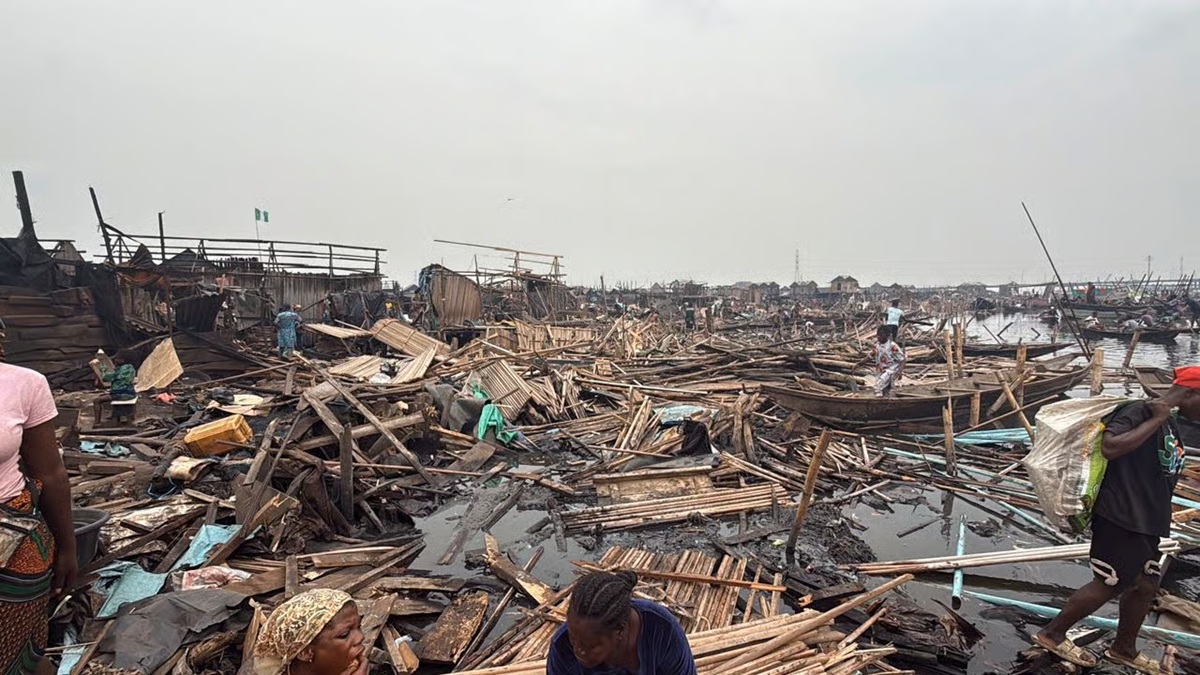
According to him, affected communities had been engaged for several years before the exercise, adding that existing regulations require buildings to maintain a minimum distance from power lines. He further noted that some residents had appealed for a reduction of the required distance.
“The law stipulates that buildings must be 250 metres away from power lines, but they are built under the power lines, and no government will accept that. Imagine one line dropping into the lagoon. The disaster will be incredible,” he said.
Also speaking, the Special Adviser to the Governor on e-GIS and Urban Development, Mr Olajide Abiodun Babatunde, said the demolitions were part of a broader urban regeneration plan aimed at making Lagos safer.
Babatunde said previous resettlement efforts, including the relocation of residents from Oko Baba to government-built housing estates, showed that the state was providing alternatives for displaced residents. He added that urban planning decisions were guided by approved master plans, safety standards and environmental regulations.
He further urged residents and developers to comply with planning laws to avoid future demolitions, noting that the state’s e-GIS platform allows the public to verify zoning and setback requirements.
“We understand the pain this causes, but speculation only fuels division. Let’s focus on facts and collaborative solutions,” he said.
During the discussion, some participants raised concerns over alleged casualties, enforcement methods, compensation and relocation timelines. Others questioned the social and emotional impact of the demolitions.
While rights groups and some residents have described the exercise as discriminatory, the government maintained that failure to act could result in far more severe consequences.