Trending
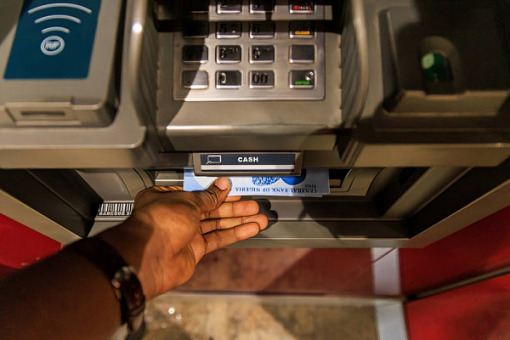
The Central Bank of Nigeria has introduced new minimum standards for the deployment, operation, maintenance and security of automated teller machines (ATMs) across the country.
In a circular titled “Exposure of the Draft Guidelines on the Operations of Automated Teller Machines (ATMs) in Nigeria”, released over the weekend, the apex bank said the new rules supersede all previous ATM regulations.
Under the new framework, card-issuing institutions are required to deploy at least one ATM for every 5,000 payment cards issued.
Read More : LASTMA Warns Against Skating On Highways
CBN said full compliance must be achieved within three years, with a minimum of 30% implementation by 2026 and 100% by 2028. The guidelines also set new standards for ATM location and security.
ATMs must be installed in locations that ensure user safety and transaction confidentiality, and should not be placed outside buildings unless they are securely bolted to the floor.
“ATM deployment, redeployment, and decommissioning require prior written approval from the CBN,” the CBN further instructed.

In response to failed transactions, the CBN directed that reversals for on-us transactions must be instant, noting that where technical issues prevent immediate reversal, manual refunds must be completed within 24 hours.
“Automatic Refunds: Acquirers must adopt appropriate mechanisms to immediately initiate refunds for non-dispense errors without the prompting of the issuing bank or the customer” is another provision of the new directive.
The guidelines further require that “all ATMs must have cameras that record all persons and activities (card insertion, cash withdrawal, etc.), but should not record customers’ keystrokes” and that “networks used must be tested and proven for data confidentiality.”
It added that all machines must be equipped with anti-skimming devices to mitigate fraud.
Read More : NIS Enrols Over 5,000 in UK Passport Drive
Banks are also required to ensure cash availability at all ATMs at all times, adding that where ATMs are deployed by non-bank institutions, the partner bank remains fully responsible for cash provisioning.
The guidelines also require ATMs to display helpdesk contact details and applicable charges and fees, and to issue receipts for all transactions except balance enquiries.
The CBN said it will conduct periodic audits and on-site inspections to monitor compliance.