Trending
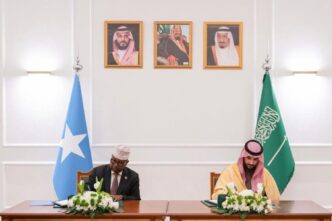
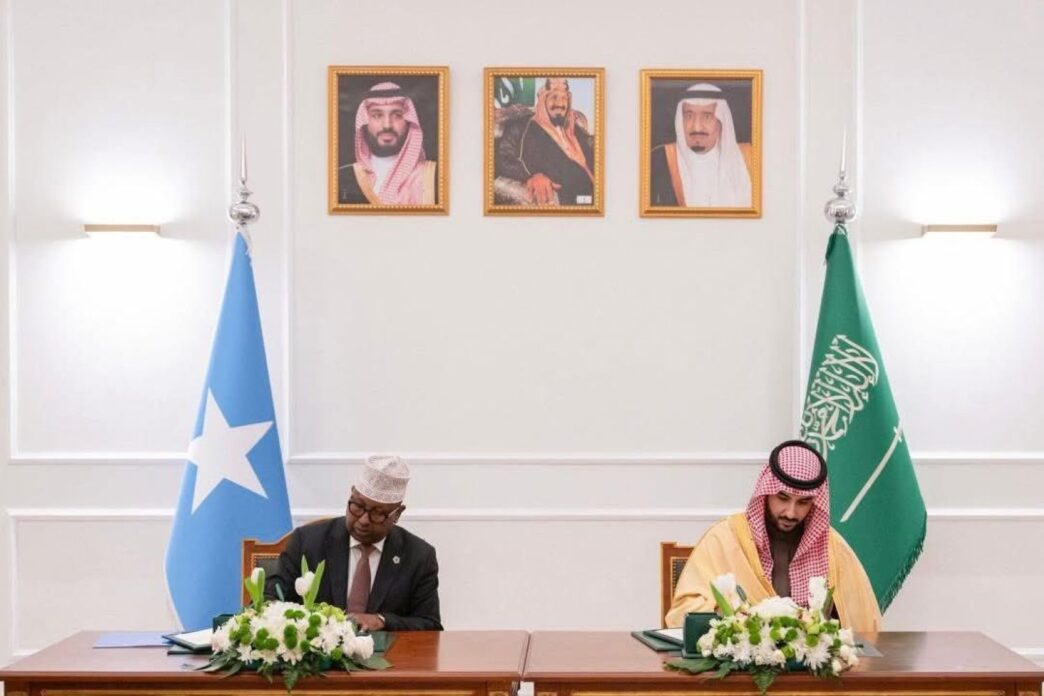
Somalia has signed a new military cooperation agreement with Saudi Arabia, a move widely viewed as part of intensifying Gulf rivalries playing out across the Horn of Africa.
The agreement was signed in Riyadh by Somali Defence Minister Ahmed Moallim Fiqi and his Saudi counterpart, Prince Khalid Bin Salman, on the sidelines of a defence exhibition. According to a statement posted on X by Somalia’s defence ministry, “This agreement further strengthens defence and military cooperation between the two nations, while covering various areas of mutual interest for both countries.”
Prince Khalid confirmed in a separate post that he had “signed and witnessed the signing” of “several” agreements, although he did not provide additional details.
Read More : Fighter Jets, Drones Deployed in Somali Clashes
Strategic Theatre for Gulf Influence
The Horn of Africa occupies a critical geopolitical corridor between the Indian Ocean and the Suez Canal, along one of the world’s busiest maritime trade routes. This positioning has made countries such as Somalia increasingly important to Gulf monarchies seeking strategic footholds beyond the Arabian Peninsula.
The timing of the pact is significant. It comes roughly six weeks after Israel recognised Somaliland, the self-declared republic that broke away from Somalia in 1991 but remains unrecognised by Mogadishu and much of the international community.

Abu Dhabi’s Expanding Footprint
The United Arab Emirates has been steadily building influence in Somaliland. Emirati logistics giant DP World has invested heavily in developing the deep-water Berbera port, turning it into a strategic commercial and military asset. Local sources say the port complex includes an airport facility under tight Emirati control, operating with limited reference to authorities in Mogadishu.
The UAE is also widely accused by analysts and Western officials of supplying arms to Sudan’s Rapid Support Forces, which have been locked in a brutal conflict with Sudan’s regular army since 2023. The UAE has consistently denied the allegations.
Read More : 28 Suspected Pirates Escape During Transfer
Fracturing Gulf Alliance
Saudi Arabia and the United Arab Emirates were once close strategic partners, particularly during their joint intervention against the Iran-backed Houthis in Yemen beginning in 2014. However, their relationship has steadily deteriorated due to divergent interests in Sudan, Yemen, and now the Horn of Africa.
Tensions reportedly escalated last month when Riyadh bombed a shipment of weapons allegedly bound for Yemen and believed to have originated from the UAE, signalling a dramatic breakdown in trust between the two monarchies.
Against this backdrop, Somalia’s defence agreement with Saudi Arabia is being interpreted not simply as bilateral cooperation, but as a recalibration of alliances in a region increasingly shaped by proxy rivalries, port politics, and competing security interests.