Trending
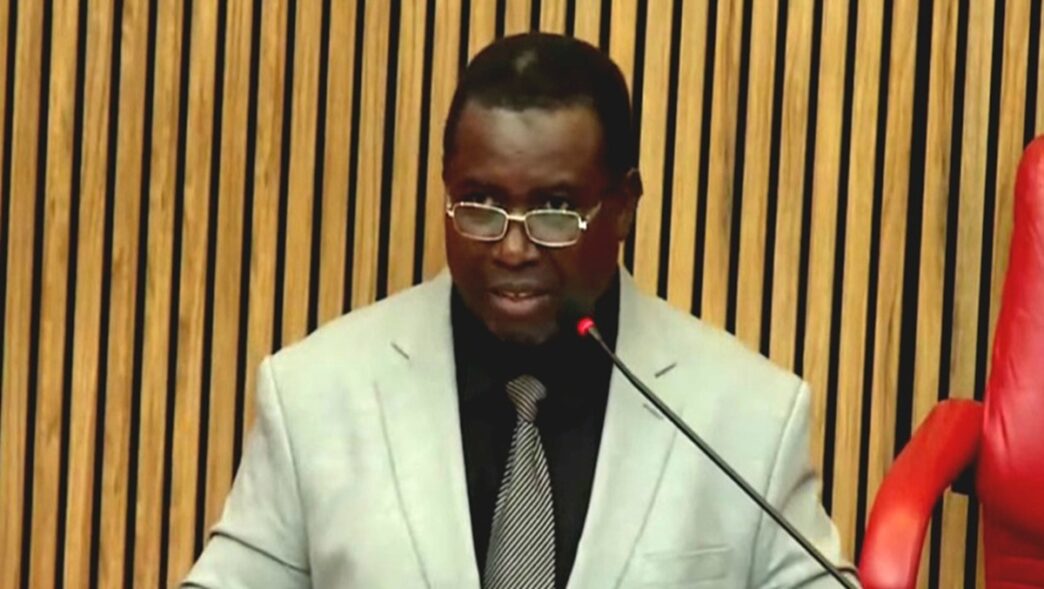
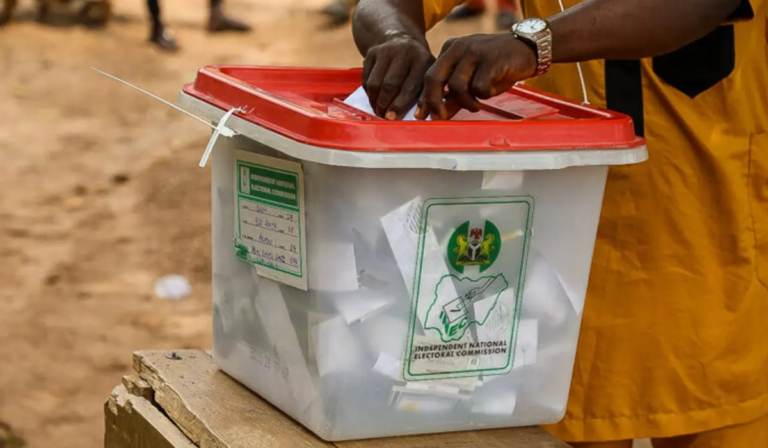
The Independent National Electoral Commission (INEC) has informed the National Assembly that it will require N873.78 billion to conduct the 2027 general elections.
INEC Chairman, Prof. Joash Amupitan, disclosed this on Thursday while presenting the Commission’s 2026 budget proposal and projected 2027 election costs before the National Assembly Joint Committee on Electoral Matters in Abuja. The commission is also proposing N171 billion for its operations in the 2026 fiscal year.
He explained that the N873.78 billion request covers the full conduct of the 2027 general elections, a sharp increase from the N313.4 billion released for the 2023 polls.
Read More : Aisha Yesufu Backs Osun Script for 2027 Election
The 2026 proposal, he said, is intended to fund routine operations, including by-elections and off-cycle governorship polls.
Amupitan clarified that the proposed election budget does not factor in a fresh request by the National Youth Service Corps (NYSC) for higher allowances for corps members serving as ad hoc election staff.
Breaking down the projected election cost, he said the budget is structured into five major components: N379.75 billion for operational expenses, N92.32 billion for administrative costs, N209.21 billion for technology, N154.91 billion for capital expenditure, and N42.61 billion for miscellaneous items.
He noted that the commission prepared the proposal in compliance with Section 3(3) of the Electoral Act 2022, which requires INEC to submit its election budget at least one year before a general election.
On the 2026 fiscal framework, Amupitan said the Ministry of Finance had issued a budget ceiling of N140 billion, but that INEC’s actual proposal stands at N171 billion. The breakdown includes N109 billion for personnel costs, N18.7 billion for overheads, N42.63 billion for election-related activities, and N1.4 billion for capital projects.
The INEC chairman argued that the envelope budgeting system does not suit the commission’s operations, noting that its responsibilities often require urgent, flexible funding arrangements.
He also identified the lack of a dedicated communications network as a key operational challenge, noting that establishing an independent network would improve accountability during technical disruptions.
Lawmakers expressed support for the commission’s position.
Senator Adams Oshiomhole (APC, Edo North) said it would be inappropriate for external agencies to dictate INEC’s budgeting structure, given the sensitivity of its mandate, and urged the National Assembly to reconsider the envelope budgeting model to prevent underfunding.
The joint committee subsequently approved a motion recommending a one-time release of INEC’s annual budget. It also indicated that it would consider the NYSC’s request for about N32 billion to raise allowances for corps members engaged for election duties to N125,000 each.
Read More : Tinubu To Inaugurate APC Campaign Council
Chairman of the Senate Committee on INEC, Simon Lalong, assured the commission of legislative backing to ensure adequate funding for the 2027 polls.
On his part, Chairman of the House Committee on Electoral Matters, Bayo Balogun, pledged support but cautioned the commission against making commitments it may not be able to fulfil.
He recalled that during the 2023 general election, assurances about uploading results to the INEC Result Viewing (IReV) portal created expectations of real-time monitoring, noting that the platform was provided for in INEC regulations rather than explicitly in the Electoral Act.