Trending
As state legislatures across the United States finalise their budgets, the combined pressure of the “One Big Beautiful Bill Act” and economic uncertainty has forced 14 states to confront looming deficits.
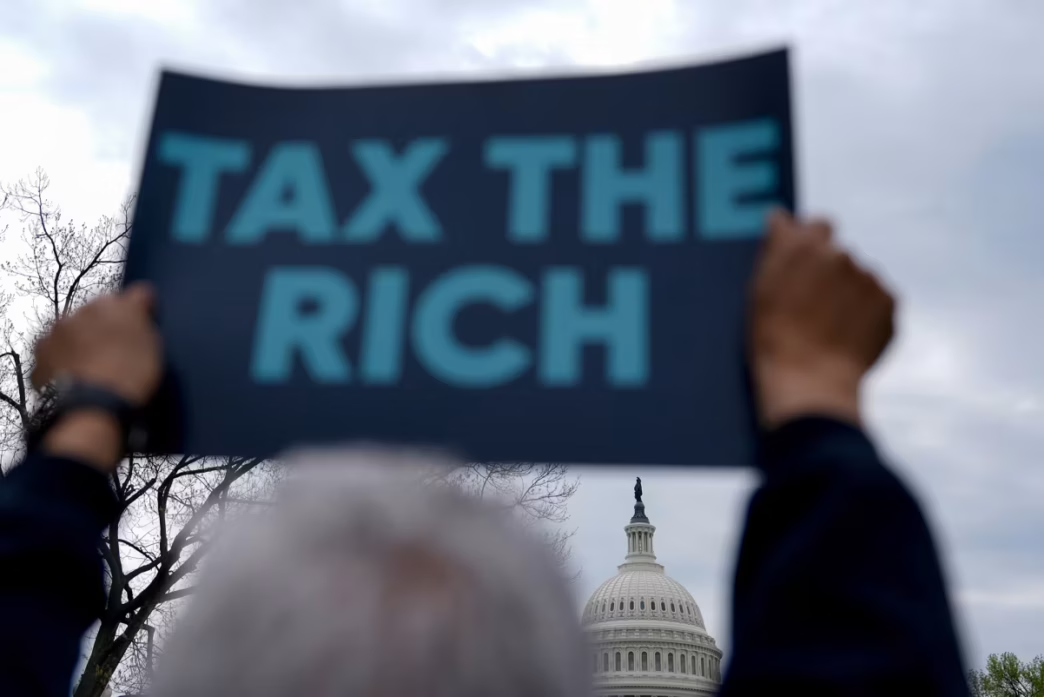
To protect essential funding for schools, roads, and healthcare, many American lawmakers are shifting their focus away from middle-class tax hikes and toward the nation’s wealthiest residents.
While some states are introducing new tax brackets for millionaires, others are exploring unprecedented levies on total net worth to bridge the financial gap.
Massachusetts has become a primary case study for this strategy following the 2022 passage of the Fair Share Amendment.
By adding a surtax on incomes over $1 million, the state has generated more than $5 billion for education and transportation, exceeding initial projections.
Supporters highlight tangible benefits from this revenue, such as universal free school meals, while advocates in Michigan are pushing for a similar shift from a flat tax to a graduated system to bolster public education funding.

California is currently considering the most aggressive approach with the upcoming “Billionaire Tax Act.”
This November ballot initiative proposes a one-time 5% tax on residents with a net worth exceeding $1 billion—a group that has grown significantly in the state since 2019. Proponents estimate the measure could generate $100 billion, effectively erasing the state’s budget deficit.
However, the proposal has drawn sharp criticism from business groups and even a cautious response from Governor Gavin Newsom, who warned that such taxes could accelerate the exodus of high-profile residents to states with no income tax.
Read More : Naira Holds Steady With Dollar At ₦1,333
The debate underscores a growing divide in state fiscal policy. While some regions lean into progressive taxation, others are moving toward flat taxes or the total elimination of income tax to attract capital.
Critics argue that in an era of remote work, high earners are increasingly mobile, posing a risk to states like California, where the top 1% of earners already contribute 45% of all income tax revenue.
As the November vote approaches, the nation is watching to see if wealth taxes can provide a sustainable solution to state budget woes or if they will trigger a significant shift in where the country’s wealthiest choose to live.