Trending
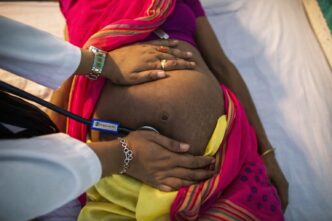
A report released by the World Health Organisation (WHO) and other international partners has revealed that nearly two-thirds of all maternal deaths worldwide occur in conflict-ravaged countries.
The report revealed that the risk of a woman who lives in a country affected by conflict dying due to maternal causes is around five times higher for each pregnancy she undergoes compared to her peers in stable countries.
According to the WHO, an estimated 160,000 women died from preventable maternal causes in fragile and conflict-affected settings, which is 6 in 10 maternal deaths worldwide in 2023. It further noted that these cases occurred despite these countries accounting for only around one in ten of global live births.
Read More : Africa Ebola Outbreak Exceeds 10,000 Cases
“Countries classified as conflict-affected had an estimated MMR of 504 deaths per 100 000 live births, while countries considered institutionally and socially fragile had an MMR of 368. In contrast, countries outside both categories saw a much lower MMR of 99,” the report read in part.
“These findings deepen the picture provided in last year’s maternal mortality estimates 2000-2023, which showed that global progress has stalled and that maternal mortality remains staggeringly high in low-income and crisis-affected settings, which spurred this further analysis.”
Analysing why women in conflict-ravaged regions are at risk of maternal deaths, it explained that crises create conditions where health systems cannot consistently deliver lifesaving maternal care.
The report also highlighted countries plagued by instability that are striving to maintain maternal health services despite challenges.
It noted that training traditional birth attendants in Colombia has shown that strengthening trusted local networks can ensure timely care even where access is limited due to geography, insecurity, or mistrust.
Read More : Ebola: Bundibugyo Strain Shows No Early Symptoms
It added that Ethiopia is salvaging the maternal crisis by establishing continuity of care through mobile teams, renovated facilities and additional midwives.
“Solutions in Colombia, Ethiopia, Haiti, Myanmar, Papua New Guinea and Ukraine demonstrate that even where health systems face extreme pressure, innovative approaches can protect maternal health.
“They show communities adapting services to cultural needs, health workers restoring disrupted services, hospitals reorganising care under security threats and coordination mechanisms evolving to ensure continuity of care.”