Trending
Civilians in central Somalia are terrified as government-backed clan militias, sent to combat Al-Shabaab, are said to terrorise the local populace even more than the insurgents they displaced.
Zakeriya Hersi, a 36-year-old lorry driver who regularly transports goods from Bosaso port to Hiiraan province, says he now fears militias more than the Al-Qaeda-affiliated group.
“We can’t even breathe because of the fear of the militias,” Hersi told AFP.
Read More : Fighter Jets, Drones Deployed in Somali Clashes
“At every checkpoint, we are forced to stop at gunpoint, we are extorted, and we risk losing our lives even when we pay. These were the same ones we supported, but now we fear them more than anything.”
In some areas of Somalia, al-Shabaab operates a parallel government that administers courts, collects taxes, and offers public services. In 2022 and 2023, the Hawadle clan, which is powerful in Hiiraan, joined the government’s offensive and assisted in the expulsion of Al-Shabaab from dozens of towns.
But many locals say the militias that replaced Al-Shabaab are worse.
Another driver, Bashar Ali, claimed that in December 2024, as his passenger bus approached a checkpoint close to the town of Mataban, a militiaman opened fire on it.
“He demanded $200. I could smell the alcohol on his breath,” said Ali.
The militiaman took his phone and shot it to pieces after he handed over $20.
“He raised the AK47 to my chest. When he pulled the trigger no shot came out. He lost his balance and collapsed to the floor because he was so drunk.”
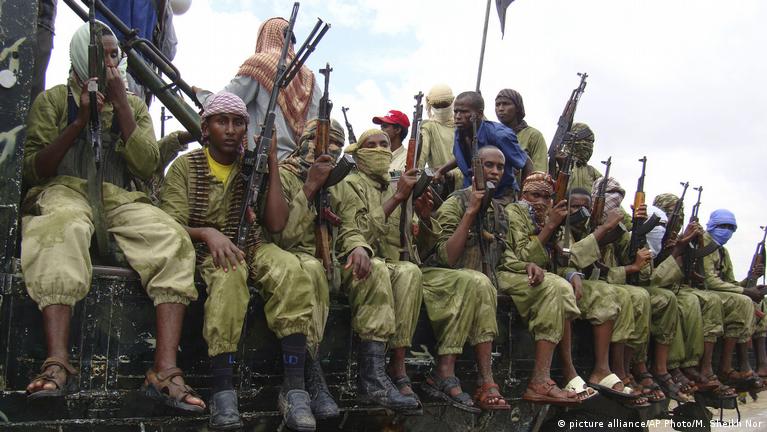
The government’s strategy mirrored the U.S.-backed “Sunni Awakening” in Iraq, arming clans against Al-Qaeda affiliates.
In Somalia, the Hawadle’s militias, known as Macwiisley, received weapons and logistical support.
While the tactic provided intelligence and manpower, rival clans shifted closer to Al-Shabaab, and locals say the militias wield unchecked power.
“Clans are the essential currency of Somali politics and you cannot fight without them, but that doesn’t mean you can build a state through them either,” said Jethro Norman, a researcher with the Danish Institute for International Studies.
In February 2025, Mogadishu’s military court reported that human rights abuses by Macwiisley, including killings and sexual violence, dominate its caseload.
When Al-Shabaab launched a counter-offensive last year, the government largely focused elsewhere, allowing the insurgents to retake at least 14 towns in Hiiraan and 28 in Middle Shebelle, according to AFP counts.
“The government exploited local resentment towards Al-Shabaab but left us when it was needed the most,” said Amina Hussein, 23, a resident in Beledweyne, Hiiraan’s capital.
Read More : 28 Suspected Pirates Escape During Transfer
Norman noted that Al-Shabaab employed new tactics, negotiating with clan elders and allowing militias to keep their weapons in exchange for standing down.
“Rather than collectively punishing communities… the group contacted clan elders by phone before retaking areas, offered reconciliation, and let Macwiisley fighters keep their weapons in exchange for standing down.”
According to Norman, this has given rise to Al-Shabaab’s “most powerful narrative in years: the government cannot protect you, cannot hold territory, cannot deliver on its promises.”