Trending
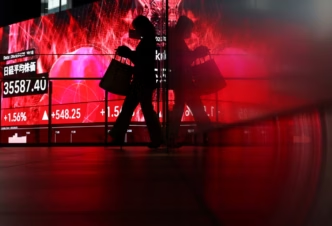
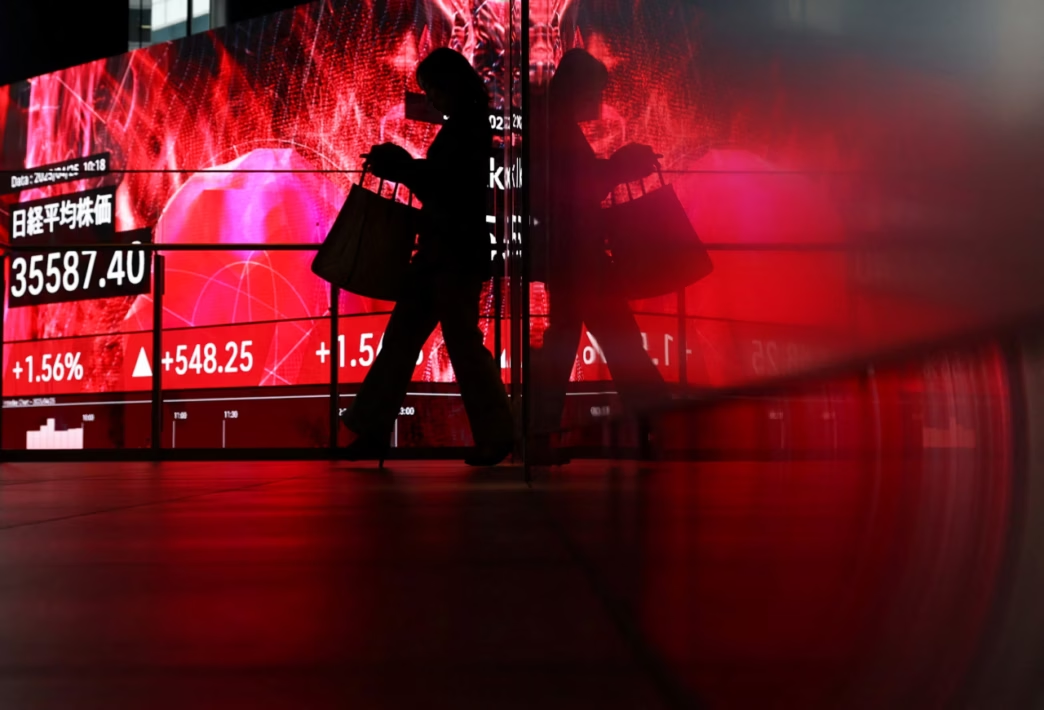
Asian markets rallied, and the U.S. dollar weakened on Monday following a landmark Supreme Court decision that struck down a central pillar of President Donald Trump’s trade policy.
The 6-3 ruling determined that the administration had exceeded its legal authority by using the International Emergency Economic Powers Act (IEEPA) to impose sweeping tariffs last year.
The news sparked a surge in the tech sector as investors, wary of high valuations on Wall Street, shifted capital into Asian markets.
However, the sense of relief was quickly met with fresh uncertainty.
A defiant President Trump immediately vowed to replace the invalidated levies, announcing a new 10 per cent global duty that he raised to 15 per cent by Saturday—the maximum permitted under alternative legal authorities. This new tariff, intended to address “balance-of-payments” deficits, is set to take effect this Tuesday for 150 days.
The shifting legal landscape has thrown major international trade agreements into a state of flux.
In Europe, officials have suggested pausing legislative work on the pending EU-US trade deal until the legal ramifications of the court’s decision are fully understood.
Similarly, Indian trade officials reportedly postponed a planned trip to Washington to finalise their own interim agreement, as the “reciprocal” logic behind these deals has been undermined by the court’s ruling.
Read More : PETROAN Directs Members To Inspect Fuel Meters
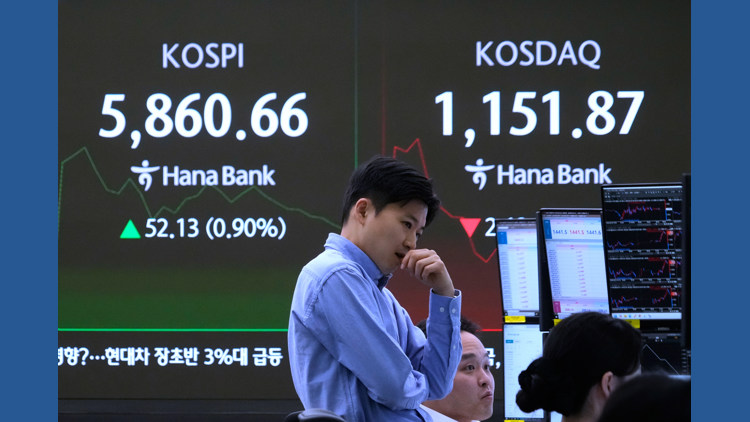
While Asian markets like Hong Kong and Seoul saw significant gains, analysts warn that the underlying trade tensions are far from resolved.
With the administration exploring other avenues to maintain its tariff regime and calls growing for the refund of billions of dollars already collected, global markets remain in a “circular process” of new announcements and potential legal challenges.
For now, the “Trump trade regime” appears to be entering a period of prolonged litigation and unpredictability.