Trending
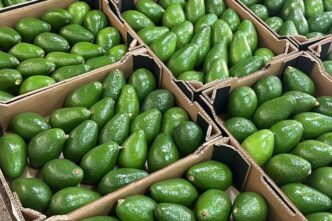
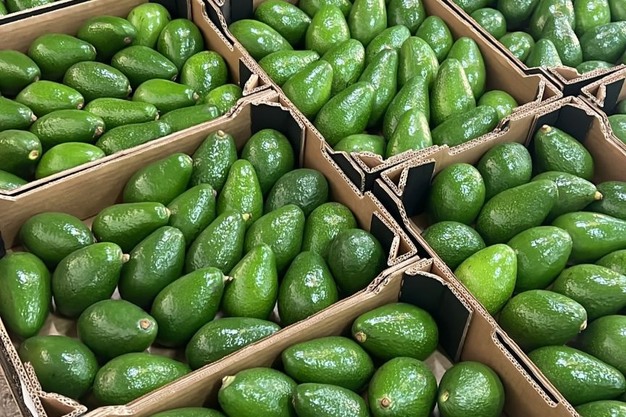
In 2025, about 430,000 tonnes of avocados were exported from Africa, but the balance of power shifted to the north. According to preliminary 2025 data, there has been a major change in volumes, market access, and logistics strategy. This indicates that infrastructure and route stability are now just as important as farm output.
Strong demand in Europe, the Middle East, and some parts of Asia drove a 16.7% increase in total African avocado exports in 2025 to around 430,000 tonnes, according to the Food and Agriculture Organisation’s 2025 edition of the FAO Tropical Fruits Market Review.
The biggest contributor to that expansion was Morocco. The FAO review states that it ranked first on the continent for the first time in 2025, with export volumes rising by about 90% year over year to about 141,000 tonnes.
Kenya, once Africa’s largest exporter, dropped to second place in 2025, with export volumes down 19% to an estimated 105,164 tonnes. Logistics constraints, such as disruptions along important shipping corridors like the Red Sea route, are largely to blame for the contraction, according to the FAO analysis. These disruptions changed global freight patterns in late 2024 and early 2025.
Carriers had to reroute via the Cape of Good Hope due to security concerns near the Suez Canal, which resulted in longer transit times to Europe and higher freight costs. The FAO claims that longer transit times have a direct impact on fruit quality and shelf life for Kenya, whose primary export market is still the European Union.
Morocco’s location proved to be crucial.
Shipping times from Moroccan ports such as Tangier Med to southern Europe average a few days, compared to several weeks from East Africa when vessels reroute around southern Africa.
However, production growth also favoured Morocco. According to the FAO, Morocco’s avocado output has expanded steadily over the past five years, supported by irrigation investments and the establishment of new orchards in regions such as Souss-Massa and Gharb. Export packhouses have scaled in tandem, aligning grading standards with European supermarket specifications.
By contrast, Kenya’s domestic production trends diverged from export performance. While output declined in 2024 due to erratic weather, industry sources projected a 4% increase in 2025, driven by expanded planted area and higher yields per hectare. Counties such as Murang’a, Kiambu, and Nakuru continue to anchor Kenya’s Hass and Fuerte production.
Yet, regulatory measures also influenced trade flows.
In late 2025, Kenya’s Agriculture and Food Authority suspended sea shipments of avocados during parts of the season to safeguard export standards, leading to some consignments being shipped by air. According to a 2025 statement by the authority, the measure aimed to prevent immature fruit from reaching export markets after repeated quality concerns raised by European buyers.
Sector analysts argue that Africa’s avocado story is no longer defined solely by acreage.
“It is increasingly shaped by route reliability, cold chain efficiency, and compliance systems,” according to Wahiga Macharia of the Avocado Society of Kenya.
That emphasis on quality and consumer retention is echoed further south. At the 2025 Subtrop Marketing Symposium in Mpumalanga, Shelly Vorster of the World Avocado Organisation said European Union consumption surpassed one million tonnes for the first time, reaching 1.07 million tonnes in 2025. The EU now absorbs roughly 30% of global avocado volumes, according to WAO research.
Per capita consumption, however, remains uneven. In Nordic countries and Germany, annual intake averages around 2kg per person, compared to 1.8kg in the UK and 2.3kg in France, indicating headroom for further growth.
Vorster cautioned that demand growth hinges on consistent quality. A single poor eating experience can deter repeat purchases for up to 13 weeks, a risk that exporters with short marketing windows cannot afford.
South Africa’s industry illustrates this balance between access and execution. According to industry body Subtrop, South Africa exports around 40% of its annual production of 155,000 tonnes. While volumes remained broadly stable in 2025 despite port bottlenecks in Durban and Cape Town, exporters are increasingly targeting India, China, and the Middle East to diversify beyond Europe.
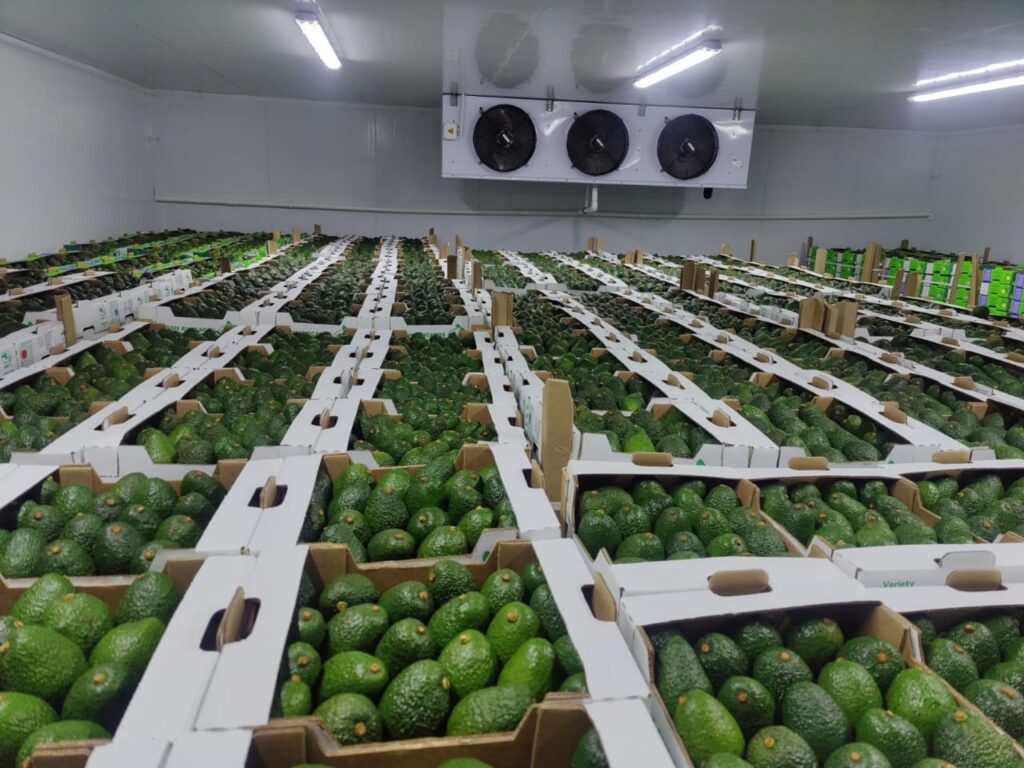
Government policy is also shifting to unlock new corridors
South Africa’s agriculture ministry has indicated plans to deploy additional agricultural attachés to accelerate phytosanitary approvals in high-growth markets such as India, China, and Japan, underscoring how technical compliance increasingly shapes trade flows.
India, in particular, is emerging as a demand engine.
Import volumes there have more than doubled year on year for two consecutive years, rising from 1,871 tonnes in 2022 to 3,900 tonnes in 2023, 9,212 tonnes in 2024, and 19,120 tonnes in 2025, according to trade data cited by Indian importers. Growth is expected to moderate to 15–20% in 2026 as consumption stabilises.
Within that expansion, Tanzania has consolidated its position.
According to Indian importers at Abacate International, Tanzania remains the dominant origin for the Indian market due to zero-duty access and favourable transit times. Weekly consumption in India averages 14–15 containers, yet imports can reach 25–30 containers during peak arrivals, creating price volatility when supply overshoots absorption capacity.
Tanzania’s earlier 2025 season start, with shipments beginning in January instead of February, helped stabilise supply early in the year. Even so, election-related disruptions and flooding temporarily opened space for Kenyan and Australian fruit to gain short-term market share. Structurally, however, Tanzania remains India’s preferred source.
North Africa’s broader horticulture push reinforces Morocco’s lead.
According to 2025 trade data from Eurostat, Morocco strengthened its position in the EU fresh produce market across tomatoes, citrus, and avocados, leveraging proximity to Spain and France as well as established citrus export corridors.
Egypt is aiming for scale as well
Producer-exporter Pico, one of Egypt’s early commercial avocado investors, plans to double its planted area over the next four years. The company began trials in the late 1990s and commercial plantings around 2010, focusing 65% of its acreage on Hass for Europe, with green-skin varieties targeting North Africa and Gulf markets.
Egypt’s export window, running from mid-November through February, avoids peak competition from major Latin American suppliers. Executives say that seasonal advantage, combined with consistent sizing comparable to Spain and Morocco, underpins its strategy.
While Peru and Mexico still dominate global supply, Africa’s collective weight is increasing.
The FAO estimates global avocado shipments rose about 13% in 2025, reflecting sustained demand in Europe, the United States, the Middle East, and parts of Asia. Within that expansion, Africa’s share is rising as production scales and logistics recalibrate.
New Gulf demand is also reshaping routing decisions
According to 2026 trade briefings from importers in the United Arab Emirates and Saudi Arabia, consumption continues to expand, driven by food service growth and shifting diets. Morocco and Kenya both target these markets, though North Africa retains freight cost advantages.
China represents another strategic frontier. South Africa has secured phytosanitary access, while Kenyan authorities continue negotiations to expand protocols beyond pilot volumes. Compliance thresholds remain high, reinforcing the premium on coordinated value chains.
According to Macharia, farm-level expansion must align with trade architecture if Africa’s place in the global avocado economy is to be sustained.
“Ports, shipping lanes, compliance regimes, and diplomatic access increasingly determine who captures value,” he said.
Morocco leads for now, but the continent’s exporters are recalibrating.
“The contest is no longer about who plants the most trees. It is about who connects the orchard to the shelf most efficiently, and in that race, infrastructure, market intelligence, and policy coordination may prove as valuable as fertile soil.”
Credit: Bonface Orucho, Bird Story Agency.