Trending
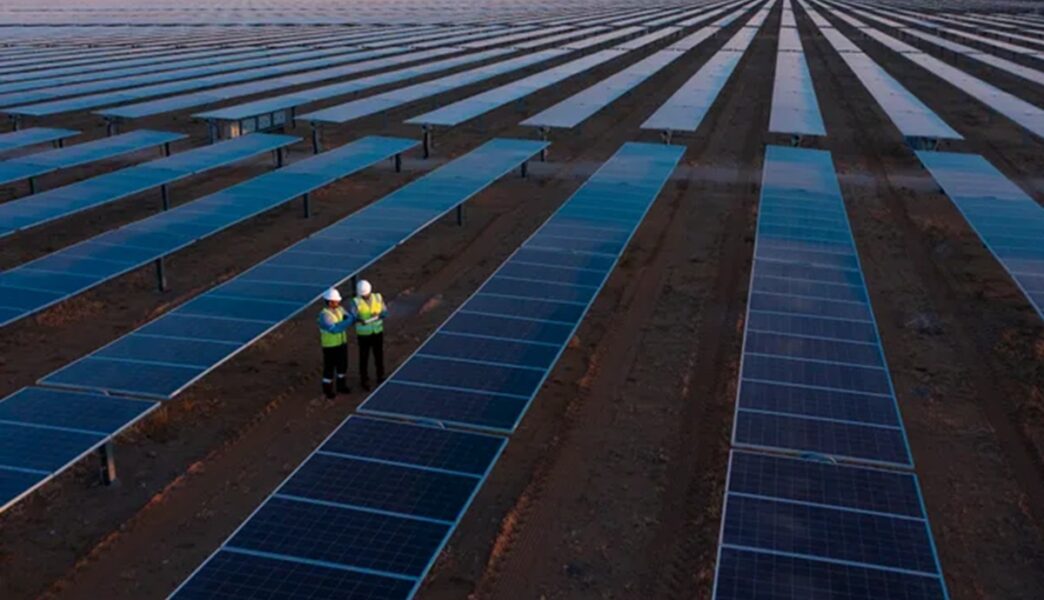
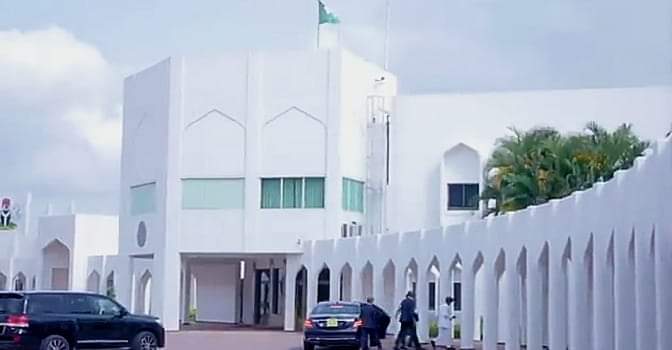
The decision by the Aso Rock Presidential Villa to disconnect from the national grid by March 2026 and run entirely on a solar mini-grid has stirred a wave of questions across Nigeria: What does it mean if the seat of power is opting out?
The installation, which cost ₦10 billion, has been undergoing testing since December 2025. An additional ₦7 billion has been proposed in the 2026 budget to complete related aspects of the project.
If successful, the Villa will join the State House Medical Centre, which has operated without generator power since completing its own solar installation in May 2025.
“The generator in that State House Medical Centre has not been put on for one minute since May last year,” State House Permanent Secretary Temitope Fashedimi told the Senate Committee on Special Duties on February 12, 2026.
“Only a couple of months, we used three per cent from AEDC (Abuja Electricity Distribution Company), so the rest has been strictly from the solar and from the battery electric storage system.”
Fashedimi disclosed the March timeline for the Villa’s full cutover during the budget defence session.
“We are hopeful that maybe by March we’ll be able to do a full cutover,” he said. As of the third week of March, the presidency has yet to announce whether the switch has been completed.
Physical changes to the Villa complex are already visible. Solar panels have been installed across large sections, including the Banquet Hall parking lot, the visitors’ parking lot, and the area around the lake.
The Financial Case for Withdrawal
Government officials have stated that the project is intended to reduce expenditure. According to figures presented during the budget defence, the Villa’s annual electricity costs were approximately ₦47 billion.
The Director General of the Energy Commission of Nigeria, Mustapha Abdulahi, described this spending level as unsustainable.
The urgency of the situation was emphasised in 2024, when the Abuja Electricity Distribution Company (AEDC) issued a ‘Notice of Disconnection’ to the presidential villa over an outstanding bill of N923.87 million.
The notice, which also targeted 86 other government ministries, departments, and agencies (MDAs) with a collective debt of N47.1 billion, prompted President Bola Tinubu to intervene personally, ordering the payment of Aso Rock’s bill to avoid an embarrassing disconnection of the nation’s seat of power.
The solar installation is expected to pay for itself over time through reduced diesel consumption and lower grid electricity bills.
The Two Grids
Presidential spokesman Bayo Onanuga has defended the move, noting that other presidential residences globally, including the White House, have adopted solar energy.
“The White House in Washington D.C. uses solar power,” Onanuga posted, sharing a video of a similar project implemented in the United States to support his position.
The White House in Washington D.C. uses solar power. pic.twitter.com/IzltzqIylZ
— Bayo Onanuga, OON, CON (@aonanuga1956) April 22, 2025
The context, however, could not be more different. The White House primarily uses electricity from the reliable local Washington, D.C. power grid, supplemented by on-site solar panels installed for sustainability.
U.S. electricity customers experienced an average of 11 hours of power outages in 2024, nearly twice as many as the annual average across the previous decade, according to a new report from the Energy Information Administration.
But hurricanes accounted for 80% of those lost hours, with most of last year’s outages resulting from major weather events like hurricanes Beryl, Helene and Milton, EIA said in the report.
Nigeria’s presidency, by contrast, is using solar to escape a national grid that barely functions. For the 200 million Nigerians living outside the Villa’s walls, the reality is one of persistent darkness.
According to records from the Nigerian Electricity Regulatory Commission (NERC), the national grid experienced 26 system collapses between 2020 and 2024. Industry sources indicate that between 2010 and 2025, the grid collapsed 105 times.
The failures have been particularly acute in recent months. In January 2026, the grid collapsed twice within five days, on January 23 and again on January 27. On both occasions, power generation fell to zero megawatts.
The Nigerian Independent System Operator attributed the first collapse to “the simultaneous tripping of multiple 330kV transmission lines, alongside the disconnection of some grid-connected generating units.”
The second collapse was caused by a “voltage disturbance” originating from the Gombe Transmission Substation. Two additional collapses occurred in February 2026.
‘You Cannot Tell People to Fast While Feasting Yourself’
For many Nigerians, the presidency’s move represents not progress but separatism. “You cannot tell the people to fast while feasting yourself,” Former LP presidential aspirant, Peter Obi, said when news of the planned switch first broke.
Trade union leaders also reacted sharply. According to labour leaders, when Aso Rock, which is supposed to spearhead patronage and boost Nigerians’ confidence in electricity, opts out, it signals that NERC and the entire privatised electricity structure should cease to exist.
“If the presidency switches from public electricity to a solar system, it signals no hope for ordinary Nigerians who have no other alternatives,” they argued.
“As such, NERC should be held liable for its supervision of the inactive sector. Distribution Companies (DisCos) and Generation Companies (GenCos) should be scrapped, as Aso Rock—which ought to fight for the betterment of all Nigerians—is abandoning its responsibility.”
Another trade union leader, Comrade Seun Abosede, said the decision “deepens the reality of a widening gap between government and the governed.”
Abosede added that “leadership must reflect the realities of the people. If the seat of power isolates itself from the systemic challenges affecting citizens,” or sends “the wrong signal—and the signal is that the APC-led federal government cares less about the people.”
The Catholic Secretariat of Nigeria (CSN) also slammed the decision, stating that the ₦17 billion solar project was a self-inflicted “vote of no confidence” in the nation’s electricity sector.
Rev. Fr. Michael Nsikak Umoh, the national communications director, argued that “the Presidency chooses insulation over reform, symbolism hardens into indictment.”
Umoh drew attention to the contradiction of asking citizens to accept higher electricity tariffs under the “Band A” regime while the government exits the system entirely.
“Consumers have been urged to accept market-reflective pricing in the name of sectoral reform. Yet reform rings hollow when the reformer elects to exit the system.
“It is difficult to persuade citizens to invest faith and money in a grid from which the highest office in the land is preparing to withdraw,” Umoh stated.
He also noted that “Instead of modelling disciplined compliance to strengthen institutional confidence, the government has chosen ‘structural secession. ‘ ”
He questioned, “If energy costs are deemed unsustainable for the Presidency, what does that imply for manufacturers in Agbara, traders in Kano, artisans in Mushin, or industrial clusters in Nnewi and Aba? The message risks being interpreted as this: survival is individual; resilience is private; the grid is incidental.”
A Presidency Cocooned?
In an editorial titled “Presidency’s No Confidence Vote on National Grid,” Lagos-based newspaper THISDAY argued that the presidency should not exit the grid but rather facilitate the adoption of renewable energy by major towns and cities to free up capacity.
“By exiting the national grid, the presidency tends to isolate itself from the problems facing other Nigerians,” the piece read.
“This does not show leadership by example; it shows loss of confidence by the government in the power sector and also discourages potential investors.
“Many believe it will be difficult to convince investors to invest in a sector that the government has exhibited a lack of confidence.”
An editorial in The Plenary described the move as the government choosing to “cocoon Aso Rock in a ₦17bn solar bubble while the rest of the country gropes in darkness,” sending the unmistakable message that “when it comes to electricity, it is every Nigerian for himself.”
The Cost of Failure
The economic impact of an unstable power supply has been documented by multiple institutions. The World Bank estimates that Nigeria loses approximately $29 billion annually, about 2% of Gross Domestic Product, due to unreliable electricity.
The Lagos Chamber of Commerce and Industry (LCCI) issued a statement following the January collapses, warning that the recurrence “underscores deep structural and operational weaknesses in the power transmission system and poses a direct threat to manufacturers, MSMEs, and Nigeria’s overall business environment.”
LCCI’s Director-General, Chinyere Almona, added that, “Based on recent patterns and in the absence of urgent structural fixes, the LCCI estimates that Nigeria could experience tens of grid collapses in 2026 under a ‘business-as-usual’ scenario.”
The Manufacturers Association of Nigeria (MAN) has also documented the staggering cost of self-generation. MAN President Francis Meshioye stated that industrial firms spent over N1 trillion on diesel and gas-powered generators in recent years, with spending jumping 75 per cent from N404.80 billion in the first half of 2024 to N708.07 billion in the second half.
“If countries like South Africa and Egypt could talk about 20,000 to 30,000 megawatts of electricity, and distribute it to the industrial sector. Why should we still celebrate 6,000MW when our population is about three times that of those countries?” MAN’s Segun Ajayi-Kadir questioned.
“What exactly is our problem here? Somebody still needs to determine where the problem lies. I would say we have not dug deep enough to know.”
Decades of Unfulfilled Promises
A recent investigation by Daily Trust revealed that despite the transition to democracy in 1999 and the privatisation of the power sector in 2013, the national government has spent over N7 trillion on the sector, with little to show for it.
Every administration since 1999 has made reviving the power sector a cardinal part of its reforms.
The first minister of power during the Olusegun Obasanjo administration, Chief Bola Ige, famously pledged to make “power failure a thing of the past” within six months.
Not only was the Obasanjo administration unable to achieve the aim, but things also got worse with frequent grid collapses.
Subsequent administrations took a cue from there. Goodluck Jonathan, as president, said Nigeria needed about $900 billion to fix its energy sector in 30 years.
“Under our national infrastructure master plan, substantial amounts are required for infrastructural development efforts in the next 30 years covering 2014 to 2045,” Jonathan said during the Nigeria Power Financing Conference at the Banquet Hall of the State House in 2014.
“The energy sector alone needs an infusion of about $900bn during this period. Of this, a significant percentage is expected to come from the private sector.”
The administration of the late Muhammadu Buhari reportedly took more than $6 billion in loans to improve power supply and upgrade transmission infrastructure.
Goddy Jeddy Agba, the Minister of State for Power, had also claimed that power failure is a thing of the past in Nigeria, saying that 85 per cent of the citizens will have access to electricity by the end of the year.
“Power failure is a thing of the past. By the end of the year, 85 percent of Nigerians will have electricity. Also, all the houses will be metered – you will only pay for what you consume.” Agba said in February 2022.
Meanwhile, during his campaigns, Tinubu also promised to make a reliable power supply a priority and has reportedly stressed that if he fails to achieve it, he should not be voted back into office.
In one of the numerous interventions, the Central Bank of Nigeria (CBN) made available a N213 billion facility out of the N701 billion payment assurance guarantee obtained.
Read More : Traore at Four: Revolution or Repression?
The CBN made available a N213 billion facility out of the N701 billion payment assurance guarantee obtained.
Yet as the nation’s seat of power prepares to unplug from a grid it was meant to champion, the circle of blame, DisCos blaming the Transmission Company, TCN blaming generation, generation blaming gas supply, gas supply blaming pipeline vandalism, and the cycle goes round and round.
But for the millions of ordinary Nigerians outside the Villa’s walls, none of that changes what they see with their own eyes. They do not see the promise of long-term savings or the logic of self-reliance. They see their leaders leaving a sinking ship and closing the door behind them.