Trending
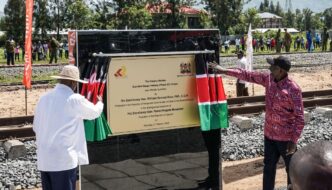
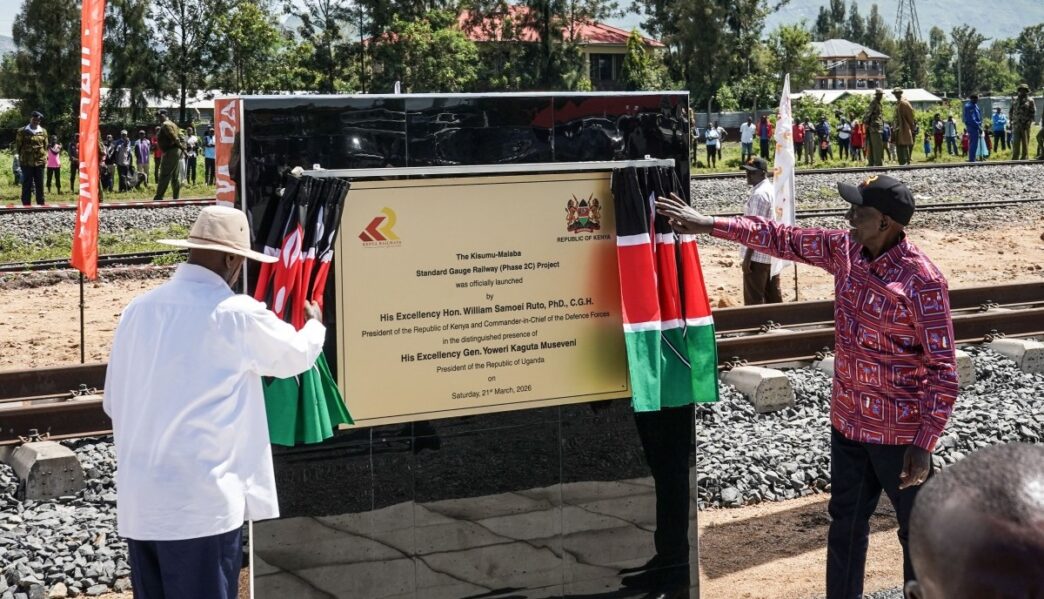
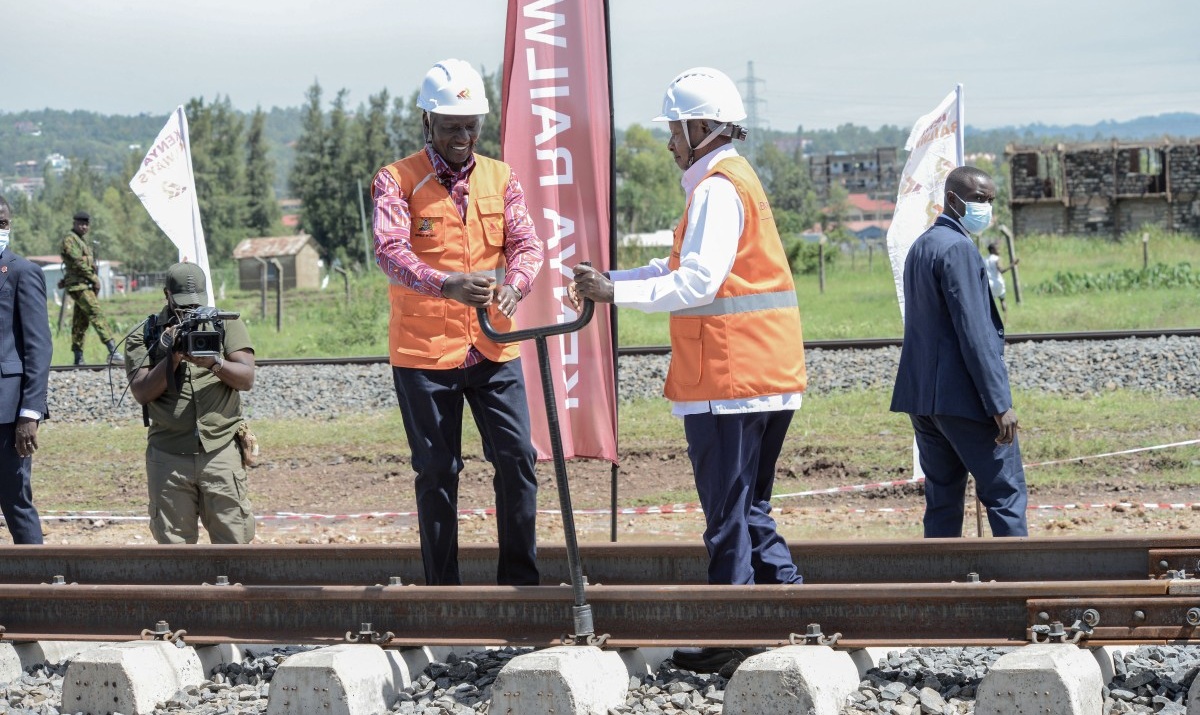
Kenya’s President William Ruto and Uganda’s President Yoweri Museveni on Saturday launched a long-delayed extension of a Chinese-funded railway near their shared border, despite ongoing concerns over Kenya’s rising debt tied to the project.
The Standard Gauge Railway, constructed between 2013 and 2019, currently runs from the port city of Mombasa through Nairobi to Naivasha, but plans to extend it into Uganda stalled after China declined further lending.
Kenya now spends about $1 billion annually servicing Chinese loans, much of it tied to the railway, significantly exceeding the line’s revenue, which stood at around $165 million last year despite rising passenger and cargo traffic.
Read More : Uganda Army Chief Restricts Ministers’ Travel
An audit report also found that more than $260 million had been lost to penalties and interest due to delayed repayments.
Despite the financial strain, the Kenyan government has pushed ahead with the project, arguing it is critical for regional trade and long-term growth.
Ruto said the railway would shape the future of the region, noting that it is expected to significantly reduce logistics costs that currently weaken East Africa’s competitiveness.
He pointed out that transporting cargo from Mombasa to Malaba takes around 80 hours, and over 100 hours to reach Kampala, stressing that such inefficiencies cannot support economic progress.
“Cargo takes an average of 80 hours to move from Mombasa to Malaba and more than 100 hours to reach Kampala,” the Ugandan capital, Ruto said.
“We cannot build prosperity on inefficiency.”
Museveni also said that the project would help address inefficiencies in Uganda’s transport system, describing the current structure as costly and ineffective.
“The railway is part of the rationalisation of our transport system, especially on the Uganda side, which is irrational and wasteful,” the veteran leader told the ceremony.
The next phase of the railway is expected to reach Kisumu by June 2027 before extending to Malaba on the Kenya-Uganda border.
Ruto, who recently launched construction of the next phase in Narok County, said the project has been carefully planned, including its financing, and would generate jobs while easing pressure on road transport.
Read More : Ruto Pushes Africa’s Industrial Growth at UNGA
The estimated cost of the extension exceeds $3.9 billion, with Kenya opting to finance it through future cargo-related revenues rather than new Chinese loans, although Chinese firms remain involved in construction.
China had previously lent Kenya about $9.7 billion between 2000 and 2019, with roughly half directed toward the railway, before pausing lending as repayment challenges began.
Kenya sees the extension as key to boosting trade across East and Central Africa, particularly with landlocked countries such as Uganda, Rwanda, South Sudan, and the Democratic Republic of Congo.