Trending
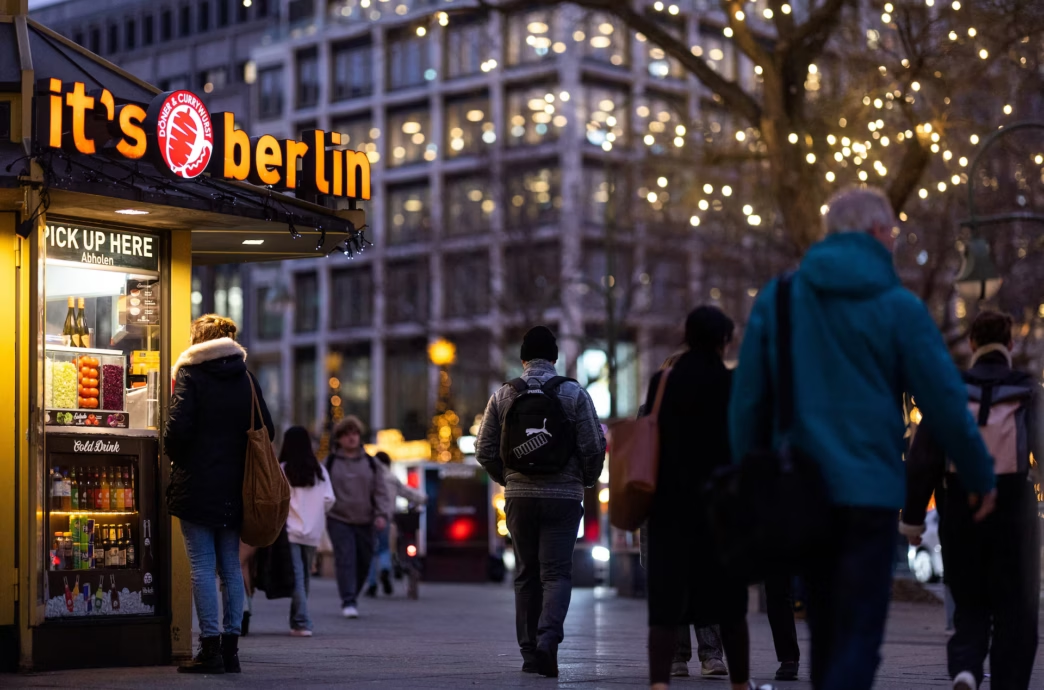
Consumer confidence in Germany has taken a sharp downturn heading into April 2026, as the ongoing conflict in the Middle East fuels fears of a renewed inflationary spike.
According to the latest forward-looking indicator from GfK and the Nuremberg Institute for Market Decisions (NIM), sentiment dropped 3.2 points to a reading of minus 28.
While current purchasing power remained relatively stable, expectations for future income plummeted by over 12 points, reflecting a growing public conviction that high energy costs will stall the nation’s fragile economic recovery.
Read More : Nigeria Rejects 124 Percent Debt Ratio Claim
The survey of approximately 2,000 individuals highlights a significant shift toward pessimism, with 60% of respondents expecting oil, gas, and petrol prices to remain elevated over the long term.
This “external seismic shock” comes at a particularly difficult time for the German economy, which has struggled with stagnation and fierce international competition since 2022.

Although the European Central Bank suggests inflation may not reach the record peaks seen during the 2022 energy crisis, the psychological impact of the Iran war is clearly driving households to prioritise precautionary savings over discretionary spending.
Read More : Oil Lifts Saudi Stocks as Egypt Market Falls
Chancellor Friedrich Merz, who has made economic revitalisation a cornerstone of his leadership, now faces a daunting challenge as the conflict threatens to undo recent progress.
With business morale and investor confidence also registering sharp declines this week, economists warn that the Middle Eastern turmoil could lead to a period of “stagflation” or even a technical recession.
As energy-intensive industries face rising production costs, the government’s ability to maintain social and political stability will depend heavily on its capacity to mitigate these persistent price shocks.