Trending

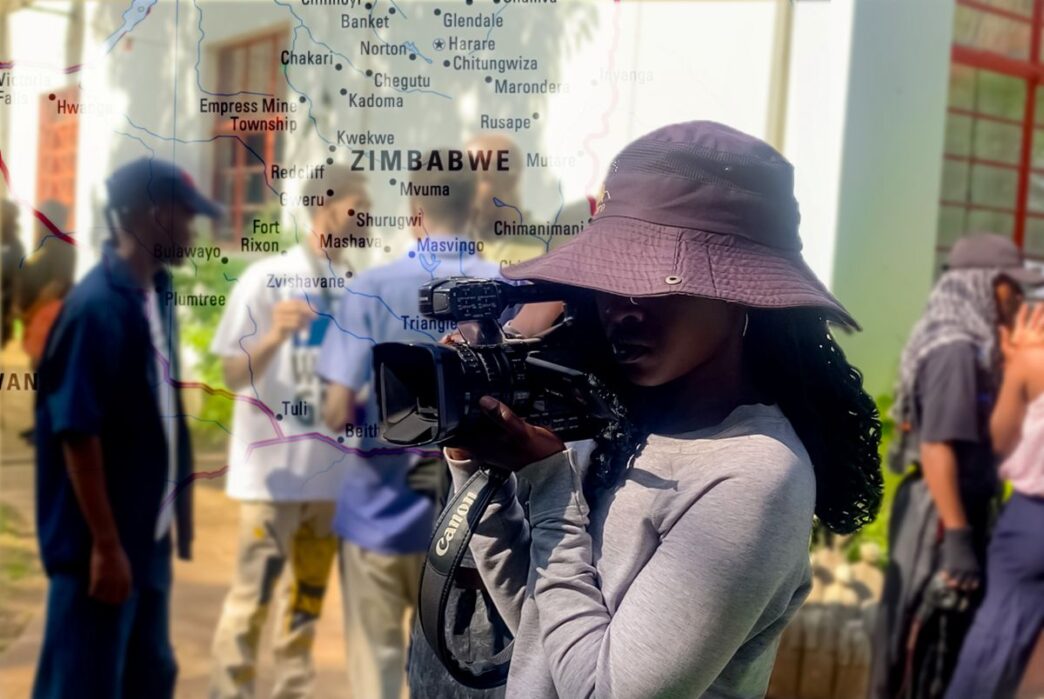
Zimbabwe is repositioning film as an economic sector, using tax incentives to attract film productions while building capacity to retain more value locally. The shift mirrors a broader continental push to move beyond filming locations toward full production ecosystems.
Zimbabwe is backing its creative sector with targeted public funding, setting aside US$10 million for local content production as part of an effort to strengthen national broadcasting and expand homegrown storytelling.
The country is targeting both the cost of filming and the economics of building studios, signalling a broader move to treat storytelling as a supply chain rather than an output.
Read More : UN: Four Million Displaced in Central Sahel
“This is about moving up the value chain,” said Tinotenda Machida, a Harare-based producer familiar with regional production dynamics.
“If you don’t have post-production locally, you are exporting your margins. What Zimbabwe is trying to do is keep that margin in-country.”
For years, Zimbabwe has produced films, but not the full value behind them.
Much of the high-margin work, editing, sound design, and visual effects, has typically been outsourced to hubs in South Africa, Ghana, Kenya, or Europe, creating what industry players describe as “production leakage.”
The result is a familiar pattern across African creative sectors, where countries generate content but export the most profitable stages of production.
Zimbabwe’s film industry, however, has not been absent; it has been under-structured.
According to media scholar Oswelled Ureke, the sector has long operated as an informal, fragmented ecosystem, often dismissed when compared to larger markets like Hollywood or South Africa, but sustained by grassroots production and creative resilience.

He describes filmmaking in Zimbabwe as “mégotage,” a process of piecing together limited resources, in which productions are often completed on minimal budgets, with lean crews and improvised equipment, yet continue to demonstrate technical capability and narrative depth.
That resilience has kept the industry alive through decades of economic strain, but it has also reinforced a structural gap: strong creative output without the financing, infrastructure, and institutional support needed to scale into a fully integrated value chain.
The 2026 national budget estimate is further attempting to change that.
It proposes extending duty-free importation to foreign film producers and to materials used in film production infrastructure, while also introducing a 200% capital allowance on investment in studios and post-production facilities, claimable in the year the expenditure is incurred.
The measures are designed to reduce entry costs for international productions while making it financially attractive to build local capacity.
In practical terms, this shifts the economics of filming in Zimbabwe.
According to industry estimates, duty exemptions can significantly reduce upfront production costs, while the capital allowance allows investors to deduct twice their infrastructure spending from taxable income, accelerating returns and lowering risk.
The approach reflects a growing recognition among African governments that film operates as a high-multiplier industry.
Sector analyses show film production drives demand across tourism, transport, hospitality, construction, and a wide network of creative and technical services, making it a strategic entry point into broader economic activity.
This is part of the Zimbabwe Film Strategy 2025–2030, launched in 2024 by the National Arts Council of Zimbabwe, which targets structural gaps across the industry, from production quality to income generation along the film value chain.
The strategy outlines nine priority pillars, including governance, financing, infrastructure, copyright protection, skills development, and market access, signalling a coordinated push to professionalise the sector and align it with the country’s broader economic ambitions.
Zimbabwe’s recent film gains show that the sector is already producing exportable results, even before the latest policy push. In 2020, Cook Off became the first Zimbabwean film to stream on Netflix, a milestone that showed a low-budget local production could reach a global platform.
In 2025, Rise pushed the country further, premiering at Tribeca as the first Zimbabwean film selected for the festival and later becoming the first Zimbabwean film to qualify for Oscar consideration, although it missed the shortlist.
Across the continent, policy is beginning to catch up with that reality.
In Morocco, a long-standing rebate system returns around 30% of eligible local spend to producers, helping the country attract major international shoots while building a reliable production services industry.
The model combines financial incentives with streamlined logistics, including customs facilitation and access to locations, enabling Morocco to retain a significant share of production value domestically.
South Africa offers one of the continent’s most mature systems, with cash rebates of up to about 35% on qualifying production expenditure. That framework has supported the growth of a full ecosystem, from large-scale studios to advanced post-production capabilities, positioning the country as a leading destination for both filming and finishing work.
Yet even in South Africa, recent industry concerns over delayed rebate payments highlight a critical lesson: incentives alone are not enough without efficient execution.
Elsewhere, countries are experimenting with newer models.
In Ghana, a 20% tax rebate, alongside import duty exemptions on film equipment, is being deployed as part of a broader push to position the country as a global filming destination.
The incentives build on earlier initiatives such as the ‘Shoot in Ghana’ campaign and have already supported large-scale productions, including international commercial shoots that employed over 1,500 local crew, underscoring the role of fiscal policy in both attracting foreign projects and deepening domestic participation in the production value chain.
Like Zimbabwe, Ghana is targeting both production inflows and infrastructure gaps, signalling a shift toward more integrated policy design.
Kenya and Rwanda are also refining their approaches, focusing on rebates, facilitation, and ecosystem support to strengthen domestic production environments. However, both markets still face limitations in high-end post-production, underscoring the broader continental challenge of retaining value beyond the shooting phase.
This is where Zimbabwe’s approach stands out.
Rather than focusing solely on attracting productions, it is attempting to anchor the entire production cycle within its borders. By combining duty relief with an aggressive capital allowance, the policy directly targets the two biggest barriers to value retention, high equipment costs and the capital intensity of building studios and post-production facilities.
The strategy aligns with what industry analysts describe as a second-generation phase of film policy in Africa. The first phase, led by countries like South Africa and Morocco, focused on attracting international productions through rebates and incentives. The emerging phase is more structural, aiming to capture the full value chain, from filming to editing, sound, and distribution.
Data from global film markets suggests that post-production and related services account for a significant share of total project value, often exceeding on-location shooting costs.
Without domestic capacity in these areas, countries risk remaining service providers rather than value owners.
Zimbabwe’s policy aims to close that gap early. There are, however, execution risks.
Experts argue that building a competitive film industry requires more than tax incentives; it depends on skills development, reliable infrastructure, regulatory clarity, and consistent policy implementation.
Read More : AEW 2026: Cape Town Hosts 10,000 Energy Leaders
Credit: Bonface Orucho, Bird Story Agency