Trending


The Federal Competition and Consumer Protection Commission (FCCPC) has clarified that it did not impose a ban on airtime and data advances across Nigeria.
There have been viral reports and social media posts suggesting that telecom customers in Nigeria will no longer be able to access credit or data loans.
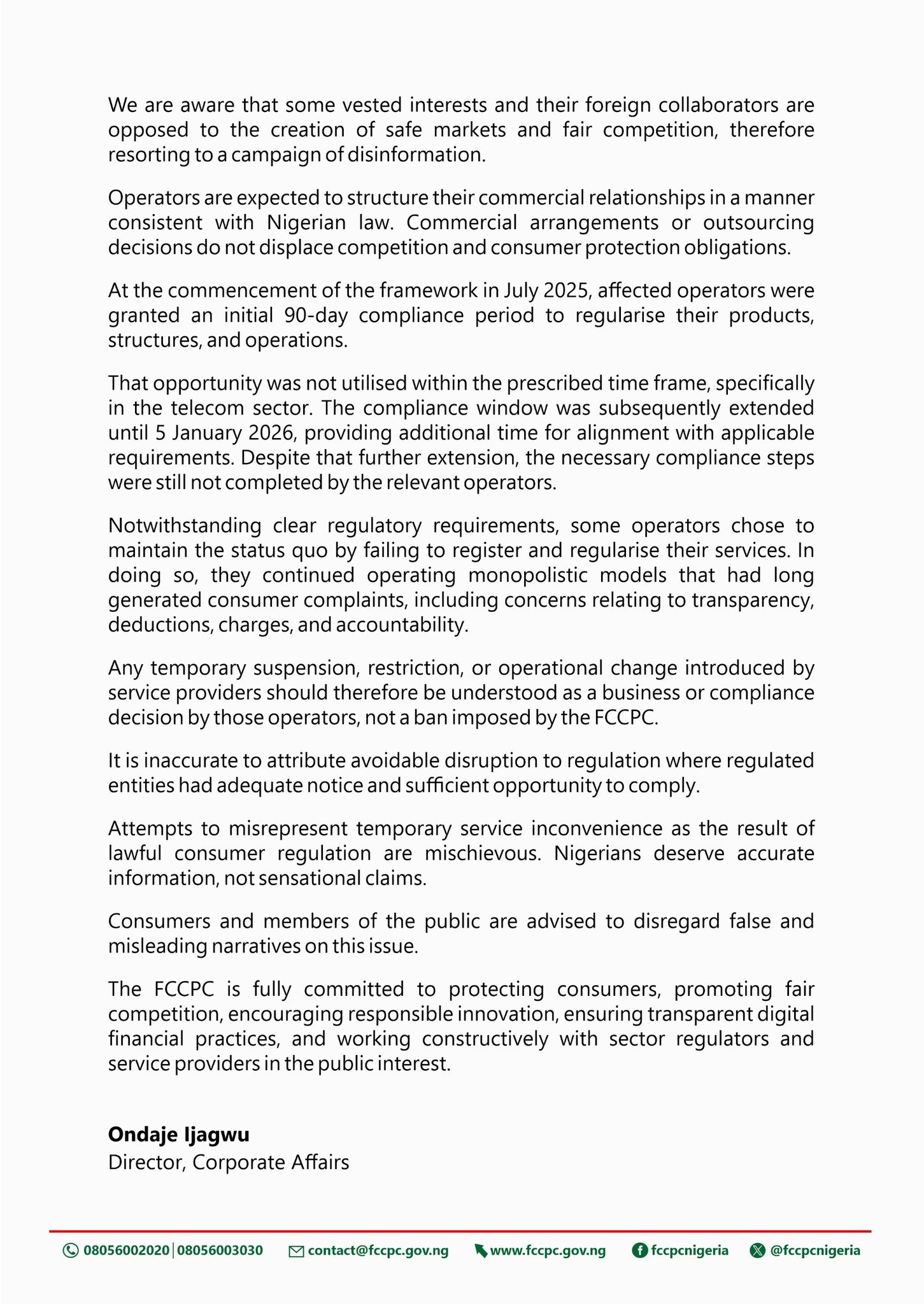
The agency, in a statement signed by its Director of Corporate Affairs, Ondaje Ijagwu, emphasised that it did not issue a directive preventing customers from accessing telecommunications value-added services.
“Those claims are incorrect. The commission has not prohibited airtime borrowing or data advance services, and no directive was issued preventing consumers from accessing lawful telecom value-added services,” the statement read in part.
Ijagwu explained that the regulations it introduced, which were misinterpreted, were introduced to curb the excesses of “abusive” service providers whose practices have caused consumer harm.
“The primary aim is to promote a fairer and more transparent system by mandating proper registration, responsible lending conduct, clear disclosure of fees and terms, accessible consumer complaint channels, data protection safeguards, stronger accountability for third-party partners, and effective regulatory oversight,” Ijagwu noted.
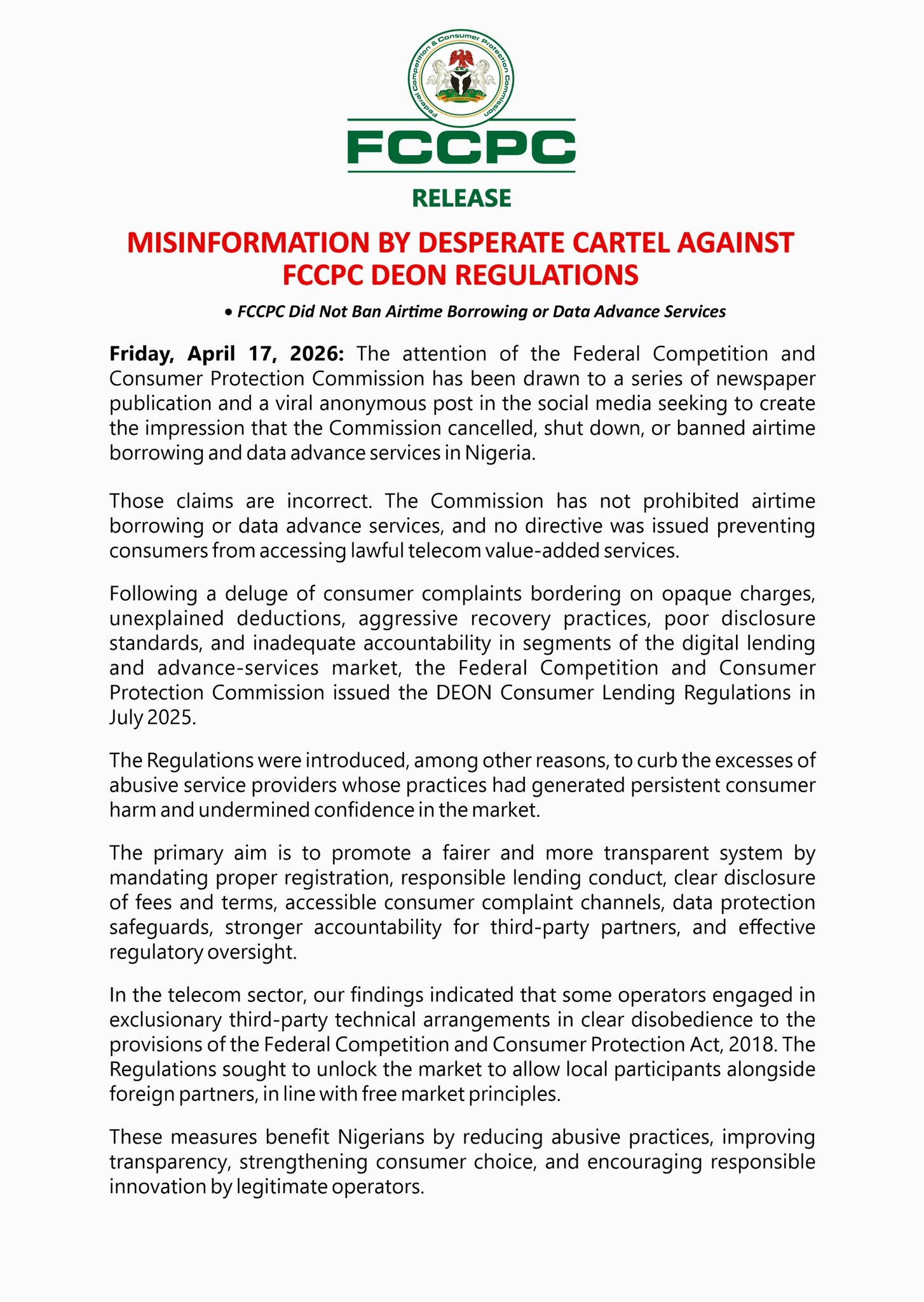
FCCPC Did Not Ban Airtime Borrowing or Data Advance Services
The attention of the Federal Competition and Consumer Protection Commission has been drawn to a series of newspaper publication and a viral anonymous post in the social media seeking to create the impression that the… pic.twitter.com/J0DT1ge4lA
— FCCPC Nigeria (@fccpcnigeria) April 17, 2026
“In the telecom sector, our findings indicated that some operators engaged in exclusionary third-party technical arrangements in clear disobedience to the provisions of the Federal Competition and Consumer Protection Act, 2018. The regulations sought to unlock the market to allow local participants to work alongside foreign partners, in line with free-market principles.
These measures benefit Nigerians by reducing abusive practices, improving transparency, strengthening consumer choice, and encouraging responsible innovation by legitimate operators.”
Ijagwu added that affected operators were granted an initial 90-day compliance period to regularise their products, structures, and operations when the regulation commenced in July 2025, but some failed to utilise the opportunity within the stipulated time frame.
Read More : Zamfara Police Arrest Youth Over Video Threat
He added that the agency extended the deadline, but some operators failed to register and regularise their services. Their failure to follow due process, according to Ijagwu, generated consumer complaints, including concerns relating to transparency, deductions, charges, and accountability.
“Any temporary suspension, restriction, or operational change introduced by service providers should therefore be understood as a business or compliance decision by those operators, not a ban imposed by the FCCPC,” Ijagwu added.
“It is inaccurate to attribute avoidable disruption to regulation where regulated entities had adequate notice and sufficient opportunity to comply.”