Trending
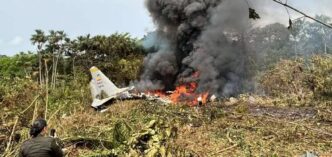
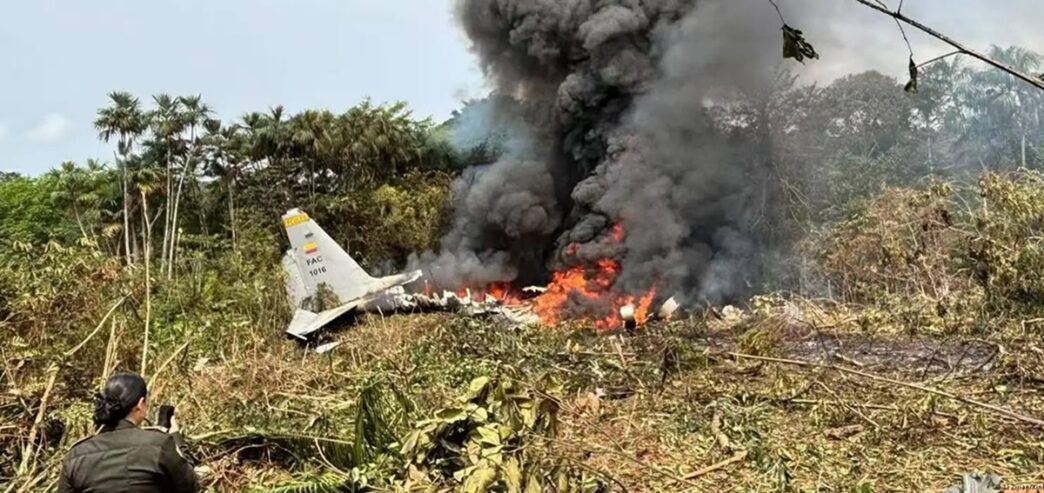
Preliminary findings into last month’s deadly military plane crash in Colombia have shown that the aircraft struck trees moments after takeoff, an impact that fatally compromised its ability to remain airborne.
The Colombian Air Force said on Thursday that investigators found the C-130 Hercules transport plane had hit three trees just four seconds after leaving the runway. The crash claimed the lives of 69 service members and remains one of the country’s deadliest recent military aviation disasters.
The aircraft went down on March 23, roughly one kilometre from the runway in the Amazonian town of Puerto Leguizamo, close to the border with Peru. The plane had taken off from the remote region before losing control and crashing shortly afterwards.
Read More : Mauritania Students Protest Transport Fare Hike
Colonel Luis Fernando Giraldo told reporters that evidence recovered from the wreckage strongly indicates the aircraft collided with surrounding vegetation immediately after takeoff. According to him, investigators discovered “vegetation material” inside two of the engines.
He said the impact “would have affected the aerodynamic performance of the left wing and the control of the aircraft,” suggesting the collision critically damaged the plane’s ability to climb or stabilise in the air.
The aircraft, manufactured in 1983, was carrying more than 120 people at the time of the crash, along with ammunition. Authorities said some of that ammunition exploded after impact, causing additional injuries to nearby residents who rushed to help survivors.
Despite the preliminary findings, officials said it remains too early to determine whether human error or a mechanical fault played any role in the disaster. However, investigators have already ruled out excess weight and poor weather conditions as contributing factors.
The final report is expected to provide clearer answers on whether operational decisions, aircraft condition, or environmental risks ultimately led to the fatal crash.