Trending
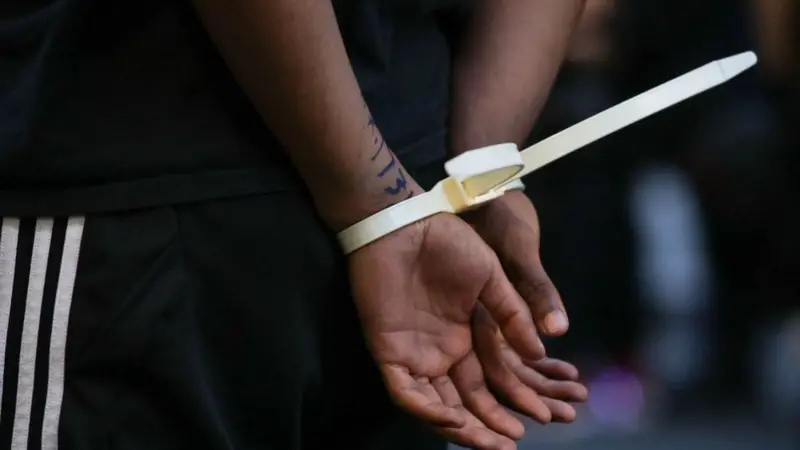
A Nigerian-linked fraud organisation stole approximately $215 million from more than 1,000 victims across 47 states and 19 countries through an international email hacking scheme, according to US court documents.
A federal jury in Toledo, Ohio, on April 24 convicted Oluwafemi Michael Awoyemi, 40, of Romeoville, Illinois; Aruan Drake, 37, of Atlanta, Georgia; and Peter Reed, 35, of Oak Forest, Illinois, of Wire Fraud Conspiracy. Awoyemi and Drake were also convicted of Money Laundering Conspiracy.
“Individuals, businesses, and other organisations in the United States, were targeted and hacked by Nigerian-linked fraud organisations,” according to court documents.
Read More : Washington Tightens Iran Economic Squeeze
“Their objective was to gain access to e-mail accounts held by individual users.”
In total, 25 defendants have been convicted for their roles in the scheme, commonly referred to as “business email compromise.”
According to evidence presented in court, the co-conspirators would “monitor the communications, and other activities of the individual email users to learn about their business practices and contacts.”
After gaining sufficient intelligence, they would “send a fraudulent e-mail to either the hacking victim, or to someone communicating with the hacking victim, requesting payment.”
“Because the co-conspirators were familiar with the victims’ activities, the fraudulent e-mails were crafted in a way to convince recipients that the request for payment was for legitimate business activities.”
Once members of the conspiracy obtained payment, they used “a web of fraudulently created bank accounts and cash transfer systems to launder and distribute the funds,” the documents state.
Approximately $50 million of the stolen money was used to purchase cashier’s checks that were presented for payment to the New Dolton Currency Exchange, a Chicago-area money service business owned and operated by co-defendant Lon Goodman.
According to court documents, Goodman “accepted cashier’s checks from co-conspirators who presented false identifications or presented checks payable to others.”
Goodman “routinely accepted false know-your-customer information and continued doing business with individuals after being warned by banks that checks were obtained with stolen funds or otherwise returned as fraudulent.”

When it became too risky to accept cashier’s checks in an individual’s name, Goodman would “accept checks from those individuals payable to shell companies that those individuals controlled.”
“The wire transfers sent by the victims ranged from tens of thousands, to millions of dollars,” the documents state.
“In one instance, a victim business sent $2.7 million to a shell company bank account that was controlled by a conspiracy member.”
International victims were identified in Canada, Mexico, Great Britain, Germany, Italy, Kuwait, United Arab Emirates, Australia, New Zealand, Malaysia, Panama, Bermuda, Romania, and other countries.
Read More : Abia Arrests 86 Over Sanitation Violations
Among the items seized or subject to forfeiture during the investigation were ” Nearly $1.2 million worth of cashier’s checks, cryptocurrency, and cash, a Patek Philippe Nautilus watch, $45,000 value, an Audemars Piguet Royal Oak watch, $30,000 value; a Richard Mille Felipe Massa watch, $140,000 value; and a 4,423 square foot residence in Lawrenceville, Georgia.”
In addition to the three convicted at trial, 22 other defendants pleaded guilty to Wire Fraud Conspiracy and Money Laundering Conspiracy, including Ayobami Osas Christopher, 30, of Lawrenceville, Georgia; Emmanuel Okereke, 42, a Nigerian national residing in Atlanta; Olalekan Bashiru, 36, a Nigerian national residing in Chicago; Lon Goodman, 69, of Whiting, Indiana; and others.
“Each defendant’s sentence will be determined by the Court after a review of factors unique to the case, including each defendant’s prior criminal record, if any, their role in the offense, and the characteristics of the violation,” the Department of Justice stated.