Trending
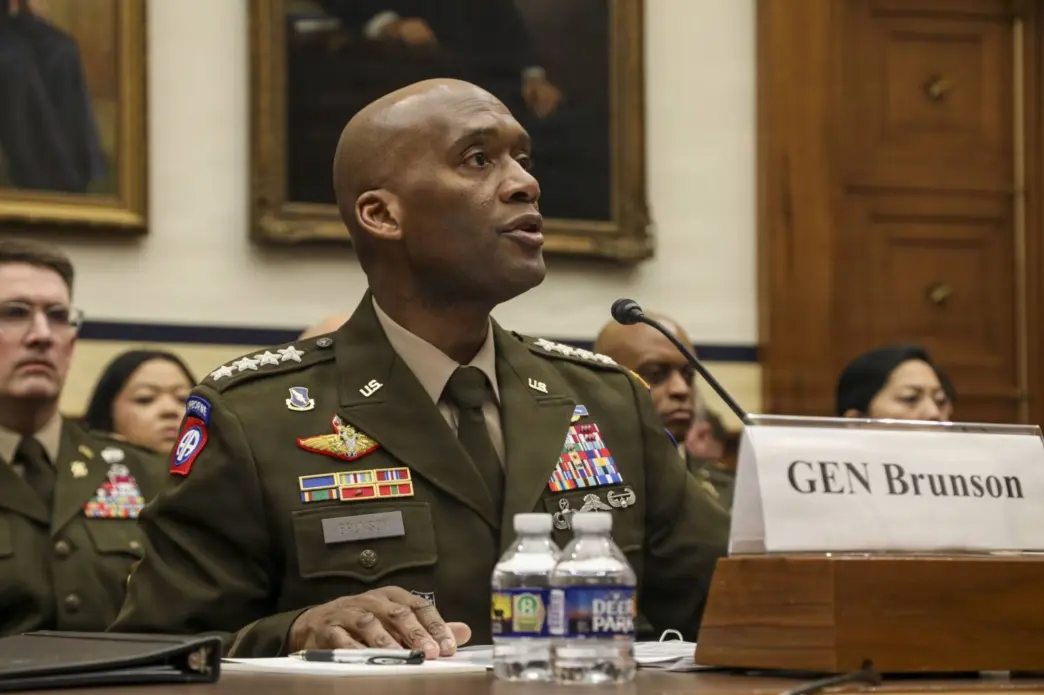
Seoul’s presidential office announced Saturday that South Korea and the United States are holding talks regarding recent public remarks by the commander of US Forces Korea (USFK), Xavier Brunson.
The discussions follow sharp criticism from China over Brunson’s comments in a recent podcast interview, where he described South Korea as “the dagger in the heart of Asia” when viewed from China’s east coast.
The Chinese embassy in Seoul reacted strongly this week, stating that the commander had truly crossed the line.
Today at the Shangri-La Dialogue, @CDRUNCCFCUSFK was allowed to answer a question from a Chinese participant about a comment he made on the @US_AWC China Landpower Studies Center Podcast. (1/14)https://t.co/QcxaxZBYTF
— U.S. Forces Korea (@USForcesKorea) May 30, 2026
The controversial interview emerged amid growing speculation that Washington intends to expand USFK’s role to counter the rising regional influence of China, a key ally of North Korea and Russia.
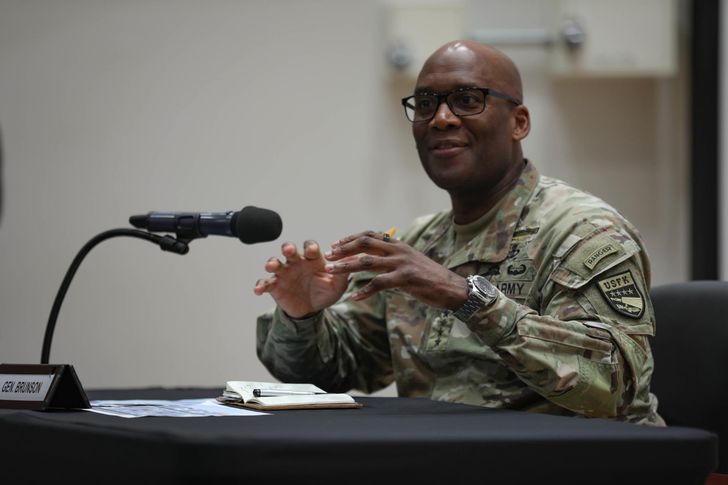
This is not the first time Brunson has used vivid military metaphors; last year, he highlighted South Korea’s strategic value in the Indo-Pacific by calling the nation a “fixed aircraft carrier.”
Local media outlets report that Seoul’s presidential office complained to the US about the latest remarks, with broadcaster JTBC noting that South Korea has raised similar concerns ten times previously.
While the Blue House acknowledged the communication, officials stated they could not confirm specific details of the discussions held through diplomatic and security channels.
In the translated transcript of the podcast, Brunson also described Japan as a shield that blocks Chinese ambitions in the South China Sea, while positioning the Philippines to China’s southeast.
Roughly 28,500 US troops are stationed in South Korea to protect the country against nuclear-armed North Korea.
The Chinese Embassy in Seoul fired back on Friday, asking if Washington authorised Brunson’s hostile and aggressive remarks.
An unnamed spokesperson questioned whether the commander was merely displaying his own belligerence or trying to use South Korea as a pawn by labelling the host nation as an instrument of war.