Trending
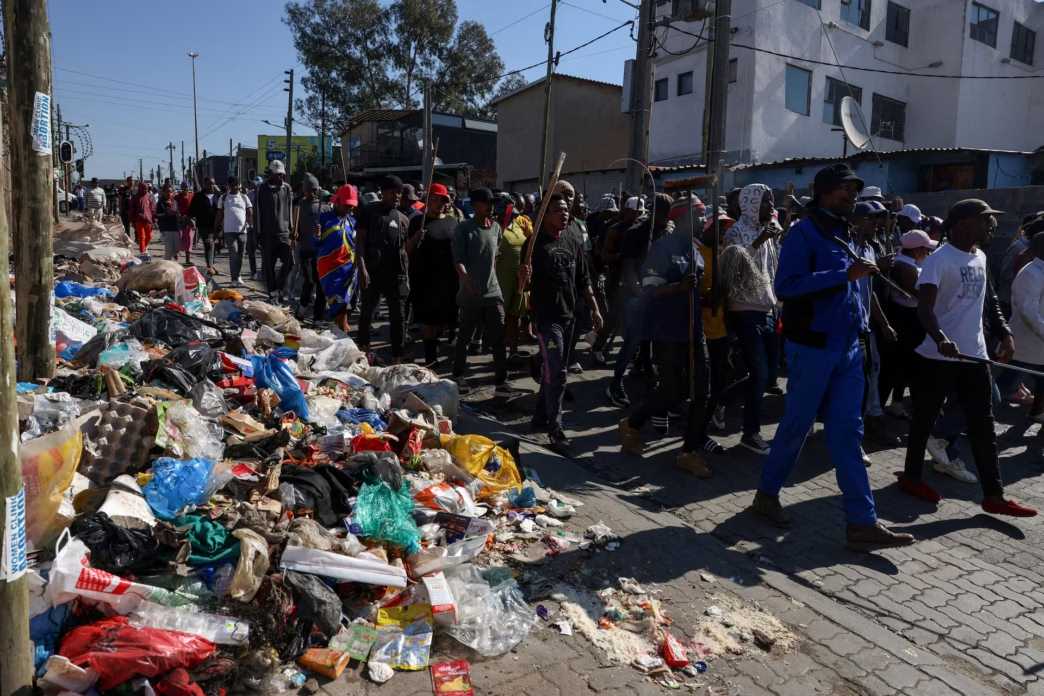
South Africa faces severe economic blowback from recent anti-migrant protests, as economists warn that forcing thousands of foreign workers out of the country will damage the very businesses and labour markets campaigners claim they want to protect.
Widespread frustrations over high crime, weak growth, and an unemployment rate that leaves 8.1 million citizens jobless fuelled a massive nationwide march on June 30.
Although the demonstrations remained largely peaceful, the fear of impending violence has driven thousands of African migrants to flee the country, threatening to trigger acute labour shortages across both the formal and informal sectors.
Read More : Pillay Calls US Sanctions on ICC ‘Unacceptable’
This mass exodus directly undermines vital industries that heavily rely on foreign labour, including construction, agriculture, hospitality, and transportation.
Mpho Lenoke, a lecturer at North-West University, noted that migrants typically fill vacancies that are difficult to occupy and frequently establish businesses that employ South Africans.
According to UN and OECD-ILO data, the 2.6 million migrants living in South Africa constitute roughly 5 per cent of the population but contribute an estimated 9 per cent to the nation’s gross domestic product (GDP).
The unrest has already caused noticeable disruptions within the retail and delivery sectors.
Foreign-owned spaza shops serve as structural pillars for local wholesalers and landlords, while Shoprite Group’s grocery delivery platform, Sixty60, recently faced operational hurdles because South Africans comprise less than a quarter of its delivery driver workforce.
Despite public resentment, an International Labour Organisation (ILO) study highlights that rising immigrant participation actually increases employment opportunities for native-born South Africans.

Conversely, Susanna Deetlefs of ACLED warned that the protests inflict immediate economic damage through looting, supply chain disruptions, and forced business closures.
Read More : Zuma Under Medical Treatment, Says Ramaphosa
While international investors have reacted calmly so far, financial analysts warn that the rising social tension introduces a significant new risk factor for the region’s largest economy.
The fallout also extends far beyond South Africa’s borders, as the country serves as the primary hub for regional remittances.
A joint report by FinMark Trust and the South African Reserve Bank revealed that cross-border remittance outflows recently tripled to over 19 billion rand ($1.16 billion), funds that directly sustain neighbouring economies like Lesotho, Malawi, Mozambique, and Zimbabwe.