Trending

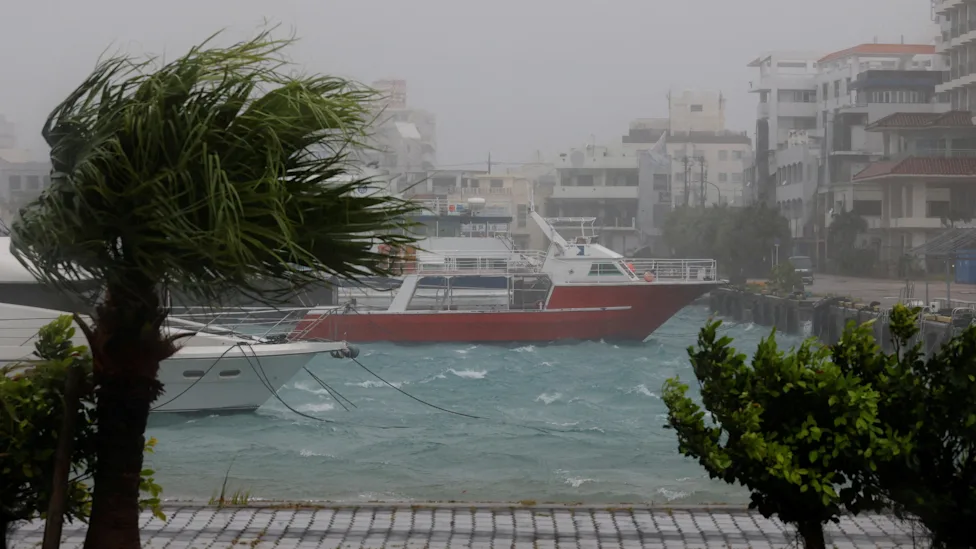
China has been hit by its second typhoon in a week after Typhoon Bavi made landfall, forcing the evacuation of nearly two million people from affected areas.
The powerful storm first came ashore in the coastal city of Taizhou on Saturday evening, then made a second landfall in Wenzhou a few hours later.
Before reaching China, Bavi swept across remote Japanese islands and brushed past northern Taiwan, bringing heavy rain to the island.
Read More : Shettima Returns From UNGA 81
In the Philippines, landslides triggered by the storm killed at least 17 people earlier in the week.
Although Bavi has weakened into a severe tropical storm, weather officials warned that it still poses a major threat because of the large amount of rain it is carrying.
Authorities forecast “exceptionally heavy rains” across eastern Zhejiang Province and northeastern Fujian Province, saying the mass evacuations were carried out “entirely to guard against the [worst-case] scenario.”

More than 1.7 million people were evacuated in Zhejiang, while thousands more left their homes in neighbouring provinces.
Schools, businesses and outdoor activities have been suspended in Zhejiang.
Around 400 flights and dozens of train services have also been cancelled.
In Wenzhou, a city with about 10 million residents, hundreds of thousands of people were evacuated as the storm approached.
Officials in Beijing also ordered the evacuation of about 100,000 people as a precaution.
Bavi began as a super typhoon, bringing wind speeds of up to 290 kilometres per hour as it passed through Guam and the Northern Mariana Islands before weakening over the Pacific Ocean.
It later struck Japan’s Sakishima Islands, injuring at least five people and leaving thousands without electricity.
Taiwan avoided a direct hit but experienced heavy rainfall, prompting evacuations and warnings of possible landslides. Authorities there reported no deaths.
Read More : Trump Offered China Arms Deal, Envoy Says
Residents across the region cleared supermarket shelves as they stocked up on food and other essentials ahead of the storm.
The latest typhoon comes just days after Typhoon Maysak struck southern China, killing at least 39 people, destroying livestock and causing major agricultural losses.
It also triggered two rare tornadoes in Hubei Province.