Trending
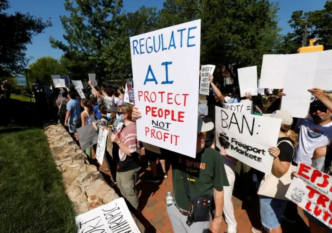
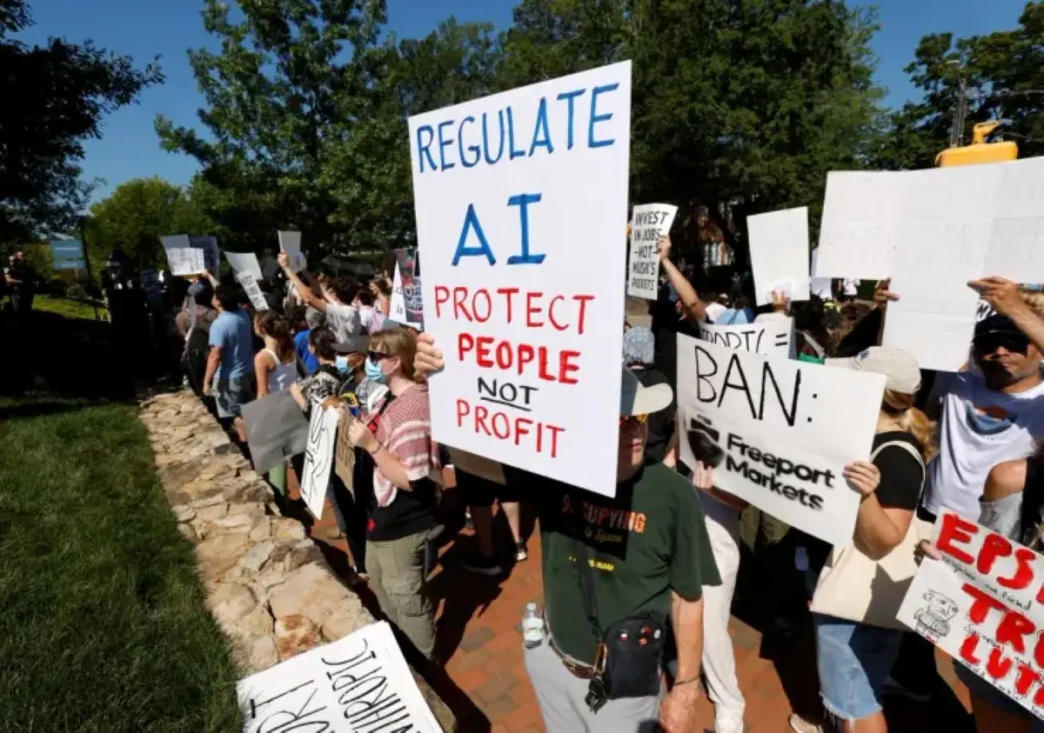
The world’s leading artificial intelligence companies have begun efforts to create a self-regulatory standards body as pressure grows for stronger safeguards around the development of advanced AI systems.
OpenAI said on Tuesday that it is working with Anthropic and Google on plans for an organisation that would help establish safety standards across the industry. The proposal is based on an idea from Google DeepMind CEO Demis Hassabis, who suggested creating a body similar to the Financial Industry Regulatory Authority (FINRA), which oversees US brokers and investment firms.
In July, Hassabis called for the United States to establish an organisation that can test the most advanced AI systems before releasing them to the public. He said such a body would require significant funding, likely from technology companies, to attract expert researchers and secure the computing resources needed for large-scale evaluations.
OpenAI CEO Sam Altman backed greater cooperation among AI developers, saying competition between companies and countries should not prevent efforts to improve safety.
“I think it’s great for our industry to say we want to come together and we want to be able to coordinate and make sure we have enough time to do this safely,” Altman said at a Salesforce conference in San Francisco.
He added that public anxiety grows when people believe some companies may not take sufficient precautions. “When there’s any implication that some in the industry might not do the right thing, I think that’s when people get very scared,” Altman said.
However, the proposal has drawn criticism from some AI leaders who fear the biggest technology companies could dominate the creation of industry rules. Aidan Gomez, co-founder and CEO of Canadian AI firm Cohere, accused major US AI laboratories of potentially creating a “cartel” under the argument of safety.
“AI needs guardrails. That is not the dispute and never has been. The dispute is over who writes them, who gets to participate and whose interests the rules are protecting,” Gomez wrote.
Concerns about AI risks have intensified following warnings from former employees of major AI firms. Former Anthropic researcher Jacob Coxon said AI companies were “gambling with our lives,” while former Google DeepMind researcher Bilal Chughtai warned that AI could pose an existential threat.
Anthropic CEO Dario Amodei has also called for a slower pace of AI development, a position supported by Altman, Elon Musk and Hassabis.
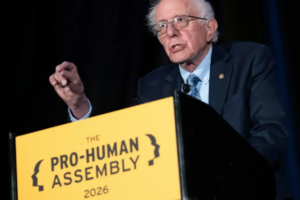
US Senator Bernie Sanders said voluntary commitments from technology companies would not be enough. “When the future of humanity is at stake, we need binding international safety rules, not voluntary standards from the industry,” Sanders said.
Altman acknowledged that accidents involving emerging technologies may be unavoidable but argued that transparency could help prevent more serious failures.
“Accidents with any new technology are unavoidable, and we should have a great culture of transparent reporting about them,” he said.
Meanwhile, US President Donald Trump has dismissed some AI risk warnings as “hoaxes,” while Nvidia CEO Jensen Huang has criticised what he described as coordinated fears surrounding the technology.
Nvidia’s chips power many of the world’s leading AI systems, placing Huang at the centre of the industry’s rapid expansion.