Trending
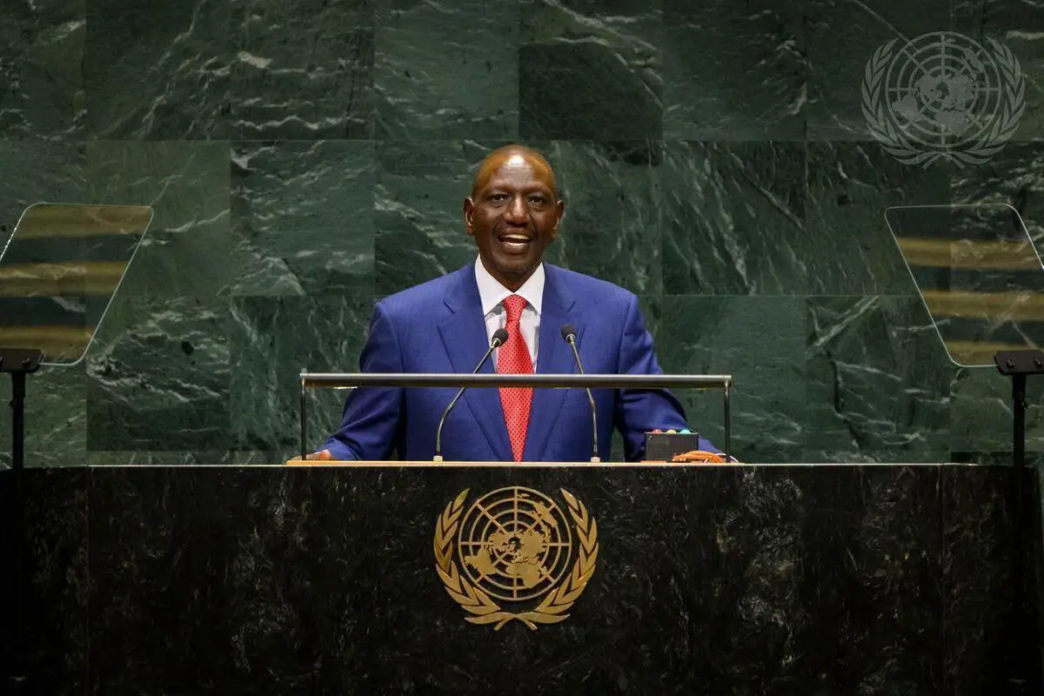
Kenyan President William Ruto has called for a new phase of African economic transformation, urging the continent to move beyond exporting raw materials and instead build industries, create jobs and capture greater value from its vast natural and human resources.
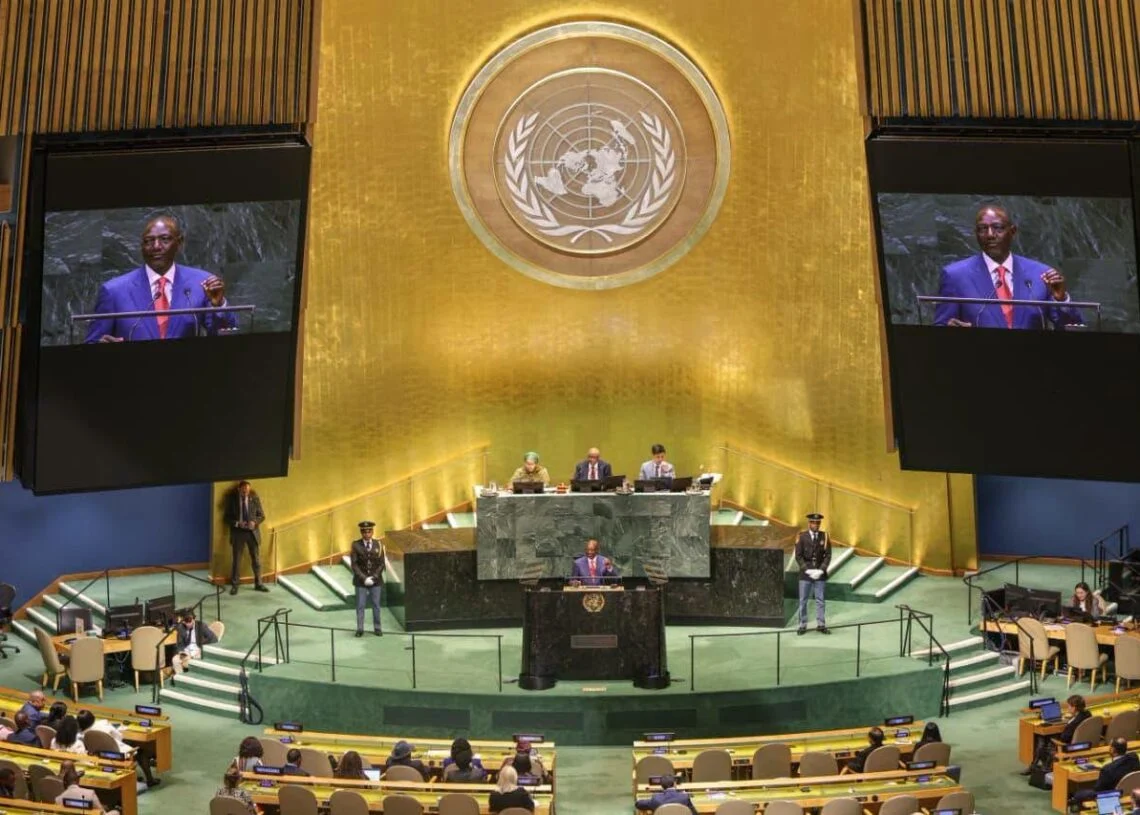
Addressing the 81st session of the United Nations General Assembly in New York on Wednesday, Ruto said Africa’s mineral wealth, agricultural potential, renewable energy resources and youthful population position it to play a much greater role in shaping the global economy.
“Africa does not come to plead. We come to propose,” Ruto declared, setting out his vision of a continent that can become a stronger partner in addressing global challenges, from food security and clean energy to resilient supply chains and economic growth.
He described Africa as a market of more than 1.5 billion people, increasingly connected through the African Continental Free Trade Area (AfCFTA), with resources that could help meet the world’s growing economic and development needs.
“These are not merely African assets. Properly developed, they are part of the answer to the world’s search for food security, clean energy, resilient supply chains, and new sources of growth,” he said.
From Raw Materials to African Industries
A central message in Ruto’s address was the need for Africa to transform its resources into finished products and industrial output, rather than continue to depend heavily on the extraction and export of commodities.
“Africa’s resources must become the beginning of African industry, not the end of Africa’s contribution to the value chain,” he said.
“Extraction defined too much of our past. Investment must underpin our future.”
Ruto pointed to developments across the continent as evidence that this transition is already taking shape, noting that cocoa-producing countries are moving from selling beans to building brands, while cotton producers are developing garment value chains.
He also called for the clean-energy transition to create opportunities for African industries rather than reproduce extractive economic arrangements.
According to the Kenyan leader, the AfCFTA must evolve beyond serving as a market for existing African products and become a platform for producing more of the goods the continent currently imports.
His remarks place industrialisation, local manufacturing and regional trade at the centre of Africa’s economic future, with greater investment needed to ensure that the continent captures more value from its resources.
Kenya’s $16 Billion Refinery Project
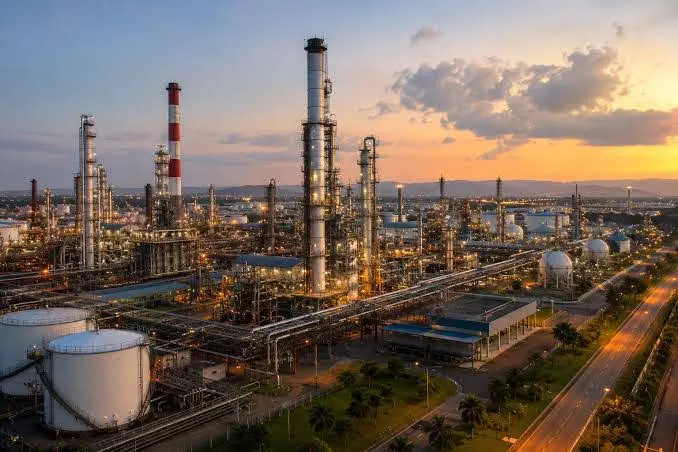
Ruto highlighted Kenya’s own industrial ambitions, announcing plans to break ground on the East Africa refinery in Lamu within a week of his address.
The proposed refinery, he said, would have the capacity to process 700,000 barrels of oil a day and represents an investment of approximately $16 billion.
He presented the project as an example of the kind of investment-led transformation Kenya wants to pursue, with benefits extending beyond the country’s borders.
“Its significance extends beyond one project or one country,” Ruto said.
“It represents the Africa we seek to build: adding value at home, creating jobs for our people, and building industries capable of serving continental and global markets.”
The project, as outlined in his speech, reflects Kenya’s broader ambition to develop industries that create employment, strengthen domestic production and position African businesses to serve markets across the continent and beyond.
Ruto also stressed the importance of mobilising African capital to finance such developments, pointing to more than $4 trillion in domestic capital held in pension funds, insurance assets, sovereign wealth funds, banks and other financial institutions.
He said the challenge was to channel more of these resources into productive investment while developing credible projects, safeguards and financial instruments that can attract long-term investors.
Education at the Centre of Kenya’s Development Plans
Beyond industrialisation, Ruto identified education as a critical foundation for Kenya’s economic transformation, highlighting investments made by his administration over the past four years.
He said Kenya had spent an additional $5.3 billion on education during that period, recruited 100,000 additional teachers, constructed more than 23,000 classrooms and was developing 1,600 laboratories.
The country has also expanded support for universities and technical institutions, according to the president.
Explaining the importance of these investments, Ruto said: “Education is not consumption. It is the infrastructure of opportunity, productivity, and national transformation.”
His remarks linked investment in education to the development of a skilled workforce capable of supporting industrial growth, improving productivity and expanding economic opportunities for young people.
He also warned that developing countries face growing pressure from debt repayments, which can limit the resources available for schools, healthcare and other essential services.
Ruto cited global public debt of $102 trillion in 2024, adding that 46 developing countries now spend more on interest than on either health or education.
He argued that development financing must become more affordable if countries are to invest adequately in their populations and build sustainable economies.
Calling for Fairer Access to Global Finance
The Kenyan president also called for reforms to the international financial system, particularly the cost of borrowing faced by African and other developing economies.
He noted that developing countries have recently borrowed at average rates two to four times higher than those available to developed nations.
Ruto said this disparity makes it more difficult for countries with significant development needs to finance infrastructure, energy projects and other investments necessary for economic growth.
“Capital must price risk; it must not price prejudice,” he said.
He called for multilateral development banks to provide more financing over longer periods and mobilise private capital at scale. He also advocated greater access to long-term and local-currency financing to reduce the burden of funding major infrastructure projects with expensive, short-term loans.
However, Ruto acknowledged that developing countries also have responsibilities in ensuring that financing is used effectively.
“Governments must also do their part to manage debt prudently, strengthen institutions, prepare credible projects, deepen domestic capital markets, honour contracts, and confront corruption without equivocation,” he said.
“A fairer international system requires responsibility on both sides. Reform abroad cannot substitute for accountability at home.”
Africa Seeks a Greater Voice in Global Decisions
Ruto’s economic proposals were accompanied by a call for stronger African representation in the institutions that shape international financial and political decisions.
He said Africa’s 54 nations are home to nearly one in every five people on Earth, yet the continent remains underrepresented in global financial institutions.
“We cannot carry substantial obligations under a system while remaining marginal in shaping its rules,” he said.
“If Africa has a stake in the burden, Africa must have a share in the decisions.”
He also renewed calls for reform of the UN Security Council, arguing that Africa’s absence from permanent membership does not reflect the continent’s place in the modern world.
Ruto said reforms should provide equitable and permanent representation, with all the privileges and prerogatives of permanent membership.
For him, political and financial reforms are connected to the broader objective of ensuring that African countries have a meaningful role in decisions affecting their security, economies and development.
He stressed that the continent was seeking shared prosperity rather than special treatment.
“A more industrialised Africa expands global demand. A more food-secure Africa strengthens global stability. A better-connected Africa diversifies global supply chains,” Ruto said.
“And an Africa able to finance more of its own development becomes a stronger partner to the world.”
A Vision of Shared Prosperity
In concluding his address, Ruto called on world leaders to reform international institutions and strengthen cooperation to address the challenges facing future generations.
He said Africa was ready to work with other nations towards a global system that offers every country a fair opportunity to develop and contribute to shared progress.
“Let ours be the generation that completes the unfinished work of San Francisco: that makes sovereign equality real in our institutions, makes international law consistent in its application, makes capital serve development and makes cooperation stronger than division,” he said.
Ruto ended with a vision of a United Nations where all countries and peoples have a meaningful place in shaping the global future.
“Not a United Nations of some nations. Not a system in which power determines whose voice matters. But a United Nations worthy of its name, where every nation has a voice, every people has a stake, and every child has a future.”
“That is the United Nations Kenya believes in. That is the multilateralism Africa is ready to build. And that is the promise our generation must now keep.”