Trending
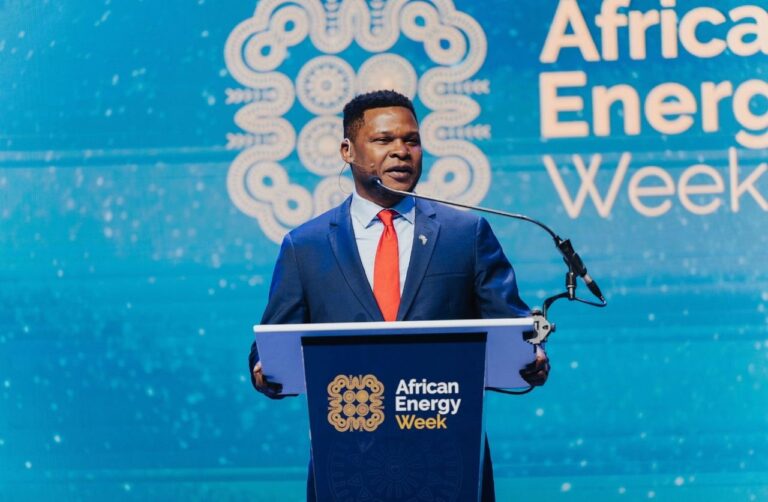
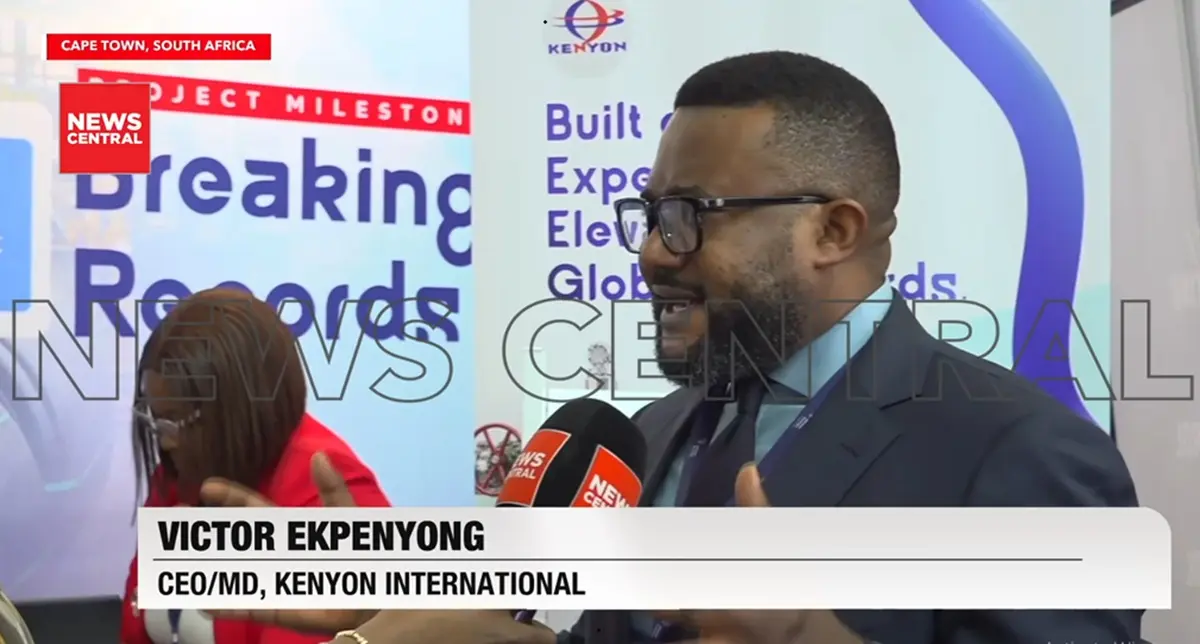
Managing Director and Chief Executive Officer of Kenyon International, Victor Ekpenyong, has urged African countries to mobilise domestic and continental funding for energy projects rather than depend heavily on foreign investment.
Ekpenyong stated this while speaking to News Central correspondent Tolulope Adeleru-Balogun on the third and final day of the African Energy Week (AEW) 2026 in Cape Town, South Africa, where discussions focused on investment, energy production and the development of the continent’s resources.
Investment and ageing infrastructure have emerged as major issues at African Energy Week 2026 in Cape Town. CEO/MD Kenyon International Victor Ekpenyong says Africa must mobilise more of its own capital while investing in older oil and gas assets to increase production.
#AEW2026 https://t.co/oUooGFKmuc
— News Central TV (@NewsCentralTV) October 15, 2026
He said Africa’s approach to financing energy infrastructure was shifting towards greater local participation, with African investors taking responsibility for funding projects across the continent.
“I think before, Africa were reliant on foreign support for energy infrastructure investment. But I think the conversation going down right in here is for us to be the architect of solving our own problems, driving the investment, looking for where fund is,” he said.
Using Nigerian industrialist Aliko Dangote as an example, Ekpenyong pointed to efforts to attract investment from Africans rather than rely solely on foreign capital.
“You can see what Dangote is doing. He’s not going out looking for funds anywhere. He’s setting up an IPO, asking Africans to invest,” he said.
He argued that African countries should move away from relying on international banks and foreign direct investment to finance energy development.
“So that area of looking for foreign direct investment, going, crying for all the banks all over the world, looking for them to come into Africa to invest in energy, that era is completely gone,” Ekpenyong said.
He urged African governments and energy businesses to identify available funding across the continent and explore ways to channel it into projects beyond national borders.
“So right now, Africans need to take the bull by the horn. African need to go look for the funding themselves. African need to think and look at the continental level,” he said.
“What can we do for ourselves? If there is a fund in South Africa, how can we leverage on the fund to see how to inject into all these energy projects that are spreading all over Africa?”
Ekpenyong said discussions at the energy conference reflected growing attention to financing African energy projects, with participants exploring ways to direct funding towards the sector.
“I think that is the conversation going on now. Now you can see all over the world, the world have gathered here today now, and that is the deals everybody is discussing, how to bring fund into Africa to invest in African energy project,” he said.
On Nigeria’s ambition to increase oil production towards three million barrels per day, Ekpenyong identified ageing oil and gas assets as a major obstacle to raising output.
He said many facilities across Nigeria and sub-Saharan Africa were developed decades ago and had not received sufficient investment in drilling and infrastructure upgrades.
“I think the problem we have in Nigeria, not just Nigeria, sub-Saharan African, is that we are running matured asset. For some time now, we have nobody invested in drilling,” he said.
“So our asset are over 20 years, 30 years old.”
Ekpenyong explained that operating mature, or brownfield, assets came with challenges, including leaking pipelines and infrastructure that had exceeded its useful life.
“Because of that, when you’re running matured asset, you’re running the brownfield. In brownfield, there is a lot going on right in there, leaking pipeline,” he said.
He added that some pipelines had deteriorated, including infrastructure located underwater, creating further challenges for oil and gas operations.
The energy executive also highlighted the investment burden facing companies acquiring oil and gas assets through divestments, saying new owners must commit substantial funding to restore ageing facilities and improve production.
“And there is a big challenge for the guys, for all this divestment taking over, because when you take over this asset, you need a chunk of investment for it to revive this asset,” Ekpenyong said.
His remarks highlight two challenges facing Africa’s energy sector: mobilising sufficient capital to develop its resources and directing investment towards the rehabilitation of existing infrastructure to support higher production.