Trending

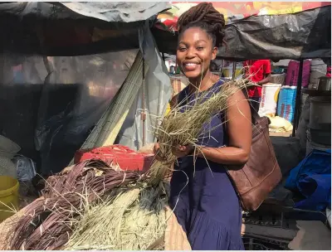
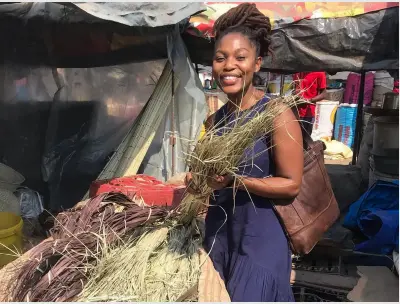
Zimbabwean fashion designer Nkanyeziyethu Malunga has transformed traditional African skills and natural materials into modern clothing, while creating opportunities for rural women and helping preserve the country’s cultural heritage.
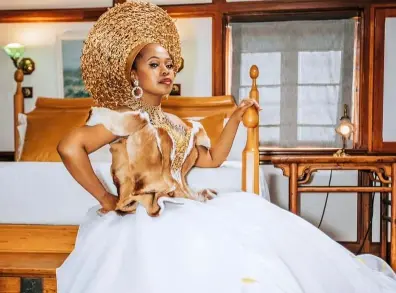
Through her fashion business, GANU, the 37-year-old designer uses plant dyes, basketry, beadwork, leather and traditional patterns to create clothes and accessories. Her work draws on skills passed down through generations and challenges the idea that fashion innovation must come from industrial materials or foreign trends.
At her workshop in Bulawayo, Malunga makes dyes from plants, tree bark and other natural materials gathered from the environment.
“My dyes are mainly extracted from plants such as mnyii and hibiscus. Although I also use many other plants, including tubers, that have properties suitable for dye extraction. I love hibiscus not only for its petals, which produce beautiful dyes, but also for its tea,” she said.
Malunga’s interest in traditional crafts began during visits to her maternal grandmother, Ngatsha Nkatha, in Tsholotsho, a rural district in Zimbabwe. During school holidays, she and her siblings watched their grandmother turn sisal, sedge and reeds into winnowing baskets.
“When I was a child, I often visited my grandmother in the village with my siblings. She was very dexterous with her fingers, and that passion eventually became mutual,” she said.
Malunga began experimenting with fashion as a teenager before launching GANU in 2013. The name comes from iganu, the Ndebele word for marula fruit, and reflects her connection to local resources and African identity.
Her designs combine traditional crafts such as basketry, crocheting, batik and beadwork with natural dyes, leather and other locally sourced materials.
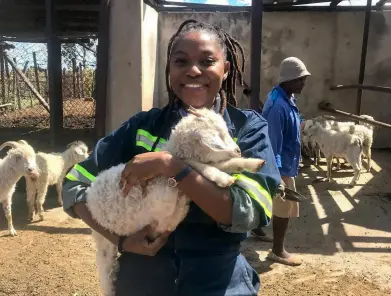
She also keeps Angora goats for their fur, which she straightens and dyes for garment production. She sources cowhide from local abattoirs and has it softened at a tannery before using it in her leather designs.
“I keep Angora goats for the fur needed in garment production. However, for raw materials such as cowhide, I usually source these from local abattoirs while sisal and tree barks are either harvested by me or sometimes extracted by colleagues I work with, who are based in the rural areas,” she said.
Cultural entrepreneur Desmond Ntini, who is based in Bulawayo, said Malunga’s work connects African cultural identity with modern fashion and sustainable business.
“Malunga is redefining the fashion industry by blending traditional African influences with contemporary creativity. Her work explains how our cultural identity can inspire modern designs while opening doors for sustainable fashion, business opportunities, and the celebration of African heritage,” Ntini said.
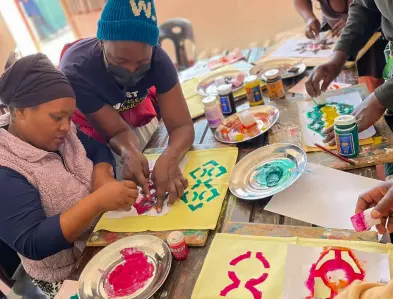
Beyond GANU, Malunga has also used fashion to help preserve traditional Zimbabwean art. In 2024, she founded Matobo Goes Fashion And Beyond, a project that works with women from Matobo in partnership with Ekhaya-gaia, my beautiful home in Zimbabwe, and the Amagugu International Heritage Centre.
The initiative transforms traditional paintings found on rural huts into designs for contemporary clothing.
The project aims to protect cultural patterns that could disappear when rain washes paintings off traditional homes. By reproducing the designs on fabric, the initiative creates another way to document and share them with audiences beyond the communities where they originated.
It also gives local women opportunities to share their knowledge and present their cultural heritage in new ways.
Dr Florence Sebele, a senior lecturer and acting chair of the Department of Art, Design and Technology Education at the National University of Science and Technology in Bulawayo, said Malunga’s work shows the value of indigenous knowledge in modern design.
“By taking indigenous knowledge that has long been undervalued and transforming it into modern fashion, Malunga speaks to our identity, culture and heritage as Zimbabweans and also as Africans,” she said.
“Her work is a powerful reminder that we have so much to take pride in, while for the wider world, it challenges the dominant narrative of what fashion is and where innovation comes from, showing that authentic, rooted African knowledge has global relevance,” she added.
Sebele said the approach could also support cultural tourism, research and creative businesses. She noted that making indigenous knowledge visible could help inform future research and commercial activities.
Malunga’s journey has also involved learning from other custodians of traditional skills. Her grandmother died before she could teach her everything about using indigenous materials and techniques.
“My grandmother’s death came early, before I could master everything on the use of indigenous knowledge in creating contemporary fashion. As a result, I have also learned to tap into the wisdom of various elderly women that I have come across since embarking on this journey,” she said.
Her designs have reached audiences beyond Zimbabwe. She showcased her work at the Durban Fashion Fair in South Africa in 2016 and was nominated for Outstanding Fashion Designer at the 2018 Bulawayo Arts Awards.
She has also worked with markets in Ghana, Europe and the United States. In April 2026, she exhibited under the ZimTrade pavilion at the Zimbabwe International Trade Fair. The organisation’s SheExports initiative has also supported her efforts to explore international markets.
Zimbabwe’s cultural and creative industries contributed an estimated US$2.7 billion to the country’s economy in 2024, representing 5.92 per cent of gross domestic product, according to a study reported in June 2026. The sector also supported an estimated 22,223 jobs.
For Malunga, however, the value of her work goes beyond fashion sales and runway appearances. It lies in preserving traditional skills, recognising the women who hold this knowledge and creating new opportunities for their communities.
“…we learn every day, we learn as we go, and we learn from everyone,” she said.
Read More : Nigeria’s Favour Ojo Eyes Olympic Debut
Her work continues to show how Zimbabwe’s cultural heritage can shape modern fashion while keeping traditional knowledge alive for future generations.
Credit: Rapelang Immaculate Ncube by Bird Story Agency