Trending

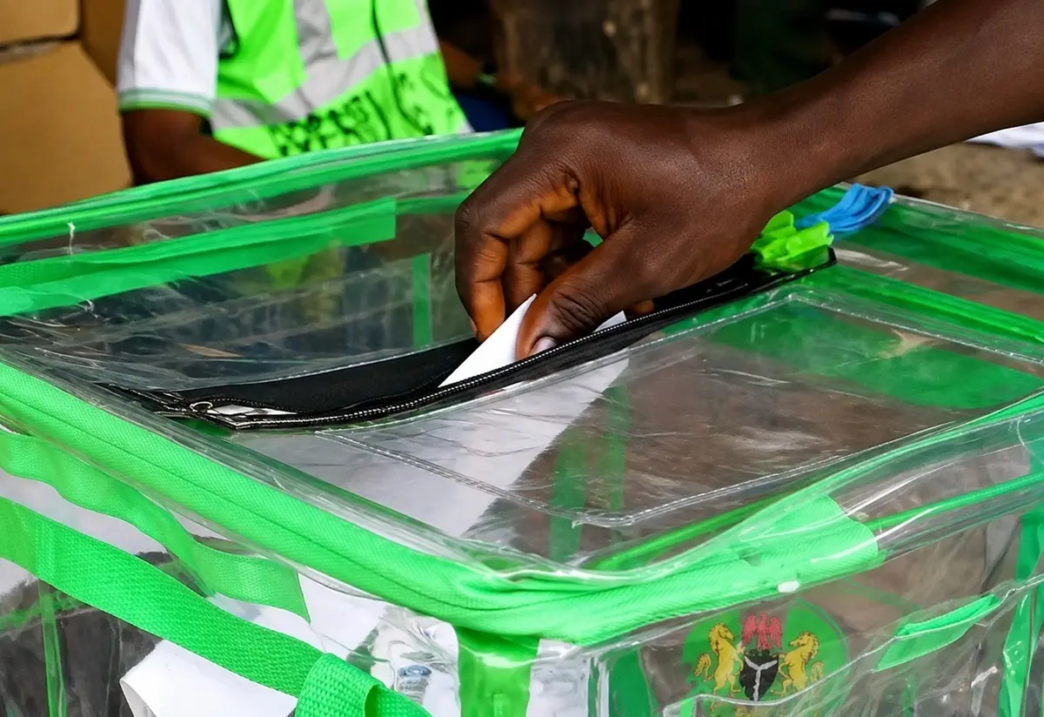
The Independent National Electoral Commission (INEC) says it has begun cleaning up its preliminary Register of Voters after identifying records containing suspected artificial intelligence-generated photographs and other irregularities.
The commission’s Director of Information and Communication Technology, Lawrence Bayode, disclosed this on saying its Automated Biometric Identification System (ABIS) had flagged 268 records for further review.
Bayode said the commission was currently examining the affected records to establish the nature of the irregularities and determine which entries should be removed.
“What we are currently doing now is looking at all these 268 records that ABIS already flagged as AI-generated or even something of irregularities,” he said.
He explained that some individuals allegedly used their official credentials to create questionable voter profiles by exploiting a registration option designed for persons with disabilities who have incomplete or missing fingers.
According to him, the option, known as special registration, was manipulated to deceive the system and was among the irregularities detected by ABIS.
Bayode said INEC had already commenced the process of removing affected records from the preliminary register.
“Those that we have seen, we are cleaning up,” he said.
However, he clarified that the commission would not remove every photograph enhanced using artificial intelligence, distinguishing between entirely AI-generated images and genuine photographs improved with AI-powered tools on mobile phones.
“Those that we know it is the AI on the phone that helped enhance their pictures, we can’t exclude such people because it was the AI on the phone that does that. Such people will still be on the register but those AI-generated, those photographs, all these will be removed. We are already looking at them,” he said.
The development followed the publication of INEC’s preliminary Register of Voters online on October 26, after screenshots circulated on social media showing questionable photographs attached to voter records, including entries from parts of Edo State.
The controversy also involved allegations of duplicate registrations and reports that the names of deceased persons appeared on the register.
In response, INEC said the online version was the same preliminary register displayed physically at Registration Areas across the country between October 9 and 15.
Read More : Otti Flags Off 2027 Campaign, Retains Deputy
The commission explained that the publication did not reflect all the data-cleaning activities already underway.
It also stressed that the register was not yet the final certified version, noting that the display, claims and objections exercise was designed to allow members of the public to identify inaccuracies and questionable entries before certification.
INEC said it would complete the necessary verification, adjudication and data-cleanup processes before certifying the final Register of Voters on December 15, 2026.