


 Trending

Nigeria’s 11 electricity distribution companies collected N222.86 billion out of the N270.49 billion billed to customers in September, leaving N47.63 billion unpaid.
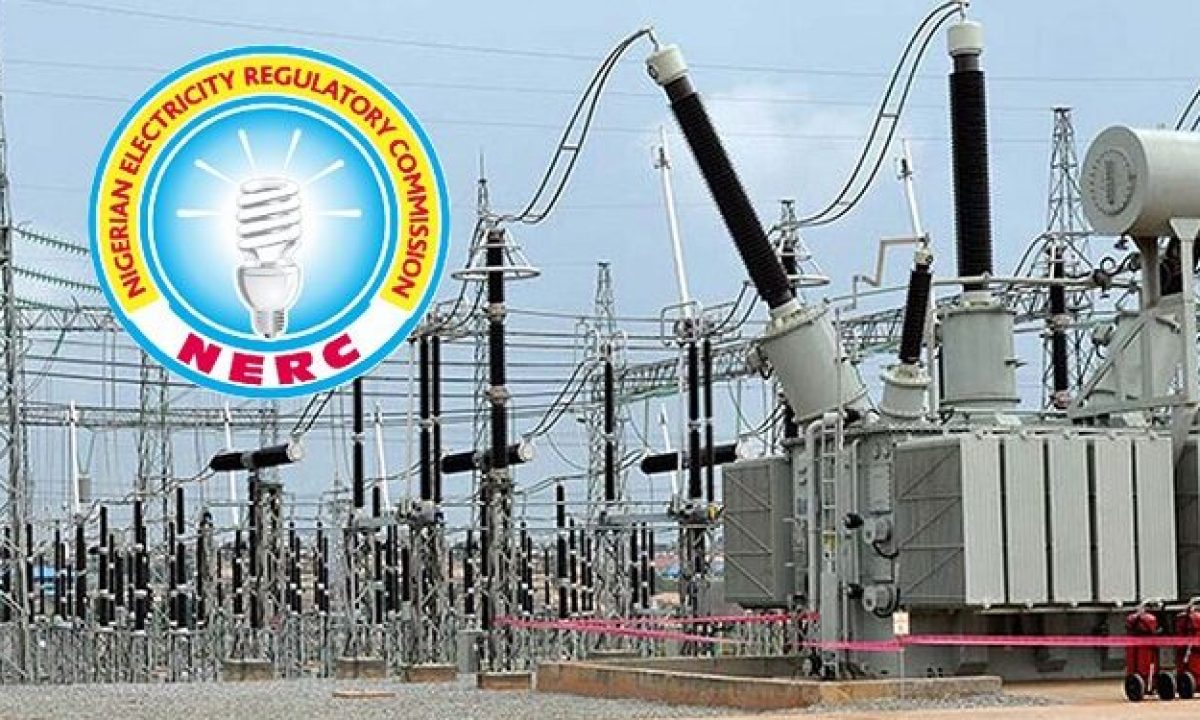
Figures released by the Nigerian Electricity Regulatory Commission on Friday showed that the operators recorded an 82.39 per cent collection efficiency during the month.
The performance represented a decline from 84.62 per cent in August, indicating a drop of 2.23 percentage points.
The decline occurred despite a 3.60 per cent increase in electricity billings and a marginal 0.87 per cent rise in revenue collected.
The figures suggest that higher electricity bills did not translate into a corresponding increase in customer payments.
NERC’s September 2026 factsheet on the commercial performance of distribution companies showed that the 11 operators received electricity valued at N341.05 billion during the month but billed customers N270.49 billion.
This translated to a billing efficiency of 79.31 per cent, representing an improvement of 3.95 percentage points compared with August.
However, the companies recovered only N222.86 billion from the amount billed, leaving N47.63 billion outstanding.
The figures indicate that although the operators improved their billing performance, converting bills into actual revenue remained a major challenge.
A breakdown of the data showed that Ikeja Electric recorded the highest collection efficiency at 99.90 per cent, recovering N41.27 billion out of the N41.31 billion billed to customers.
Enugu Electricity Distribution Company followed with 98.13 per cent, collecting N19.76 billion from N20.14 billion billed.
Eko Electricity Distribution Company recovered N39.98 billion out of N43.23 billion, representing a collection efficiency of 92.50 per cent.
Abuja Electricity Distribution Company collected N39.38 billion from N45.20 billion billed, translating to 87.13 per cent, while Yola DisCo recovered N3.69 billion out of N4.34 billion, representing 85.03 per cent.
However, collection performance was considerably weaker in some parts of the country, particularly Kano and Jos, where the operators recovered less than half of the amounts billed.
Kano DisCo recorded the lowest collection efficiency at 47.75 per cent, collecting N7.13 billion out of N14.94 billion billed to customers.
Jos DisCo followed with 49.52 per cent, recovering N5.45 billion from N11.01 billion, while Kaduna DisCo collected N5.17 billion out of N8.75 billion, representing 59.14 per cent.
Ibadan DisCo also recorded a relatively low collection efficiency of 70.33 per cent, recovering N24.94 billion from the N35.46 billion billed during the period.
Benin and Port Harcourt DisCos recorded collection efficiencies of 78.68 per cent and 77.79 per cent, respectively.
The report further showed that Enugu DisCo recorded the biggest month-on-month improvement in collection efficiency, rising by 20.89 percentage points from August. Its recovery efficiency also increased by 23.10 percentage points.
In contrast, Kano DisCo recorded the steepest decline in collection efficiency, falling by 12.57 percentage points, while Jos DisCo’s figure dropped by 12.47 percentage points.
NERC also reported that the average allowed tariff across the distribution companies stood at N130.15 per kilowatt-hour, while the actual average amount collected per kilowatt-hour was N103.68.
This translated to a recovery efficiency of 79.66 per cent, representing an improvement of 2.03 percentage points compared with August.
Recovery efficiency measures the proportion of the allowed average tariff that distribution companies recover from electricity supplied, while collection efficiency measures the proportion of bills issued that customers actually pay.
Despite the improvements in billing and recovery efficiency, the September figures showed that revenue collection remained a major weakness in the electricity distribution segment.
The performance of the distribution companies is critical to the financial stability of the electricity market because they collect payments from consumers and are expected to remit the appropriate proceeds across the power value chain.
The sector continues to face financial pressures arising from poor revenue recovery, tariff shortfalls, energy losses and payment obligations to electricity generation and transmission companies.
The figures also come amid the Nigerian Government’s efforts to expand transmission infrastructure through the Presidential Power Initiative, including projects being implemented with Siemens Energy to increase the capacity of the national grid.
However, improvements in transmission infrastructure alone may not resolve the financial challenges facing the electricity market if distribution companies continue to struggle with billing customers and collecting payments for electricity supplied.
The NERC data highlighted the uneven performance of operators in September, with some recovering almost all the amounts billed while others collected less than half.
This underscores the need for improved billing systems, revenue collection and commercial operations across the electricity distribution segment.