Trending
From South Africa’s industrial incentives to Kenya’s green number plates, a number of African governments are moving beyond pilot projects to implement comprehensive electric vehicle policies.
Electric vehicle policies in several African countries are shifting from pilots to formal frameworks aimed not only at accelerating adoption but also at positioning the continent as an industrial participant in the EV economy. Beyond environmental goals, the new policies are increasingly treating electric mobility as an industrial, fiscal, and infrastructure priority rather than a niche climate experiment.
South Africa will this year introduce a 150% tax deduction for qualifying capital investments in electric vehicle and hydrogen production, a landmark incentive aimed at boosting local manufacturing and attracting private sector investment. Enforceable as of March 1, 2026, the measure is expected to shape the country’s participation in global EV value chains.
“To encourage production of electric vehicles in South Africa, the government will introduce an investment allowance for new investments, beginning 1 March 2026,” Finance Minister Enoch Godongwana said, a sign of Pretoria’s intent to secure a foothold in green automotive production.
The incentive will run for 10 years and apply to qualifying assets acquired on or after March 1, 2026. To underpin the transition, the government has committed US$50.8 million (R964 million) over three years, with the tax cost projected at US$26.3 million (R500 million) in the 2026/27 fiscal year alone.
These measures are part of South Africa’s 2023 Electric Vehicle White Paper, which outlines a roadmap to shift the automotive sector to a dual production platform, manufacturing both internal combustion and electric vehicles by 2035.
Global EV competition is intensifying. In the fourth quarter of 2025 alone, quarterly battery-electric vehicle (BEV) sales surpassed four million units for the first time across major markets, up 17% year-on-year, according to the Electric Vehicle Sales Review Q4 2025 published by Strategy& and PwC’s Information Service.
For the second consecutive quarter, more than one in five vehicles sold globally were fully electric. Over the full year, BEV sales increased by 30%, driven largely by China’s scale, where volumes rose 33% across 2025. Europe also posted a strong rebound, with sales in its five largest markets climbing 41% in Q4.
In Africa, EV sales more than doubled in 2024 to nearly 11,000 units, though uptake remains below 1% of the market, with Morocco and Egypt each reporting more than 2,000 new EVs sold.
According to industry analysts, the surge presents both risks and opportunities for African economies, depending on whether the continent becomes a producer in the EV transition or simply a growing end market for imported vehicles.
“Without industrial participation, the continent could remain a passive destination for imports,” according to Maxwell Ratemo from the Electric Mobility Association of Kenya. “With targeted incentives, it could capture assembly, component production, and broader clean transport industries.”
That industrial question is already shaping policy choices in South Africa, one of the few African economies with the manufacturing depth to anchor EV production at scale. The country has long been a hub for global automotive brands, and its EV investment allowance is designed to ensure that future production lines do not bypass the continent.
In October 2024, BMW Group South Africa began producing the fourth-generation BMW X3, including the X3 30e xDrive plug-in hybrid, at its Rosslyn plant in Pretoria for export markets. The milestone followed a US$221.1 million (R4.2 billion) investment to electrify the facility and upskill its workforce.
While South Africa focuses on industrial incentives, other African states are moving through regulatory and consumer-facing reforms. Kenya has this week unveiled green number plates for EVs, making zero-emission cars instantly recognisable on roads. Energy Cabinet Minister Davis Chirchir said the plates serve as “tools for enforcement” and incentive targeting, helping governments roll out preferential taxes, parking access, and urban transport reforms.
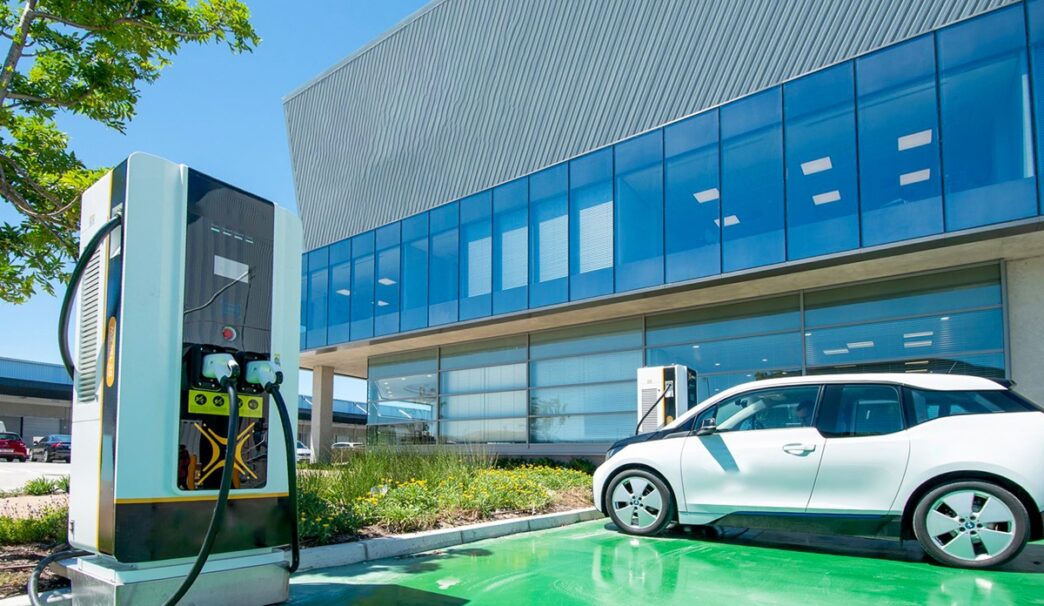
The move follows Kenya’s launch of its National Electric Mobility Policy in early 2026, which outlines the adoption of electric mobility, infrastructure rollout, fiscal incentives, and industrial ambition. Kenya has also announced plans to expand its charging infrastructure, with thousands of stations targeted for 2030 to address one of the biggest barriers to adoption.
According to Rose Mutiso, a science advisor at Energy for Growth Hub, “Countries that pair industrial incentives with reliable policy signals, from tax holidays to manufacturing support, are far more likely to attract long-term capital and local supply chains.”
“Policy certainty turns one-off deployments into sustainable industry growth rather than short lived adoption.”
Across the continent, the EV market is small but active. The Africa E-Mobility Alliance estimates roughly 30,000 EVs were in operation by mid-2025, driven mostly by two- and three-wheelers, delivery fleets, and early-stage public transport electrification. In many countries, electrification is advancing due to commercial necessity: motorcycles, minibuses, and logistics fleets are adopting EVs because fuel costs are high and maintenance savings are immediate.
Rwanda stands out as a policy laboratory. Kigali has extended tax exemptions on EVs, batteries, and charging equipment through 2028, signalling a long-term commitment to affordability and market certainty. The World Bank has highlighted Rwanda’s plans to electrify a significant share of its bus fleet by 2030, framing EV adoption as both a climate and urban development strategy.
Across North Africa, Morocco and Egypt are linking EV adoption to industrial export strategies, positioning themselves as early manufacturing gateways for Europe. Morocco’s automotive sector, already integrated into European supply chains, is attracting new investment.
Renault is exploring a dedicated EV facility near the Nador West Med port, expected to open in 2026, with plans to achieve €3 billion in local sourcing and 80% supply chain integration. BYD’s reported 46% share of Morocco’s hybrid and electric market further underscores the growing industrial momentum.
Egypt is aggressively positioning EVs as both a climate and industrial lever. Under its National Automotive Manufacturing Programme, the government aims to attract global automakers to localise production, reduce fuel dependence, and expand exports. By October 2025, total investment in free zones reached $38.5 billion across 1,237 projects, creating roughly 245,000 direct jobs, with automotive components among targeted sectors. Authorities are evaluating incentives to support local assembly and sustainable transport.
Elsewhere, Ethiopia has taken one of the continent’s boldest regulatory steps by restricting imports of internal combustion engines, accelerating electrification through direct market restructuring rather than through gradual incentives.
Across Africa, Chinese EV technologies are driving a techno-social mobility revolution. BYD dethroned Tesla as the world’s top EV seller with 2.25 million vehicles in 2025. The milestone was achieved following its Morocco launch, which included a US$5 billion manufacturing facility in Kenitra. Elsewhere, Kenya’s TAD Motors launched its first locally built EV prototypes using Kenyan steel and Chinese batteries, aiming for 90% local content by 2026. Reports indicate that South Africa is set to welcome six additional Chinese brands this year, and Ghana is courting Chinese EV makers for production and assembly.
Infrastructure and industrial policy are also beginning to converge in Nigeria. This week, the Federal Ministry of Industry, Trade and Investment signed an MoU with South Korea’s Asia Economic Development Committee to develop EV manufacturing capacity alongside charging infrastructure, signalling Abuja’s ambition to move beyond imports. The government says the project will begin with vehicle assembly before scaling toward full local production and technology transfer.
Yet challenges remain. High upfront costs, limited charging networks, weak grids in some markets, and the absence of large-scale financing mechanisms constrain uptake.
Credit: Bonface Orucho, Bird Story Agency.