Trending

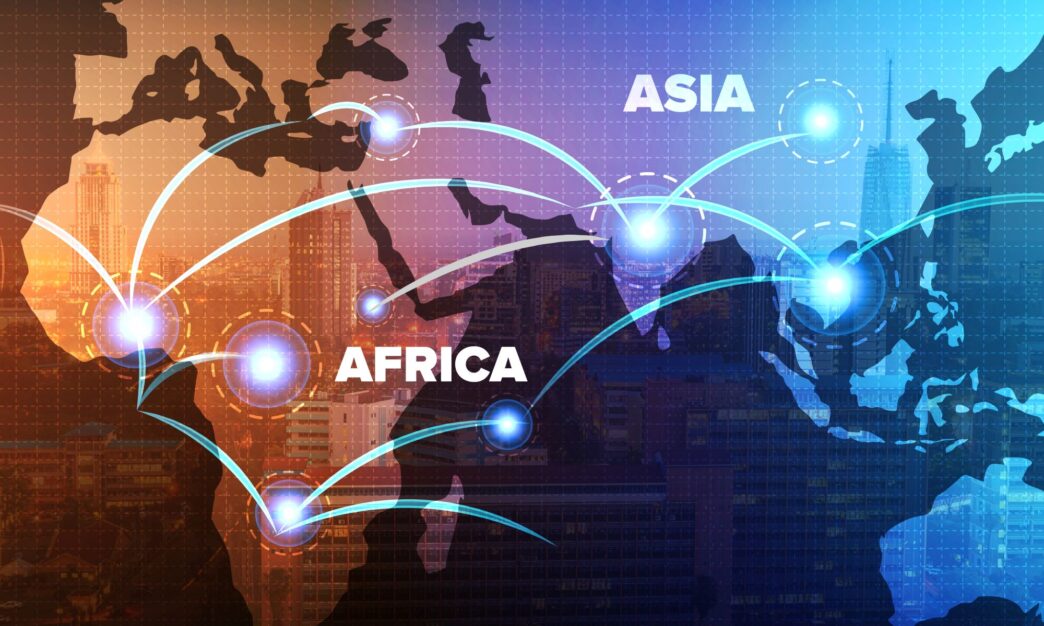
While the overall economic growth rate for the Asian and Pacific region is projected to continue its slowdown this year, Africa’s positive outlook is pegged to a weaker US dollar, a loosening of debt and inflationary pressures, strong gold and copper prices, and robust growth across various sectors.
Economic growth in Africa is expected to surpass that of Asia for the first time in 2026. While economists have varying growth rate predictions, they agree that Africa’s economy is rising while Asia’s is slowing, offering a significant opportunity for the continent to grow faster than Asia.
Mentoria Economics Chief Economist, Ken Gichinga, said that Africa’s projected high growth rate will be anchored by falling global interest rates, stronger capital inflows and buoyant commodity markets.
“The expectation of lower interest rates is likely to boost economic activity in the continent. So you are finding, like in Kenya for example, we’ve seen interest rates coming down and that is expected to boost the economy,” said Gichinga.
Average global headline inflation declined to an estimated 3.4 % in 2025 from 4% in 2024 and is projected to slow further to 3.1% in 2026, according to the World Economic Situation and Prospects 2026.
“In developing countries, average inflation is projected to moderate from an estimated 4.2% in 2025 to 3.9 %in 2026, mainly due to reduced depreciation pressures and falling prices for energy and key food commodities such as cereals.
Gichinga cited that expected interest rate cuts in the United States could channel more capital into African markets through large dollar flows, boosting liquidity, easing the debt burden, and bolstering local currency stability.
“We expect to see quite a bit of stability on the local currency and to some extent also appreciation, which definitely will make it easier to pay those dollar debts. An appreciation of local currencies will be good for those debt repayments,” he added.
The International Monetary Fund has the highest growth projection for Africa, with expectations that the Sub-Saharan Africa economy will expand from 4.1% in 2025 to 4.4% this year, edging past Asia’s 4.1% 2026 projection. The United Nations’ World Economic Situation and Prospects 2026 shows marginal growth for Africa, from 3.9% in 2025 to 4%, affirming the continent’s resilience despite headwinds such as declining official development assistance, rising trade barriers, and an uncertain global trade and financial environment. Both the IMF and the UN, as well as independent economists’ reports, expect the East Africa region to remain a major driver of continental growth, with countries like South Sudan, Uganda, Rwanda, and Ethiopia projected to have growth rates exceeding 7%.
“East Africa for some time has been a bright spot and has been a critical part of growth,” said Gichinga.
South Sudan is forecast to post the world’s highest growth rate at 22.4%, driven by the resumption of oil exports through its main pipeline in April 2025, following repairs to damage sustained in February 2024. Guinea has Africa’s second highest rate at 10.5% followed by Sudan at 9.5 %. Guinea’s growth is anchored in its expanding mining sector, with exports of aluminium ores and concentrates rising 31.7 % year-on-year to 100,864 tonnes in the eight months to August 2025, according to Guinea’s National Institute of Statistics.

Countries such as Rwanda, Ethiopia and Côte d’Ivoire have posted strong growth despite conflict or post-conflict conditions, showing their resilience beyond immediate flashpoints. Ethiopia, in particular, has emerged as one of Sub-Saharan Africa’s fastest-growing economies after years of conflict, debt distress, and foreign-exchange shortages. It is now banking on an ambitious development agenda anchored in the liberalisation of its financial and telecommunications sectors.
Gichinga said strong performance in gold and copper is also boosting revenues for producing countries, while agricultural commodities such as cocoa remain in tight supply. Ghana and Côte d’Ivoire, which together supply about 60% of global cocoa, he said, are benefiting from high prices.
Zambia, Djibouti and Tanzania are forecasted to expand by between 6% and 6.7%, making up nine out of 17 countries across the world expected to have the highest growth, making Africa home to the largest number of economies with GDP growth of at least 6 per cent in 2026, ahead of Asia, where only a handful of countries including Uzbekistan (6 %), India (6.2 % and Bhutan (7.4 %), are expected to reach that threshold.
But there are caveats to the positive economic prospects. Economists say the weather will determine how agriculture supports expectations of lower interest rates.
Credit: Conrad Onyango, Bird Story Agency