Trending


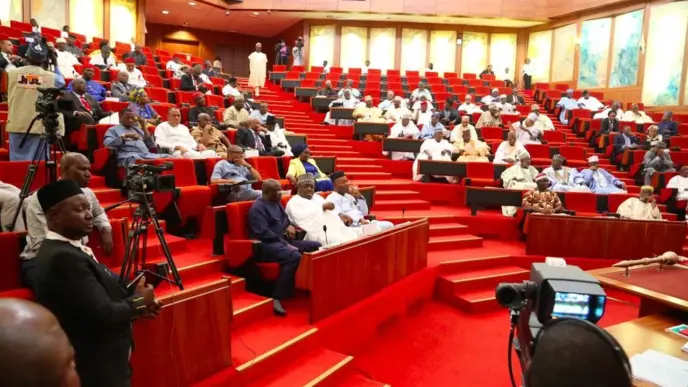
Senate President Godswill Akpabio has pushed back against criticism trailing the National Assembly’s review of the Electoral Act, insisting that lawmakers have not scrapped electronic transmission of election results.
Speaking in Abuja at the launch of ‘The Burden of Legislators in Nigeria’, written by Senator Effiong Bob, Akpabio said public reaction to the proposed amendment was premature, stressing that the legislative process was still ongoing. He maintained that the Senate only questioned the inclusion of “real-time” transmission in the law, not electronic transmission itself.
His comments follow backlash from opposition parties and civil society groups over reports that the Senate rejected mandatory real-time electronic transfer of election results.

The Nigerian Bar Association (NBA) had urged lawmakers to make electronic transmission compulsory, arguing in a statement that retaining the existing provision, which allows results to be transmitted in a manner determined by the Independent National Electoral Commission (INEC), weakens safeguards for transparent elections and leaves room for ambiguity.
Responding to the concerns, Akpabio said the amendment had not been finalised and criticised commentators for drawing conclusions before the Senate concluded deliberations.
He argued that a bill before the chamber remains subject to further review until it is fully passed and recorded in the Votes and Proceedings.
He also faulted what he described as attempts by some civil society actors to dictate legislative outcomes, noting that consultations held during retreats do not automatically translate into decisions on the Senate floor.
Clarifying the Senate’s position, Akpabio said lawmakers had not eliminated any method of transmitting results.
Rather, he explained that the word “real-time” was being reconsidered because technical failures, such as network disruptions or power grid collapses, could trigger legal disputes and potentially invalidate results.
According to him, mandating real-time transmission could create complications in areas facing insecurity or poor connectivity. He warned that if strict real-time compliance were enforced nationwide, elections in states with limited network coverage could be challenged in court.
Akpabio added that INEC should retain the authority to determine how and when results are transmitted within the framework of the law. Electoral reforms, he said, must reflect the country’s institutional and technological realities.
He cautioned that misunderstanding legislative procedures could undermine democratic processes, emphasising that democracy requires adherence to principles and public engagement.