Trending
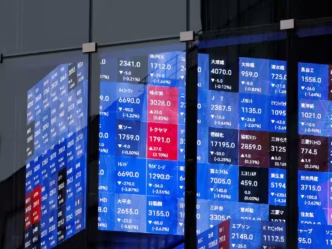
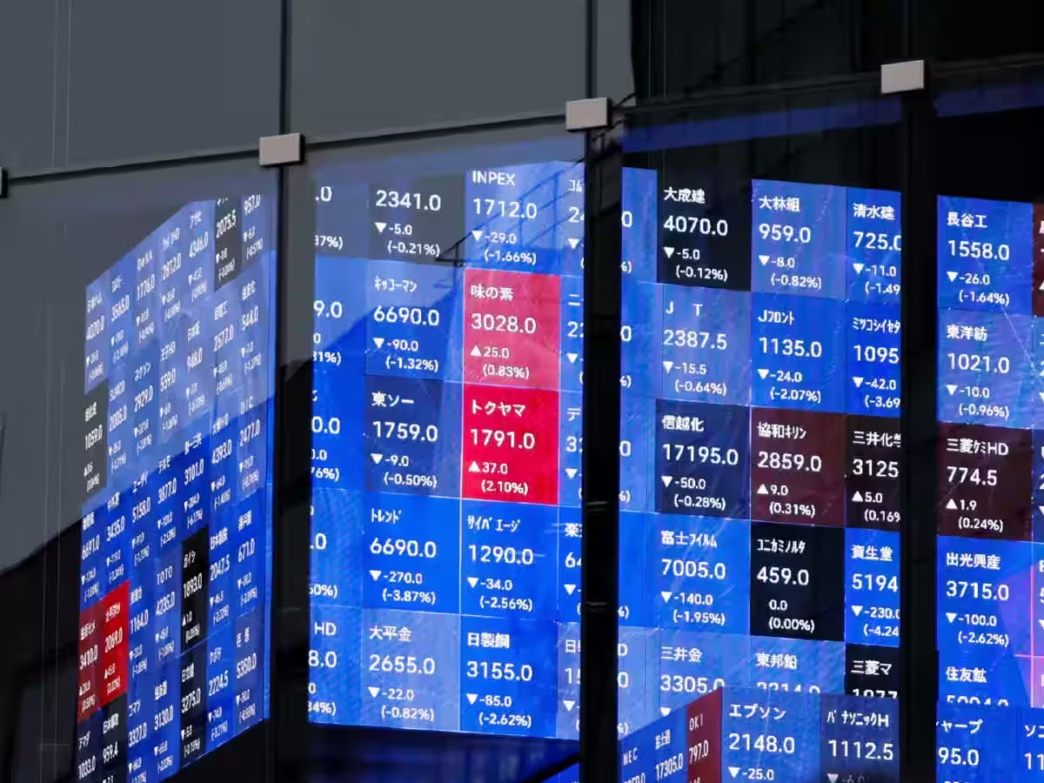
Panic selling gripped Asian equity markets on Wednesday, with South Korea’s KOSPI index collapsing by more than 12 per cent in its worst two-day performance since the 2008 financial crisis.
The market turmoil follows five days of joint U.S.-Israeli military strikes on Iran, sparking deep-seated fears that a prolonged conflict will choke Middle Eastern energy supplies and trigger a global economic downturn.
While U.S. President Donald Trump attempted to calm nerves by promising naval escorts for oil tankers in the Strait of Hormuz, the threat of a wider regional war continues to drive investors toward the exit.
The surge in crude prices is hitting Asia particularly hard due to the region’s heavy reliance on imported energy.
West Texas Intermediate has jumped 12 per cent since Friday, while Brent crude sits above $82, with analysts warning that prices could eventually breach the $100-per-barrel mark.
This “energy tax” is forcing export-driven economies to recalculate their profit margins rapidly.
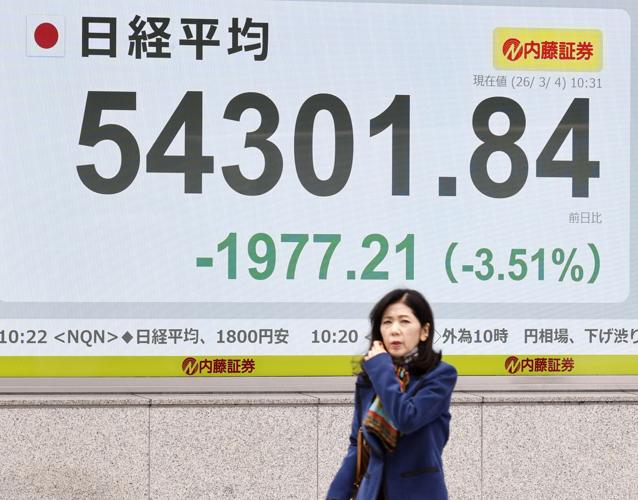
Tech giants were not spared; Seoul’s semiconductor leaders, Samsung and SK Hynix, both plummeted roughly 10 per cent, while Japan’s Nikkei 225 dropped over 4 per cent as the artificial intelligence boom was overshadowed by geopolitical risk.
Beyond the immediate market crash, the spike in energy costs has effectively derailed hopes for imminent interest rate cuts.
With natural gas prices in Europe hitting levels not seen since the invasion of Ukraine, central banks are now grappling with renewed inflationary pressure.
While the Federal Reserve and the European Central Bank are expected to postpone planned monetary easing, some analysts suggest that other institutions, including the Bank of England, may be forced to raise interest rates to keep inflation in check.