Trending
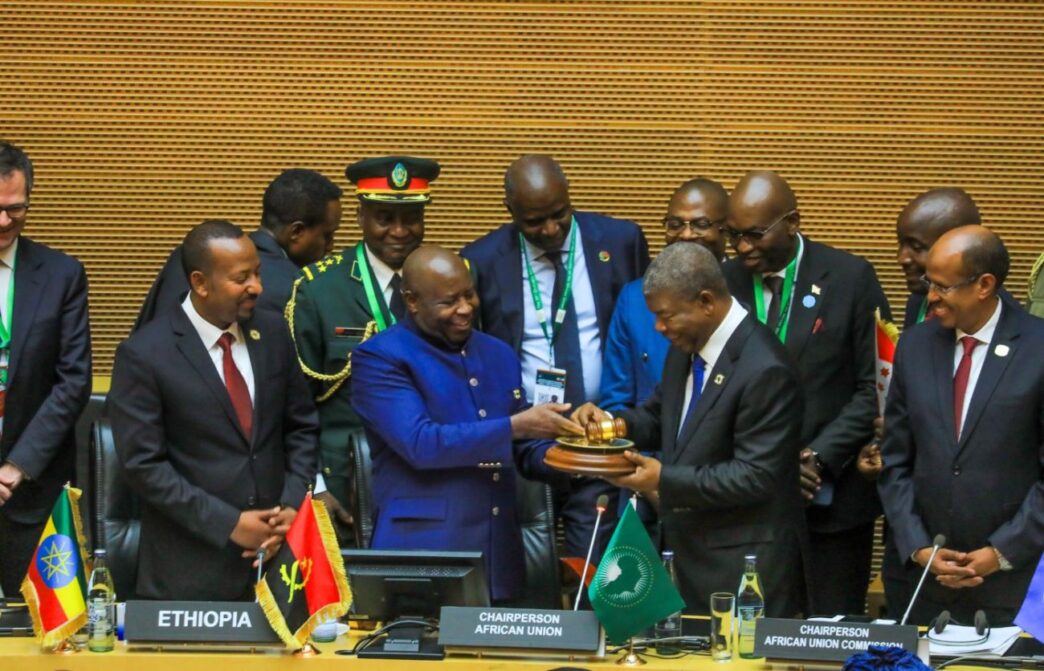
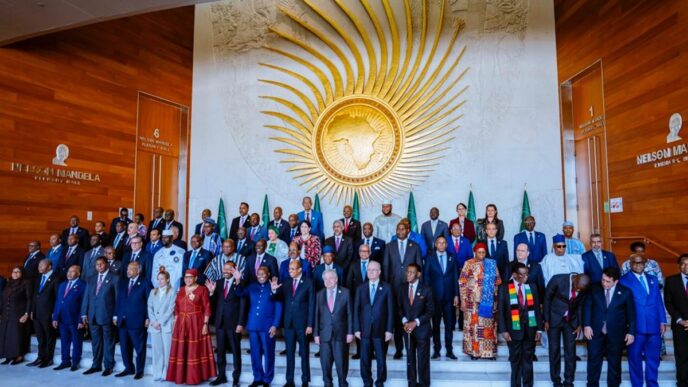
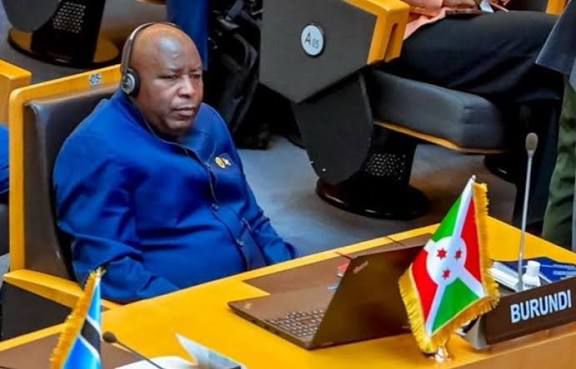
African leaders have elected Burundi’s President, Évariste Ndayishimiye, as Chairperson of the African Union for 2026 at the 39th Ordinary Session of the Assembly of Heads of State and Government in Addis Ababa, Ethiopia.
The two-day summit, held at the AU headquarters under the theme “Assuring Sustainable Water Availability and Safe Sanitation Systems to Achieve the Goals of Agenda 2063,” opened with strong calls for African solidarity, financial independence and renewed momentum for institutional reform.
At the close of the opening session, President Ndayishimiye formally assumed office as AU Chair, succeeding João Manuel Gonçalves Lourenço under the Union’s rotating leadership arrangement.
The new Bureau of the Assembly for 2026 includes Burundi as Chair (Central Africa), Ghana as First Vice (West Africa), Tanzania as Second Vice (East Africa), a representative from North Africa as Third Vice (to be confirmed), and Angola as Rapporteur (Southern Africa).
Chairperson of the AU Commission, Mahmoud Ali Youssouf, in his address to the Assembly, described access to water as a collective good that must advance both development and peace.
He warned that the continent was meeting at a time of “mounting geopolitical turbulence”, citing persistent conflicts, institutional fragility and unconstitutional changes of government in parts of Africa.
Youssouf stressed that institutional reform and financial self-reliance had become urgent as external funding declines. He urged member states to intensify domestic resource mobilisation and fast-track flagship programmes in industrialisation, agricultural transformation, energy and infrastructure, which he said were critical for sustainable growth.
He also noted rising expectations among Africa’s youth, women, and civil society, and insisted that this phase of Agenda 2063 must deliver measurable results.
Outgoing AU Chair and President of Angola, João Manuel Gonçalves Lourenço, formally opened the summit, describing water access as a “political, moral and strategic priority” central to public health, food security and stability.
Reviewing his tenure, Lourenço stated progress in advancing Agenda 2063, strengthening continental integration through the African Continental Free Trade Area (AfCFTA), and promoting reforms to enhance AU efficiency.
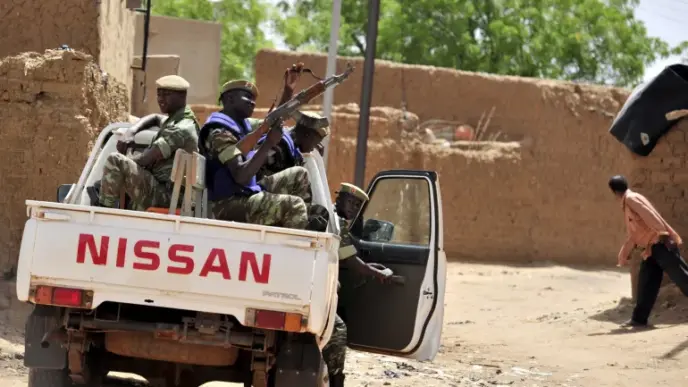
On peace and security, he reiterated that Africa’s development depends on “silencing the guns”, referencing conflicts in Sudan and the Democratic Republic of the Congo, as well as terrorism in the Sahel and the Horn of Africa.
He also reaffirmed the AU’s rejection of unconstitutional changes of government.
Meanwhile, Ethiopian Prime Minister Abiy Ahmed called on Africa to move from reacting to global developments to shaping the global agenda.
He urged greater unity and confidence, stating Ethiopia’s investments in artificial intelligence and technology as part of a broader vision aligned with Agenda 2063.
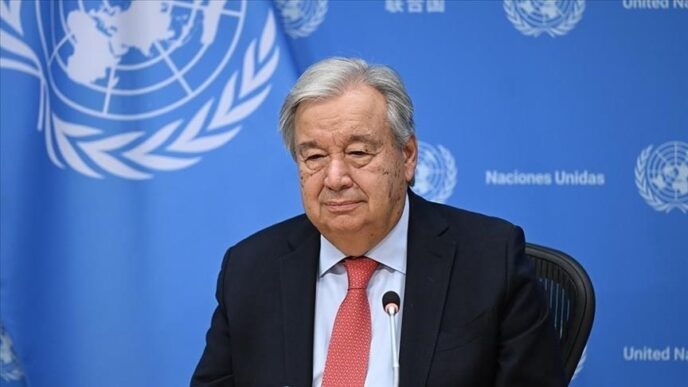
United Nations Secretary-General António Guterres also reaffirmed the strategic partnership between the UN and the AU, noting that multilateral cooperation is essential for peace and sustainable development.
He reiterated support for reform of the UN Security Council, including stronger African representation, and pledged continued backing for Africa’s industrialisation and development financing needs.
Deliberations continue, with leaders focusing on water security, sanitation, peace, and institutional reform across the continent.