Trending
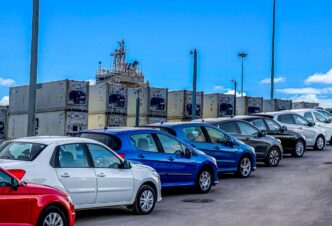
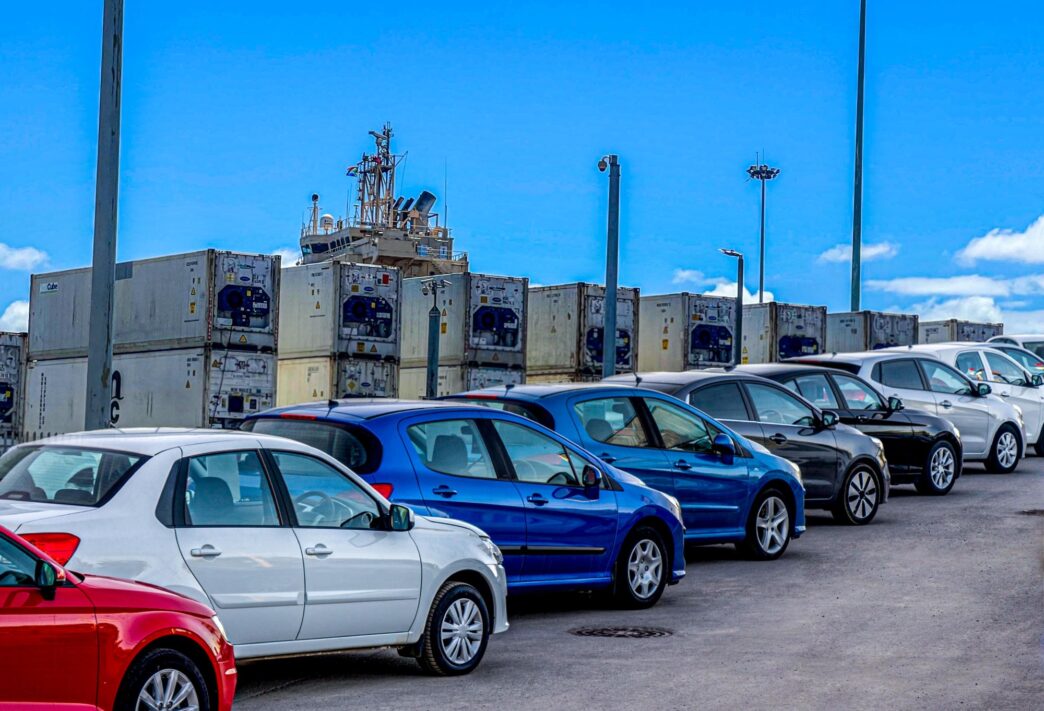
New cars are hitting Africa’s roads faster than ever as local production rises and Chinese brands heat up competition with attractive prices. Morocco is accelerating production to over one million units, surpassing South Africa’s nearly 600,000 units.
After years of shortages, high prices and delayed purchases, cheaper imports, lower interest rates and a surge in local assembly are finally easing pressure on buyers, pushing new vehicles back onto showroom floors and Africa’s roads. In several countries, including South Africa, Morocco, and Kenya, data show manufacturers are building and assembling more cars closer to home as Chinese automakers flood local markets with cheaper, feature-rich models.
“Many drivers are upgrading because financing is easier and the newer models are cheaper to maintain, especially the Chinese ones,” said John Karimi, an Uber driver in Nairobi.
Karimi said people driving very old cars are switching to new ones as ride-hailing drivers increase demand for fuel-efficient, reliable vehicles. Research firm Mordor Intelligence’s Africa Automotive Market Outlook 2026–2031 estimates that the continent’s automotive market will be worth US$22.63 billion in 2026, up from US$21.55 billion in 2025, with projections indicating it could reach US$28.93 billion by 2031.
“Rising urban middle-class spending, accelerated Chinese Completely Knocked Down (CKD) and Semi-Knocked Down(SKD) investments, and AfCFTA tariff liberalization collectively set a positive demand trajectory for the Africa automotive market,” Mordor Intelligence said in the outlook.
The report identifies rising urban middle-class car ownership as a pan-African trend, with the strongest momentum in Nigeria, Kenya and Ghana, while highlighting Chinese automotive investments as a key growth driver in South Africa, Morocco, Kenya and Rwanda. The expansion of ride-hailing and delivery fleets is also boosting demand across major urban centres, particularly in Nigeria, Kenya, South Africa, and Ghana, as e-commerce and app-based transport continue to scale.
In South Africa, new vehicle sales rose 15.7% to 596,818 units in 2025, up from 515,976 in 2024. Passenger cars recorded the strongest growth, jumping 20.1% to 422,292 units, followed by light commercial vehicles at 7.8%. The National Association of Automobile Manufacturers of South Africa (Naamsa) attributed the surge to political stability, improved liquidity, and a sharp easing in vehicle inflation, which fell to a record low of 1.5%.
Naamsa Chief Executive Officer, Mikel Mabasa, said in a statement that lower interest rates helped revive vehicle financing, unlocking pent-up demand from consumers who had delayed purchases between 2021 and 2024 and were now re-entering the market to replace ageing vehicles.
“A significant influx of affordable vehicle imports in 2025, particularly from China and India, which, combined with lower inflation and interest rate cuts, dramatically enhanced new car sales, challenging domestic OEMs but satisfying consumer demand, ” said Mabasa.
A similar trend was observed in Morocco’s automotive market, which posted a historic 33% surge in sales in 2025, driven by renewed consumer demand, the rapid adoption of hybrid and electric vehicles, and an influx of Chinese automakers. The North African country’s total sales reached 235,372 units by the end of December, up from 176,401 units in 2024, according to the Association des importateurs de véhicules au Maroc (AIVAM).
“Several additional Chinese brands are expected to enter the Moroccan market in 2026, capitalising on fast-growing consumer interest in sustainable mobility solutions,” said AIVAM president Abdelouahab Ennaciri.
Private buyers accounted for the largest share of Moroccan sales at 42%, followed by rental companies at 34% and commercial buyers at 23%. European car brands retained a dominant position in the Moroccan auto market, accounting for 75% of total sales, followed by South Korea at 10%, Japan at 5% and China at 7.7%. Chinese brands recorded their strongest gains in the fourth quarter, lifting their share to 9.4%, with forecasts placing their 2026 market share between 10% and 15%.
While Morocco’s new vehicle sales are still lower than South Africa’s, it recorded Africa’s highest growth rate and even surpassed South Africa’s annual output after producing around one million vehicles in 2025, compared to South Africa’s approximately 554,613 units between January and November 2025.
In Kenya, the new-vehicle market also experienced a strong rebound in 2025, with sales surging nearly 20% to 13,583 units, up from 11,352 in 2024. Data from the Kenya Motor Industry Association (KMIA) shows that while the market peaked at 1,185 units in December 2024, sales reached a higher monthly peak of 1,384 units in August 2025.
The growth was buoyed by the Central Bank of Kenya (CBK) ‘s progressive interest rate cuts, which lowered financing costs and supported a recovery in business confidence. The CBK reduced its base lending rate eight times, from 13% in June 2024 to 9.25% by late 2025, prompting commercial banks to lower their lending rates. Average lending rates fell to 15.07% in September 2025 from 16.91% a year earlier.
As the three countries experience a surge, Angola is reviving local vehicle manufacturing after years of reliance on costly imports. Opaia Motors, the country’s first and only operational vehicle assembly plant, was recently opened in Luanda with the capacity to build 22,000 light vehicles and 1,000 buses annually.
The company plans to assemble white-label vehicles locally under its own brand, partnering with Chinese brands such as Chery and Dongfeng for passenger vehicles and sourcing buses through Volvo. Opaia Group Chairman and Chief Executive Officer, Agostinho Kapaia, said that by providing locally produced vehicles, Angola will directly address the clear need for affordable, fit-for-purpose transport solutions.
“This will not only see the country reduce its reliance on imported vehicles from international competitors but will also simultaneously create opportunities to export these vehicles, generate local employment, and contribute to the diversification and long-term growth of Angola’s economy,” said Kapaia in a statement.
Credit: Conrad Onyango, Bird Story Agency