Trending
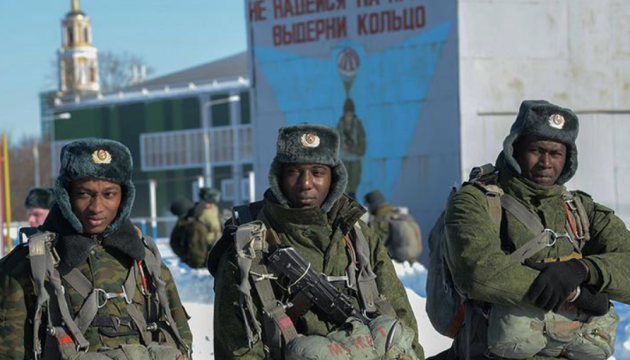
A war miles away from Africa has woven the continent in a complicated web of foreign policy and diplomatic pressures, and illegal war recruitment risks, exposing how global conflicts can reshape the lives of young Africans seeking greener pastures away from home.
When the war first broke out between Russia and Ukraine in 2022, the Russian Government dubbed it a “special military operation”. Now in its fourth year, the conflict has claimed thousands of lives on both sides.
While Russians and Ukrainians continue to mourn their dead, grief is also spreading far beyond Europe. Across Africa, families are mourning relatives who were drawn into a conflict they never intended to fight, far from home.
Ukrainian Foreign Minister Andrii Sybiha revealed that over 1,700 Africans are fighting for Russia in its war in Ukraine. According to Sybiha, Russia lured these Africans into the war using deception.
“We clearly see that Russia is trying to drag African citizens into a deadly war. According to our data, there are currently over 1,780 citizens from the African continent fighting in the Russian army,” said Sybiha.
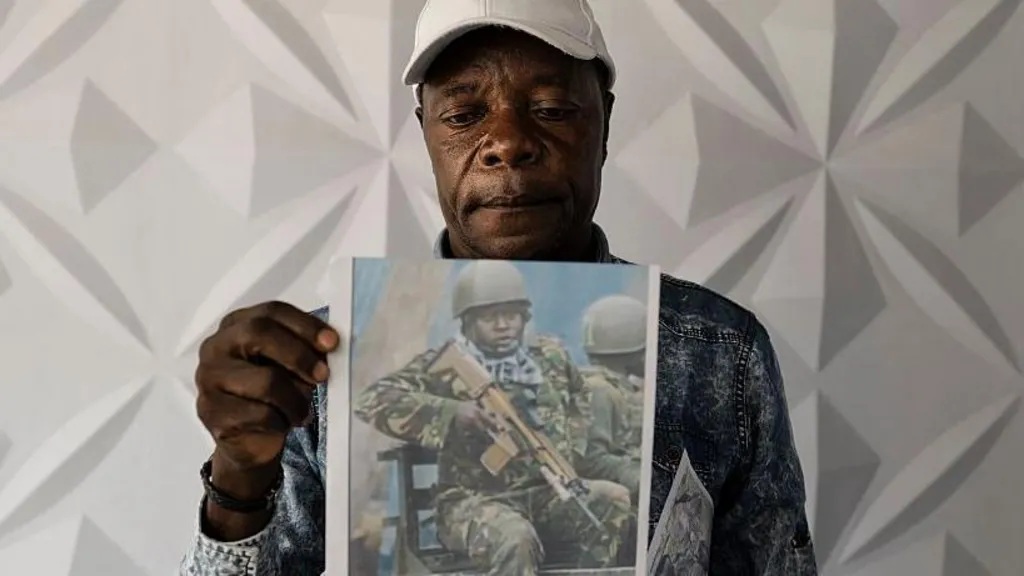
Sybiha’s claim is consistent with survivor testimonies from Africans who were tricked into the war.
Migration Dreams That Led to War
The path that led some Africans to Europe’s deadliest conflict since World War II began with promises of greener pastures and better opportunities, before placing them on the frontlines of a war in which neither side appears willing to concede on the battlefield.
Since the war started, Russia has conscripted about 18,000 foreigners to fight the war against Ukraine. While Ukraine says about 1780 of the foreign fighters come from 36 different countries across Africa, an independent French researcher suggests the figures may be higher, with about 3000 Africans in total. Some of whom are nationals of Cameroon, Ghana, Egypt, Kenya, Sudan, South Africa, Nigeria, Algeria, and Gambia. Reports estimate that approximately 150 Cameroonians, 50 Burkinabe and 25 Egyptians have died.
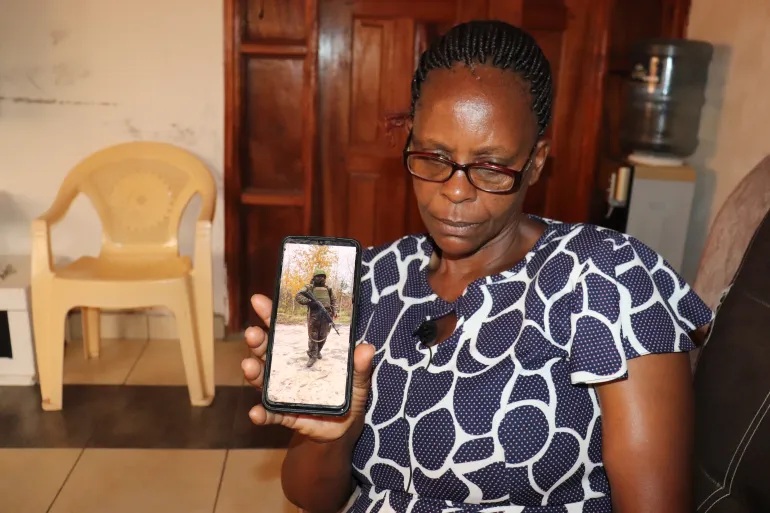
Credit: Dominic Kirui/Al Jazeera.
Though tongues and culture may differ, these countries share similar economic, social and migration pressures that make some of their citizens vulnerable to deceptive recruitment linked to Russia.
In countries like Nigeria and South Africa, youth unemployment remains high, and migration is widely seen as a pathway to economic mobility. Nigeria coined a term for it–japa. So, when foreign recruiters promise work visas, accommodation, and wages higher than what they earn back home, many job seekers quickly accept.
This was the case of Benjamin Oloko, a 31-year-old Nigerian who arrived in Russia in mid-2025 after being introduced to a security job promising $1,500 monthly and a $20,000 sign-up bonus. The sum, which was converted to roughly ₦29.5 million at the time, seemed like a mouth-watering offer to Oloko, a trader at Aleshinloye Market in Ibadan, Oyo State, before embarking on the 15-hour flight to Russia.
The promises vanished when he arrived in Russia, and Oloko realised he had been sold a lie. When the recruitment agents handed him some documents to sign, he refused, and his passport was confiscated.
“We were threatened and put under serious pressure to sign the contract. The Russian agent, a middle-aged woman, warned that our refusal to sign the contract would make her lose money,” said Oloko.
He survived despite the threats hurled at him and returned home to Nigeria, but many others he met there had worse fates.
The 31-year-old said two of the African recruits he met have died in the war, while one escaped with injuries from a bomb blast and is still hospitalised. He added that many Africans were forced to continue training despite sustaining injuries.
According to a senior lecturer of History and International Studies at the Lagos State University (LASU), Professor Dapo Thomas, no law hinders Nigerians from fighting in foreign wars, and Nigerians can, of their own free will, choose to fight on the side of a foreign army.
He, however, added that when a country forcefully conscripts foreigners into joining a war or recruits them under dubious means without a formal arrangement, it becomes illegal.
“From the interviews and videos I saw, some of them said they were they were told. While some said they were not informed. So I don’t know which one to believe, but I’m sure that if it was under false pretenses, then that’s illegal. I don’t know whether you can call it human trafficking,” said Professor Thomas.
For Adamu Abubakar, a former Nigerian Naval officer who fled to Russia after being promised a $2,000 monthly salary, surviving the war came at a cost. His experiences led him to seek mental care in psychiatric clinics after surviving the war.
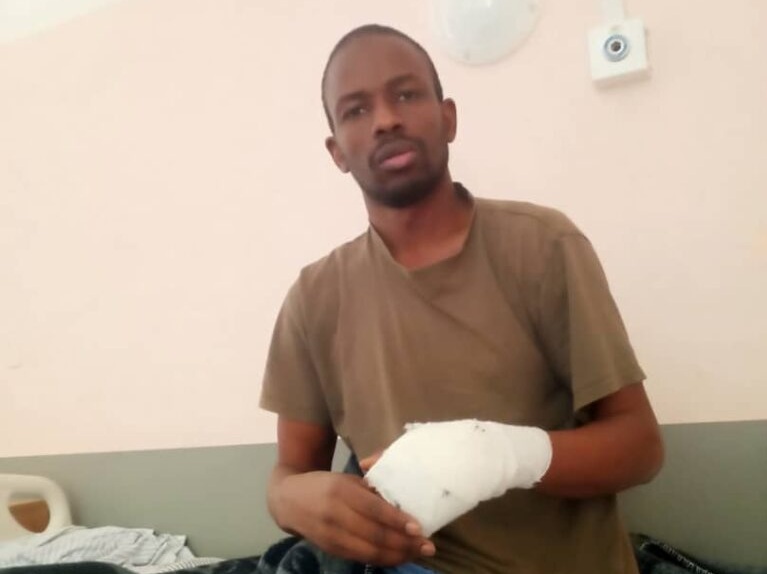
Abubakar’s wife told FIJ that her husband and other Africans who were recruited under dubious means were forced to sign a contract written in Russian without any interpreter being available. Medical information obtained by FIJ revealed he now suffers from anxiety-depressive syndrome and adjustment disorder.
“The patient [Abubakar] does not maintain eye contact. The main complaint is the presence of severe, almost contact anxiety. Experience fear, Afraid to return to his duties,” a psychiatrist under the Ministry of Defence wrote.
“Openly declares and threatens to harm himself. ‘Give me a knife and I will cut myself. Give me a machine gun and I will shoot myself.’ He asks for a lethal injection. Also complains of headache, general weakness and fatigue.
“The patient noted sleep disturbances, difficulty falling asleep, night awakenings and nightmares. He complains of poor appetite. He is fixated on personally significant traumatic experiences and his health. He is emotionally unstable. He cries during conversations and occasionally whispers something under his breath.”
The Illegal Recruitment Pipeline
Recruiters operating online and through migration brokers have advertised jobs in Russia ranging from construction to security. Interviews with migrants and migration experts reveal that some of these offers have masked a more troubling reality—a recruitment pipeline feeding foreign labour and manpower into Russia’s war.
Recruiters often target economically vulnerable Africans with promises of large sums that translate into significant local earnings, as Oloko’s experience shows.
ADDO, a research think tank, revealed that posts promoting these offers are common on social media platforms such as VKontakte, Facebook, Telegram, TikTok and X. After analysing around 132,000 military service promotions posted on VKontakte since January 2022, a London-based research group OpenMinds found that by mid-2025, one out of every three posts was targeting foreigners, a sharp rise from just 7% the previous year.
ADDO further revealed that some recruitment agents have used military simulation video games, such as Arma 3, to successfully recruit players.
The recruitment pipeline relies on agents and influencers who are paid for every person they successfully recruit. Many survivors report being forced to sign contracts written in Russian without access to an interpreter, while their passports were confiscated, leaving them trapped and powerless far from home.
Russia has, however, repeatedly denied allegations that it is deceptively recruiting foreigners for the war, insisting that any non-Russian nationals fighting alongside its forces joined voluntarily under legal military contracts.
Varied Responses to a Growing Continental Crisis
Across Africa, governments are responding differently to the alleged forced Russian military recruitment.
In Kenya, the issue has drawn parliamentary attention, with lawmakers debating the alarming reports of citizens being recruited to fight in Russia’s war in Ukraine.
In February, an intelligence report presented to lawmakers revealed that the Russian government had reportedly deployed over 1,000 Kenyans to fight alongside Russian forces in the ongoing war. The Kenyan government has since demanded the repatriation of citizens killed or captured while allegedly fighting for Russia and has launched investigations into the recruitment networks. One individual, identified as Festus Omwamba, was arrested after he was accused of recruiting fighters for Russia in the ongoing conflict.
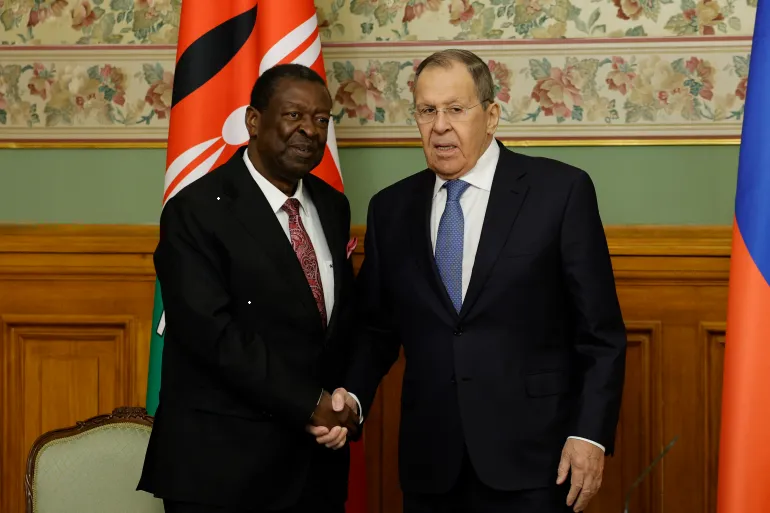
Kenya’s Foreign Minister, Musalia Mudavadi, travelled to Moscow, Russia’s capital, on March 15 to demand an end to the alleged forced conscription of Kenyan nationals into the Russian military. Kenya’s move has yielded positive results.
Following talks with Russia’s Foreign Minister Sergey Lavrov, Mudavadi disclosed that Russia has agreed that Kenyans would no longer be recruited to fight for Russia in the war.
Egypt, meanwhile, has taken a firmer approach. The government revoked the citizenship of a 22-year-old man for fighting for Russia in the war. Authorities have also imposed a security clearance requirement for citizens travelling to Russia and warned that serving in any foreign military could result in a life prison sentence upon return.
By contrast, the Cameroonian government has not taken a strong public stance. No well-publicised repatriation efforts or crackdown on recruitment networks have been reported, despite reports that some of its nationals have been recruited into the war through dubious means.
In Botswana, officials confirmed in 2025 that they were working with law enforcement and through diplomatic channels to verify reports involving two young Batswana allegedly deceived into travelling to Russia under the guise of short-term military training, only to be drawn into the conflict. Efforts were reportedly underway to ascertain their whereabouts and bring them home safely.
The Ghanaian Foreign Minister, Samuel Okudzeto Ablakwa, visited Ukraine and urged Ukrainian President Volodymyr Zelensky to release two Ghanaian nationals who were captured as war prisoners after fighting with Russia. Ablakwa, however, said the problem should be treated as a continental crisis since many African countries are involved.
“This is bigger than Ghana. If Africans are being lured into a foreign war through deception and exploitation, then Africa should respond collectively,” said Ablakwa.
As families of the victims of these dubious recruitments urge the governments of their countries to take a firmer stance, only Ghanaian and Kenyan officials have had talks with Ukrainian and Russian government officials to address this issue as of now.
Nigeria’s Delayed Action
As other African countries take decisive steps to tackle this growing crisis, Nigeria tiptoes cautiously, issuing warnings and advisories while concrete measures to address the issue or repatriate Nigerians lured into the war remain unannounced.
According to ADDO, at least three Nigerians have already been killed in action after being recruited into the conflict, yet Nigeria has so far only issued warnings, with no formal repatriation efforts or high‑level diplomatic engagements reported to halt the recruitment of its nationals for foreign armed conflict, leaving many citizens vulnerable to illegal war recruitment risks in the future.
Nigeria’s foreign affairs ministry had, in a statement issued on February 15, merely warned all Nigerians against engaging in or accepting any offer that involves participation in foreign armed conflicts, without naming any country.
— Ministry of Foreign Affairs, Nigeria 🇳🇬 (@NigeriaMFA) February 15, 2026
“The Federal Government of Nigeria unequivocally warns all citizens against engaging in or accepting any offer that involves participation in foreign armed conflicts. Such actions not only endanger lives but may also violate Nigerian and international laws governing mercenary activities and foreign enlistment. The Ministry wishes to emphasise that Nigerians who choose to participate in foreign conflicts outside approved governmental frameworks do so at their own risk,” Kimiebi Ebienfa, spokesperson for the ministry, wrote.
The ministry said the government was engaging relevant domestic and international partners to investigate the allegations, but has yet to provide any public update a month after the statement was issued.
But even the Nigerian Government had promoted a scholarship opportunity at Alabuga Polytech, where successful candidates would take undergraduate programs in Industrial Robotics, Industrial Automation, Electrical Installation, Laboratory Chemical Analysis, Information Systems and Programming, and Maintenance and Repair
of Radio Electronic Equipment.
Investigations, however, revealed that it turned out to be a dubious operation and the applicants, mostly young women, ended up in a Russian drone-producing plant, where they were tasked to produce military tools for the ongoing war.
‘Key Global Partner’
Nigeria and Russia have enjoyed diplomatic relations for 65 years, spanning education, trade and defence cooperation. Nigeria’s Minister of Foreign Affairs, Yusuf Tuggar, described Russia as a “key global partner” in 2025.
A Reuters report stated that governments of African countries are wary of confronting Moscow directly, fearing it would strain diplomatic and economic ties.
As families continue to mount pressure on the government to rescue Nigerians who were recruited under false pretences and ask it to borrow a leaf from Kenya, Egypt and South Africa who have taken a firm stance, even as Russia continues to deny, Professor Thomas says Nigeria cannot intervene until the Russian Government has been found guilty of luring Africans into the war under false pretences and every other allegations thrown against it.
“It is only when there is credible evidence that Nigerians fighting in the war on behalf of Russia were forced into it, that is the only time we can say Nigeria should react. If there is no credible evidence, there is no reason for the government to make any announcement,” said Professor Thomas.
“I dont understand why you think Nigeria is afraid of severing relations or historical ties with Russia. It has not gotten to that level. It is when Russia is found to be guilty tof conscripting Nigerians through blackmail or intimidation that is when you can talk of intervention.”
Kimiebi Ebienfa, spokesperson for the Ministry of Foreign Affairs, did not respond to calls or text messages from this reporter on March 17. When this reporter called him again on March 18, he declined and sent a text saying, “Can’t pick calls”.
As Russia continues to deny the allegations and the Nigerian Government looks on, more Nigerians are at risk of falling victims like Oloko, Abubakar and other Nigerians who were tricked into a war they had no business fighting in.