

Earth’s Heat Hits Record High, UN Issues Warning

A person wears a hat for shade under the morning sun while walking along The Strand in Redondo Beach, California on March 20, 2026, during a heat wave. A record early heat wave striking the west of the United States on March 20 is a one-in-500-years type event and all but certainly the result of human-caused climate change, experts say. The heat has been toppling records this week and was set to continue into the weekend across western cities, expanding eastward. (Photo by Patrick T. Fallon / AFP)
The amount of heat retained by the Earth reached unprecedented levels in 2025, with the United Nations warning on Monday that the effects of such warming could persist for thousands of years.

The 11 warmest years ever recorded have all occurred between 2015 and 2025, the UN’s World Meteorological Organisation (WMO) confirmed in its flagship State of the Global Climate annual report.

According to the WMO, last year ranked as the second or third warmest on record, with global temperatures approximately 1.43°C above the 1850–1900 average.

Advertisement

“The global climate is in a state of emergency. Planet Earth is being pushed beyond its limits. Every key climate indicator is flashing red,” said UN Secretary-General Antonio Guterres.

Mission 2018: Bring The Paris Climate Pact To Life
Credit: AFP

“Humanity has just endured the 11 hottest years on record. When history repeats itself 11 times, it is no longer a coincidence. It is a call to act.”

For the first time, the WMO report incorporates the Earth’s energy imbalance — the difference between energy entering and leaving the planet’s system.

Under stable climatic conditions, incoming solar energy roughly equals the energy radiated back into space, the Geneva-based agency explained.

However, rising concentrations of heat-trapping greenhouse gases — carbon dioxide, methane and nitrous oxide — “to their highest level in at least 800,000 years” have “upset this equilibrium”, the WMO noted.

“The Earth’s energy imbalance has increased since its observational record began in 1960, particularly in the past 20 years. It reached a new high in 2025.”

WMO chief Celeste Saulo stated that advances in science have deepened understanding of this imbalance and its implications.

“Human activities are increasingly disrupting the natural equilibrium and we will live with these consequences for hundreds and thousands of years,” she said.

More than 91 per cent of excess heat is absorbed by the oceans.

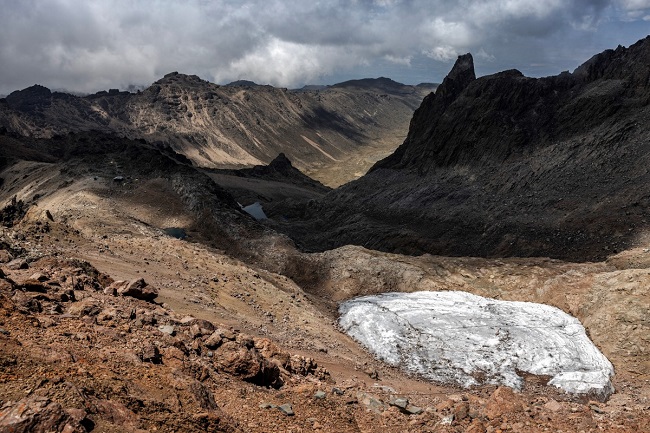
A general view of the melting Lewis Glacier in Mount Kenya National Park on March 7, 2025. Mount Kenya, Africa’s second-highest peak, is home to rapidly shrinking glaciers that are vital for nearby ecosystems and communities. (Photo by Luis TATO / AFP)

“Ocean heat content reached a new record high in 2025 and its rate of warming more than doubled from 1960–2005 to 2005–2025,” the WMO reported.

Ocean warming carries significant consequences, including damage to marine ecosystems, loss of biodiversity, and a reduced capacity of oceans to absorb carbon.

“It fuels tropical and subtropical storms and exacerbates ongoing sea-ice loss in the polar regions.”

A person wears a hat for shade under the morning sun while walking along The Strand in Redondo Beach, California on March 20, 2026, during a heat wave. (Photo by Patrick T. Fallon / AFP)

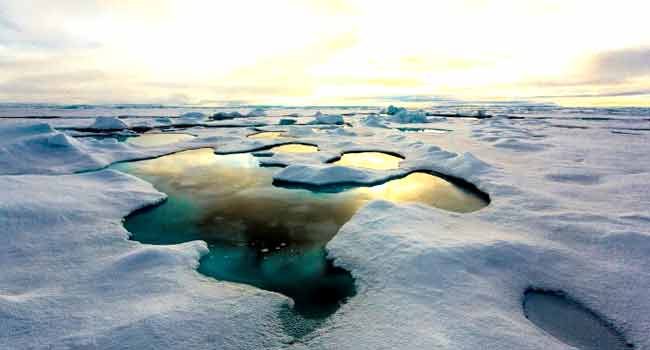
Both the Antarctic and Greenland ice sheets have experienced substantial mass loss, while Arctic sea ice extent in 2025 was the lowest or second lowest since satellite records began.

Global mean sea level last year stood around 11 centimetres higher than when satellite measurements started in 1993.

Ocean warming and rising sea levels are expected to continue for centuries.

WMO scientific officer John Kennedy noted that global weather patterns remain influenced by La Niña, a natural climate phenomenon that cools sea surface temperatures in parts of the Pacific and alters wind, pressure and rainfall patterns.

These conditions alternate with the warming El Niño phase, with neutral periods in between.

The hottest year on record, 2024, was about 1.55°C above the 1850–1900 average and coincided with a strong El Niño.

Forecasts suggest neutral conditions by mid-2026, with a possible return of El Niño later in the year, Kennedy said, which could lead to higher temperatures in 2027.

Forest firefighters fight a wildfire in Castrillo de Cabrera, northwestern Spain, on August 16, 2025. As Spain enters its third week of heatwave alerts, firefighters continue to battle blazes in the northwest and west of the country, with army units deployed to help contain the blazes. (Photo by Cesar Manso / AFP)

WMO deputy chief Ko Barrett described the outlook as a “dire picture”.

She added that while the organisation provides scientific evidence to encourage action, “these indicators are not moving in a direction that provides for a lot of hope”.

Amid ongoing conflict in the Middle East and rising fuel costs, Guterres urged global attention to the warning signs.

“In this age of war, climate stress is also exposing another truth: our addiction to fossil fuels is destabilising both the climate and global security,” he said.

“Today’s report should come with a warning label: climate chaos is accelerating and delay is deadly.”

Author

  • Toyibat Ajose

    Toyibat is a highly motivated Mass Communication major and results-oriented professional with a robust foundation in media, education, and communication. Leveraging years of hands-on experience in journalism, she has honed her ability to craft compelling narratives, conduct thorough research, and deliver accurate and engaging content that resonates with diverse audiences.

Share the Story
Advertisement

Keep Up to Date with the Most Important News

Weekly roundups. Sharp analysis. Zero noise.
The NewsCentral TV Newsletter delivers the headlines that matter—straight to your inbox, keeping you updated regularly.