Trending


The Economic and Financial Crimes Commission (EFCC) has offered whistleblowers up to 5 percent of recovered stolen assets for information leading to the recovery of such assets held abroad, the agency’s chairman said on Wednesday.
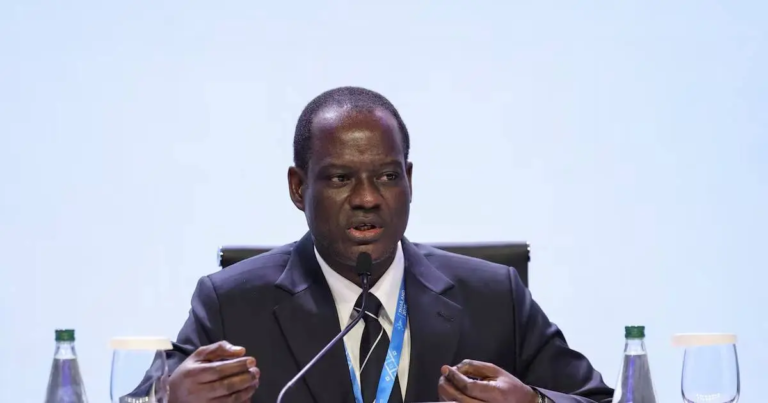
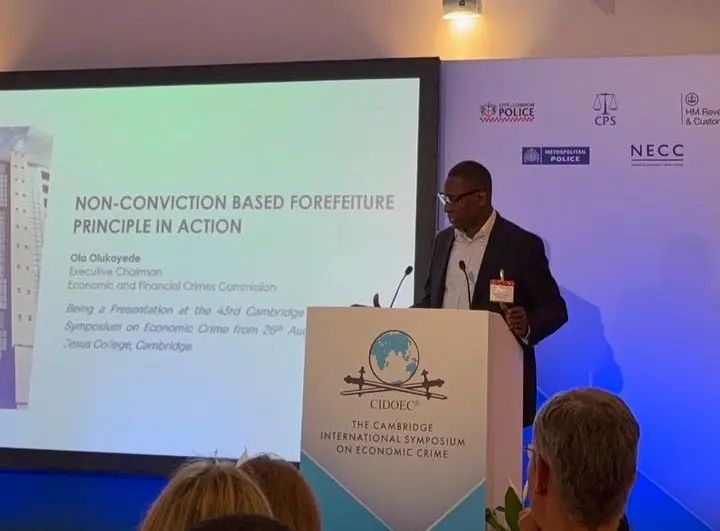
Ola Olukoyede made the announcement while delivering a lecture at the Cambridge International Symposium on Economic Crime in the United Kingdom, where he also disclosed that the anti-graft agency had forfeited cash and assets worth over $500 million to the national government in the past three years.
“The citizens must be encouraged with your whistleblower protection. If any of you is privy to where a Nigerian asset is stolen or taken to anywhere in the world, we have an incentive for you. Between 2.5 and 5 per cent is going to go back to you upon recovery,” Olukoyede said.
Read More : Wike Pledges 2027 Mobilisation for Tinubu
“That is an incentive we have put in place to encourage people to come forward to give information about stolen assets. You never tell if you give any information here, some of you may leave this place, multi-millionaire in your lifetime.”
The EFCC chairman noted several major cases, including the forfeiture of an aircraft belonging to an individual involved in a $30 million bribe connected to a power project in Nigeria.
“This aircraft was forfeited by someone who was supposed to be a member of the monetary committee of a power project in Nigeria. We discovered he collected a bribe of about $30 million in Nigeria. He forfeited that about three months ago, and it has been added to the presidential air fleet at the moment,” he said.
He also mentioned the forfeiture of a property with 753 housing units belonging to a former Central Bank of Nigeria governor.
“That property contains about 753 housing units we forfeited from an erstwhile governor of the Central Bank of Nigeria. We have criminal charges against him [in] about three courts,” he said.
Olukoyede detailed an investigation into Abubakar Malami, former Attorney General of the Federation, which began last year following suspicion of criminal abuse of office.
“We discovered that within eight years of his being in office, we were able to trace about 57 such properties to him. We’ve been able to forfeit about 48,” he said.
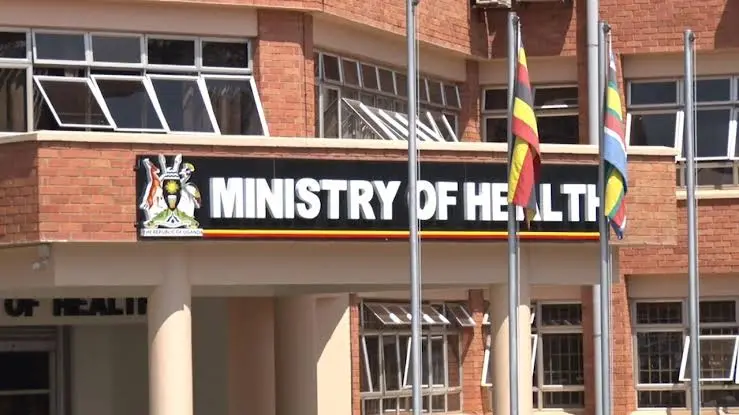
He also noted the forfeiture of a private university linked to a director in the Ministry of Health, who voluntarily surrendered the property after the commission’s investigation.
Olukoyede explained that the EFCC is constitutionally empowered to apply for the forfeiture of suspected crime proceeds without waiting for a criminal conviction, similar to frameworks in Australia and Canada.
“We have something similar to what is obtainable in Australia and Canada that empowers us to apply for the forfeiture of proceeds of what is suspected to be proceeds of crime. You apply ex parte to the High Court upon a probable suspicion of the proceeds of crime,” he said.
He attributed the agency’s success in securing non-conviction-based forfeiture orders to the ability of investigators to trace assets, cooperation from the judiciary, and access to credible intelligence.