Trending

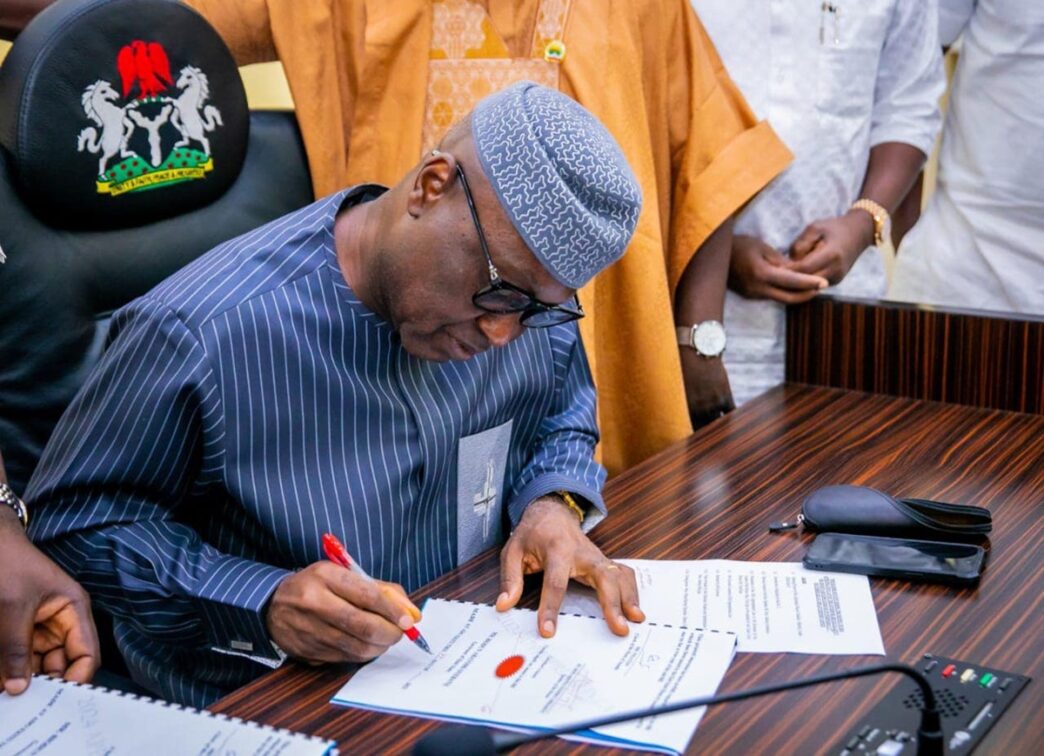
Ekiti has become the first state to domesticate the Nigeria Tax Administration Act following the signing into law of the Ekiti State Revenue Administration Law, 2025, by the governor, Biodun Oyebanji.
Oyebanji signed the revenue law along with the state’s 2026 budget of N415.57 billion during a brief ceremony at the executive council chamber in Ado-Ekiti.
According to Cable News, Oyebanji said the new law is a bold statement of his administration’s commitment to transparency, modern governance and economic empowerment.
“From today, Ekiti adopts a strictly electronic payment, billing, and receipting system. This will eradicate leakages and ensure that your payments go directly into the state’s coffers.”
The governor explained that the new law repeals the Ekiti State Board of Internal Revenue Law 2019, aligning the state with national tax reforms and adopting the harmonised list of taxes and levies approved by the Joint Revenue Board.
He added that the legislation would promote fairness, transparency, and accountability in subnational revenue administration while enhancing ease of doing business.
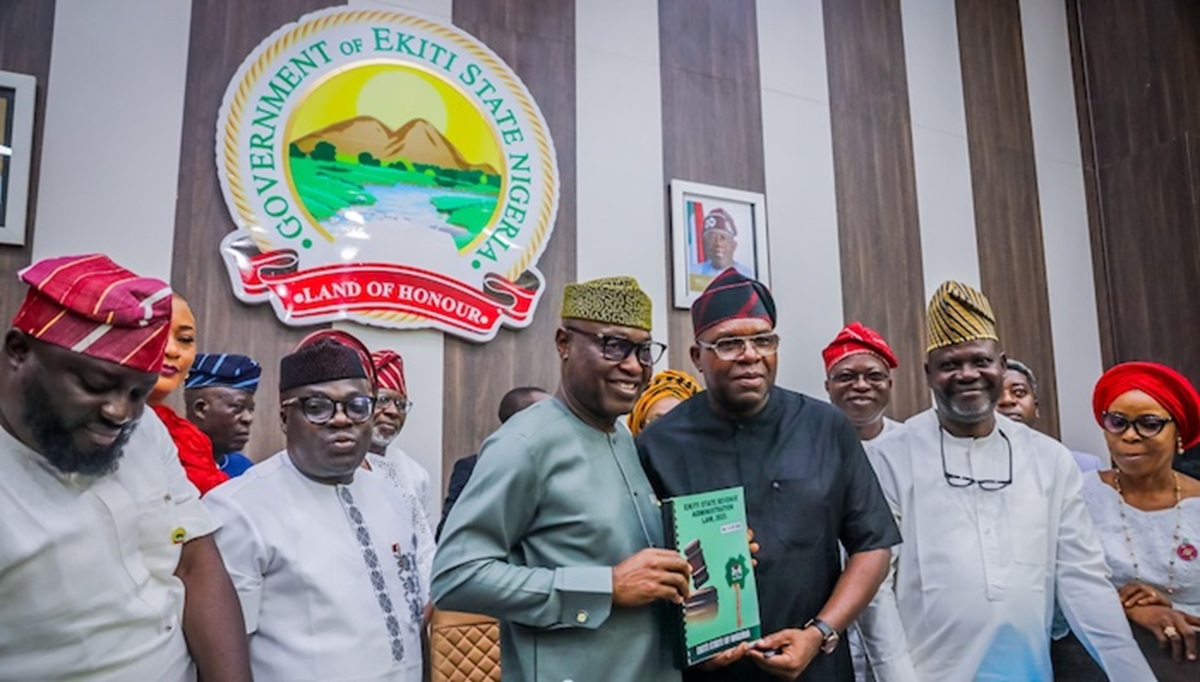
Oyebanji noted that the law gives the Ekiti State Internal Revenue Service exclusive authority for revenue collection, permits the accreditation of professional tax agents, and empowers the service with prosecutorial powers and administrative penalties.
Speaking at the event, the executive secretary of the Joint Revenue Board, Segun Adesokan commended Ekiti for taking the lead, saying the state fulfilled a request made by the Joint Revenue Board during its retreat in Ikogosi in September.
“Ekiti is the first state to domesticate the Nigeria Tax Administration Act, and this shows commitment to professionalism and autonomy in revenue administration.”
Adesokan expressed confidence that other states would follow Ekiti’s lead in completing the domestication process.
Oyebanji also signed the 2026 budget, titled the “Budget of Sustainable Governance,” emphasizing priorities such as completing ongoing projects, ensuring food security, promoting wealth creation, and developing infrastructure.
The budget earmarks 53 percent for recurrent expenditure and 47 percent for capital expenditure.
The signing ceremony was attended by Deputy Governor Monisade Afuye, Ekiti House of Assembly Speaker Adeoye Aribasoye, Joint Revenue Board Executive Secretary Segun Adesokan, members of the legislature, the executive council, and other stakeholders.