Trending
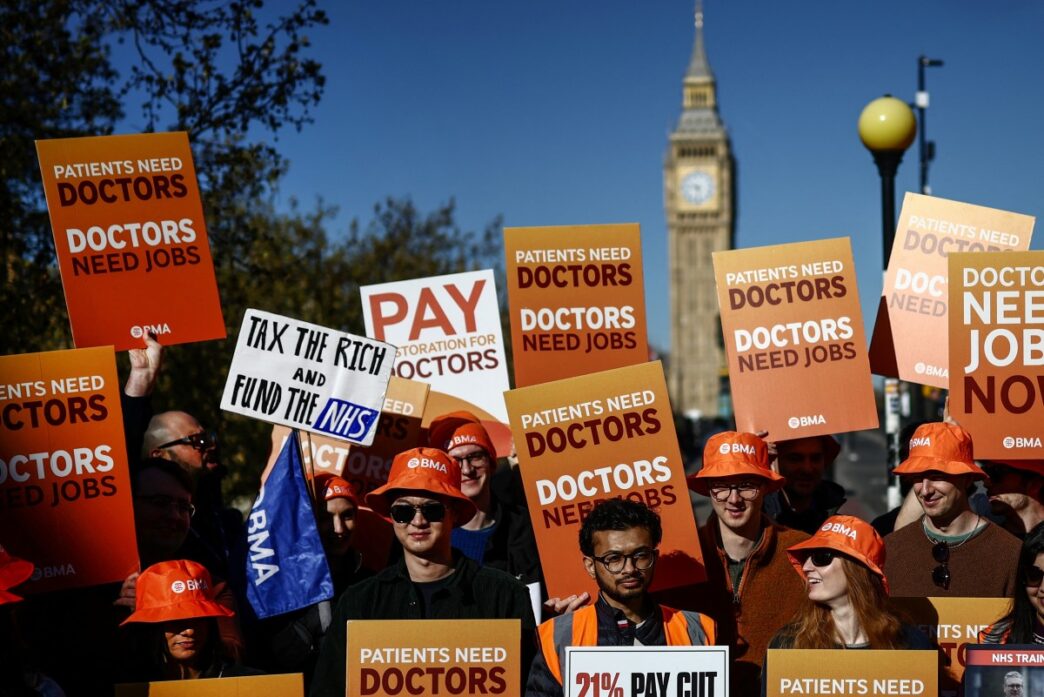
Doctors in England have staged their 15th walkout in just over three years, escalating tensions with the government over pay and job conditions.
This six-day strike, involving resident doctors below the consultant level, follows a substantial 28.9% pay rise secured after previous strikes. However, the ongoing dispute centres on the doctors’ demand for further pay increases to offset inflation-driven erosion of earnings. The strike comes at a time when healthcare workers are facing a cost-of-living crisis.
Health Minister Wes Streeting strongly disapproved of the doctors’ decision to reject the government’s latest offer of a 4.9% pay rise. Speaking on BBC television, Streeting described the doctors as “the standout winners of the entire public sector workforce when it comes to pay rises,” arguing that their recent pay boost should have alleviated their concerns.
Despite this, the British Medical Association (BMA), which represents doctors, maintains that the pay increase is insufficient to offset the financial strain from rising living costs. The BMA is calling for full pay restoration to 2008 levels, citing that the current pay scale fails to reflect the actual value of their work.
Streeting also pointed out the financial impact of the strike, warning that the stoppage could cost the National Health Service (NHS) £300 million ($3.9 million). The government has reiterated that, in the present economic climate, meeting the doctors’ demands is simply not feasible.
In an effort to address some of the doctors’ concerns, Streeting has agreed to prioritise UK-trained medics for training posts, a concession the government has made amid growing pressure from medical professionals. However, this recent development indicates that the dispute may continue for some time, with no resolution in sight.