Trending
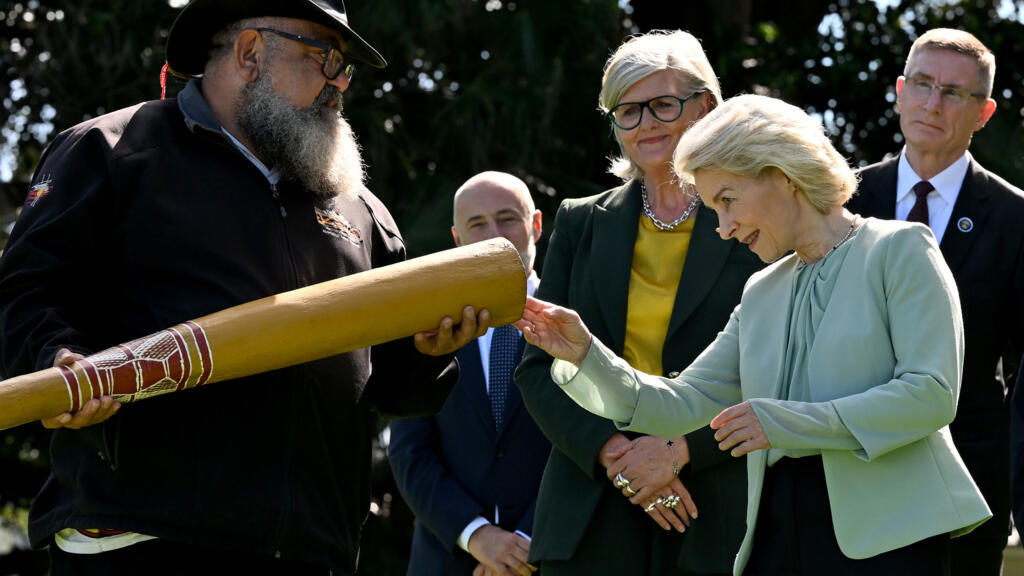
European Commission President Ursula von der Leyen arrived in Sydney on Monday, signalling that a long-awaited free trade agreement between the EU and Australia has reached its “last mile.”
This high-level visit, occurring alongside EU Trade Commissioner Maroš Šefčovič, aims to diversify economic partnerships as both regions face increasing pressure from the United States and China.
If finalised, the deal is projected to boost EU exports to Australia by over 30% and could increase Australian trade by approximately $7.1 billion in its first year, offering a critical buffer against global market volatility.
The negotiations, which began in 2018, are currently focused on resolving sensitive “last mile” hurdles.
Key sticking points include improved market access for Australian beef and lamb—a major concern for European farmers—and Australia’s luxury car tax on European vehicles.

Despite these challenges, both sides have expressed a “positive hunger” for a deal that would secure the EU’s access to Australia’s vast reserves of critical raw materials, such as lithium and cobalt, while allowing Australia to further diversify its export markets following recent trade disputes with Beijing.
Beyond trade, the discussions are heavily influenced by the worsening energy crisis sparked by the conflict in the Middle East and the closure of the Strait of Hormuz.
International Energy Agency (IEA) chief Fatih Birol warned in Canberra that the world faces an unprecedented energy shock if the regional war is not resolved.
Australia’s own vulnerability has been exposed as local service stations face diesel shortages and rising prices, prompting the government to ease fuel standards and release strategic reserves.
Against this backdrop, the proposed trade pact is seen as a vital step toward strengthening the resilience of two “like-minded” democracies in an increasingly unstable global order.