Trending
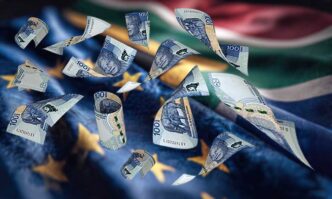

The European Union (EU) has removed six African countries, including Nigeria, from its list of high-risk third countries under its anti-money laundering and counter-terrorism financing (AML/CFT) framework.
The decision was announced by the Nigeria Financial Intelligence Unit (NFIU), which said the delisting is set out in the European Commission Delegated Regulation (EU) C (2025) 8460, adopted on December 4, 2025, and will take effect from January 29, 2026.
NFIU, in a statement, said the European Commission acknowledged that Nigeria and the other delisted countries had strengthened their AML/CFT systems, closed key technical and operational gaps, and fulfilled the commitments outlined in their Financial Action Task Force (FATF) action plans. The reforms led to their removal from the FATF “grey list” in June and October 2025.
NFIU said Nigeria’s removal reflects reforms aimed at improving financial system integrity, strengthening inter-agency coordination and aligning with international standards.
It added that the progress was driven by cooperation among government institutions, regulators, law-enforcement agencies, the judiciary, the private sector and development partners.
“The European Commission acknowledged that Nigeria and the other delisted countries have strengthened the effectiveness of their AML/CFT regimes, closed key technical and operational gaps, and fulfilled the commitments set out in their FATF Action Plans, leading to their removal from the FATF grey list in June and October 2025,” NFIU said.
“Nigeria’s removal from the EU list reflects the strong political will and leadership of President Bola Ahmed Tinubu, GCFR, whose administration prioritised financial system integrity, inter-agency coordination, and compliance with international standards.
The European Commission said the update followed decisions taken at the FATF October 2025 Plenary, which confirmed that the countries had exited the list of jurisdictions under increased monitoring.
The EU also added Bolivia and the British Virgin Islands to its high-risk list.
Reacting to the development, Nigeria’s Minister of State for Finance, Doris Anite, described the delisting as a positive outcome for the country, saying it would boost trade and investor confidence.
“Removed from EU’s financial ‘high-risk’ list. Congrats to President @officialABAT on this achievement. As Minister of State for Finance, I’m proud of this boost to trade and investor confidence,” Anite wrote on X.
The removal from the EU high-risk list means that financial transactions involving affected countries and EU member states will no longer be subject to the enhanced due diligence measures applied to high-risk jurisdictions.
The development is expected to reduce compliance costs, improve cross-border financial flows and strengthen Nigeria’s position as a destination for trade, investment and financial partnerships with the European Union.