Trending

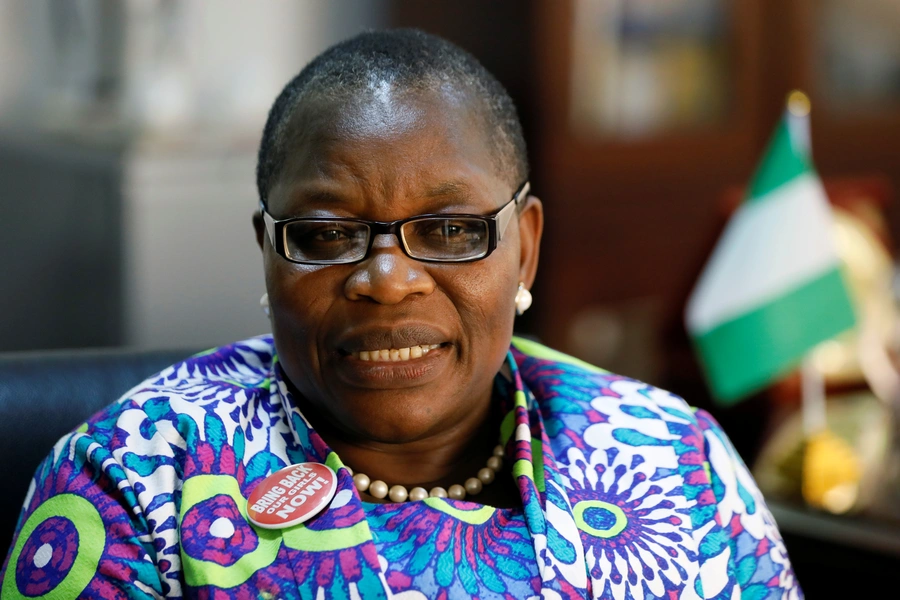
Former Minister of Education Obiageli Ezekwesili has said residents of Makoko are Nigerian citizens and should not be treated as illegal occupants, following the ongoing demolitions in the Lagos waterfront community.
In an open memorandum addressed to President Bola Tinubu and Lagos State Governor Babajide Sanwo-Olu, Ezekwesili argued that poverty does not negate citizenship and that Makoko residents have the same constitutional rights as other Nigerians.
“Mr President, Mr Governor, do the poor have a right to the city, or only the rich?” Ezekwesili asked, adding, “Is Lagos a commonwealth of citizens, or a marketplace where land value overrides human value?
“Does Nigeria’s democracy protect only those with means, or all citizens?”
Ezekwesili said Makoko residents should not be described as squatters, stating: “They are citizens of Nigeria.They are preyed on by your same political class to vote for your parties during elections. They work. They raise families. Their children whose education is now disrupted are some of the most brilliant Nigerians I have met.”
She said the community contributes to the Lagos economy through fishing, trade and informal businesses, but has been treated “as though poverty nullifies their citizenship”.
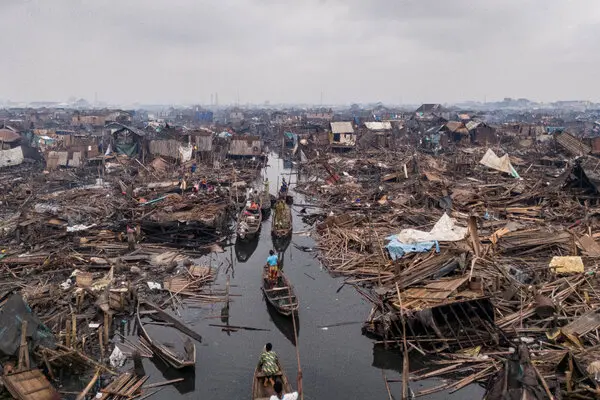
“This memorandum is written for the children of Makoko who now sleep in the open, for their mothers clutching what remains of their households, and for a nation that must decide whether poverty, which by the way is mostly the result of bad governance, is a crime, and whether justice still means anything in our country.
“This memorandum is written because a deeply troubling picture has emerged from the morbid silence that follows the heartless demolition of homes far beyond 100 meters of the power line in Makoko.
“All reasonable people can easily see the injustice to the victims of the demolitions and condemn this dubious State-sanctioned eviction unequivocally.
“What has happened in Makoko is not about safety nor urban development. What is happening in Makoko is that individuals in authority of the Nigerian State are engaged in a vicious class cleansing – to banish the poor from the sight of the powerful and their rich friends.”
The former minister criticised the Lagos State Government’s justification that the demolitions were carried out solely for safety reasons related to high-tension power lines.
She claimed that community leaders were initially told the exercise would be limited to a defined safety setback.
Ezekwesili said demolitions later went beyond those limits, affecting homes, schools, clinics, and livelihoods that, according to her, had no reasonable link to the original safety explanation.
“Pretending to care about safety, the Lagos State Government has, with the evident complicity of the federal authorities in Abuja, rendered thousands of Nigerians homeless by bulldozers deployed in the name of development, safety, and urban order and all done without compassion, restraint, or lawful care for human life.
“Our Governments went from a safety claim to forced eviction of our citizens from their lands. What is occurring in Makoko is not merely a technical planning dispute over metres. What is happening in Makoko is an undisputed constitutional failure of process, transparency, and restraint. Period.
“Until the latest safety reasons, the repeated justification of demolitions in Makoko was under the banner of “urban renewal” or “megacity aspirations”, and that in itself reveals a deeply troubling governance mindset. It is the classist mindset that thinks of development as something done to the poor, not with them and that the city is for the wealthy, while the poor are disposable.”
In the memorandum, Ezekwesili also called for an immediate halt to further demolitions, public clarification of the legal basis for the exercise, emergency relief for displaced residents, and a participatory process that involves the community in long-term solutions.
She demanded immediate, non-negotiable actions to correct the “injustices and wrongs committed” against the residents of Makoko, calling for a halt to all demolitions and evictions in the community.
The former minister also called for public disclosure and legal clarification of the exact planning standards governing power-line setbacks, including the authority under which demolition exceeded 50 metres and immediate provision of short-term emergency shelter for all displaced Makoko families, including temporary housing or safe accommodation, access to water, sanitation, and healthcare, protection for children, women, and vulnerable persons., Compensation and livelihood support for those already displaced.
“A transparent, participatory process for long-term solutions developed with the community, prioritising security of tenure, access to basic services, and protection of livelihoods through in-situ urban upgrading rather than mass displacement and public accountability for past abuses, including the use of force against civilians and by officials who authorised demolition beyond lawful limits,” she added.
She also warned the country’s politicians, in and out of government, that “a nation that fails to govern well and turns around to criminalise poverty while celebrating wealth has lost completely its moral compass and is teetering on the edge.”