Trending
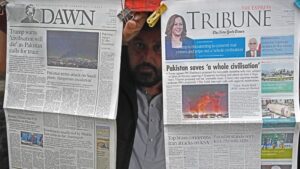
The United States and Iran are holding their high-level talks in Islamabad, Pakistan, in an effort to turn a fragile two-week ceasefire into a lasting end to a war that has disfigured the global energy markets. Here are five things to know about the Islamabad talks.
The War behind the Talks
The negotiations follow a deadly conflict that started on February 28, when the US and Israel launched coordinated strikes that killed Supreme Leader Ali Khamenei and struck Iran’s military and nuclear infrastructure, killing over 2,000 people.
Tehran responded by effectively closing the Strait of Hormuz, through which about a fifth of global oil passes, thereby triggering a spike in energy prices. On April 8, the US and Iran agreed to a two-week temporary ceasefire, set to expire on April 22.
Pakistan’s Unlikely Starring Role
Pakistan, which has more frequently been in the international headlines for militancy and a shaky economy, is hosting the first negotiations since the war began.
Its value as a mediator is a key bridge between the two parties. Iran was the first country to recognise Pakistan after its independence in 1947, and the neighbours share deep historical and religious links.
Also, Pakistan has strong relations with Washington, Beijing and Riyadh. A senior Pakistani official told AFP: “On ceasefire night, hopes were fading, but China stepped in and convinced Iran to agree to a preliminary ceasefire. While our efforts were central, we were falling short of a breakthrough, which was ultimately achieved after Beijing persuaded the Iranians.”
Major Issues on the Table
The gap between the two countries remains huge. Washington’s reported 15-point proposal, which focuses on Iran’s enriched uranium, ballistic missiles, sanctions relief and reopening the Strait of Hormuz.
Tehran’s 10-point plan demands control over the strait, a toll on vessels, an end to all regional military operations, and full lifting of sanctions. Lebanon is a major sticking point. Iran’s President Masoud Pezeshkian warned on X: “Our hands remain on the trigger. Iran will never forsake its Lebanese brothers and sisters.”
Who are the Negotiators?
US Vice President JD Vance leads the American team, joined by Steve Witkoff and Jared Kushner. Iran’s delegation is led by Parliament Speaker Mohammad Bagher Ghalibaf, a former IRGC commander, and Foreign Minister Abbas Araghchi; this reflects the seriousness of the discussions.
Islamabad on Lockdown
The discussions are being held in Pakistan’s capital under tight security. The Serena Hotel, located next to the foreign ministry in the capital’s high-security Red Zone, was asked to clear out on Wednesday, April 8.
Authorities declared a two-day public holiday, and armed security personnel flooded the streets. The talks are expected to be indirect, with Pakistani officials relaying messages between the two delegations, a format similar to previous negotiations.
The Islamabad talks represent a weak but significant diplomatic opening between the two arch-rivals, with Pakistan and China playing crucial backstage roles.
Whether the ceasefire holds or collapses into wider conflict largely depends on narrow compromises over the Strait of Hormuz, sanctions, and Lebanon. For now, the world watches as negotiators meet behind closed doors in a heavily strengthened capital.