Trending

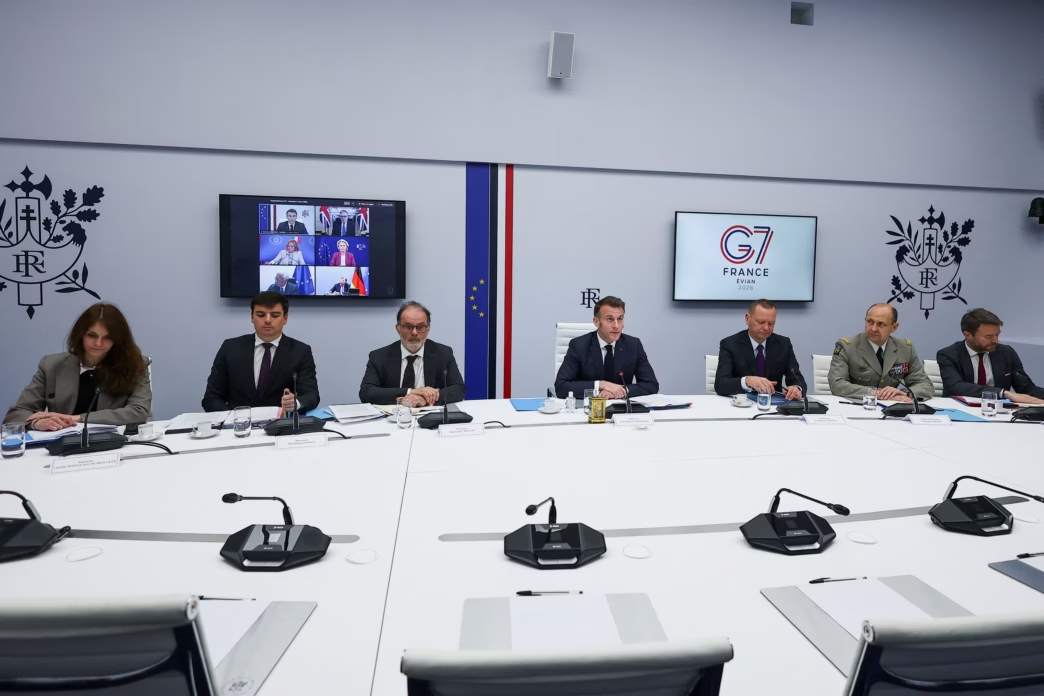
Finance and economy ministers from the G7 nations issued a joint statement on Monday, pledging to take “all necessary measures” to protect global energy stability.
Meeting as the war in the Middle East entered its second month, the ministers emphasised their readiness to coordinate international action to prevent economic spillover.
The group specifically noted the importance of safeguarding macroeconomic stability and ensuring that global supply chains remain resilient against geopolitical shocks.
The announcement comes as oil prices continue to fluctuate following disruptions in the Gulf and the closure of the Strait of Hormuz.

To mitigate these impacts, the G7—in collaboration with the International Energy Agency (IEA)—is prepared to support the global energy supply, including the potential release of strategic oil stockpiles.
This coordinated effort aims to send a clear signal to markets and provide relief to consumers and businesses facing rising fuel and heating costs.
Beyond energy security, the ministers reaffirmed their commitment to monitoring the broader financial consequences of the conflict, particularly regarding inflation and food security.
They stressed that maintaining a “rules-based” economic order is essential for protecting the public finances of both G7 members and developing nations.
As the situation unfolds, the group has vowed to remain “fully mobilised and vigilant,” with plans for additional high-level meetings to synchronise their fiscal and monetary responses.