Trending
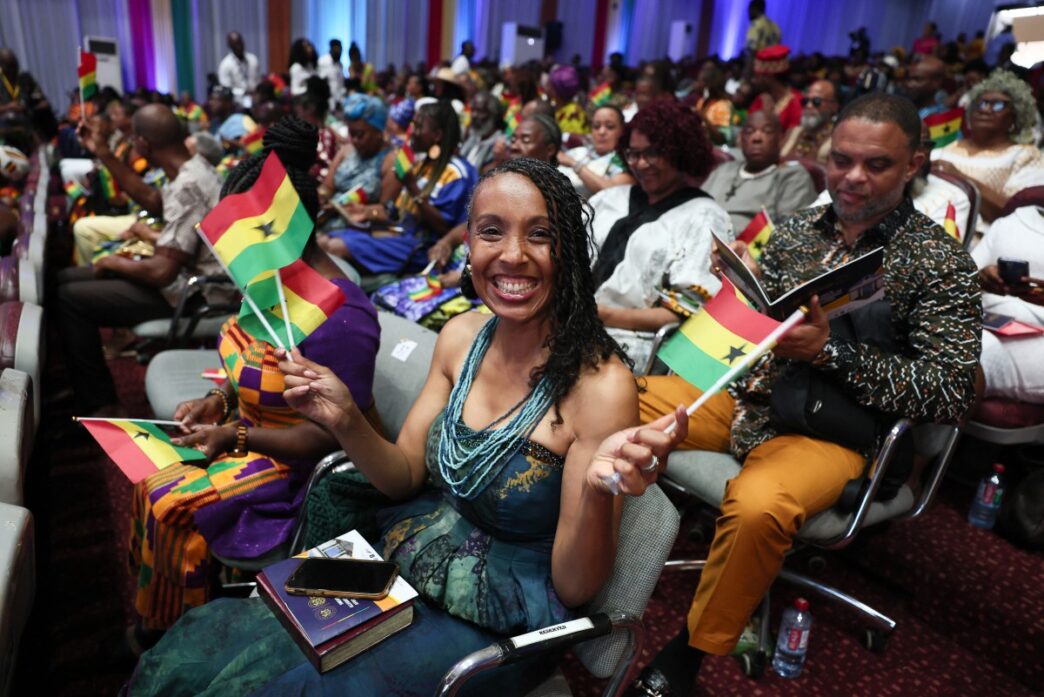
Ghana has granted citizenship to 150 members of the African diaspora in a ceremony in Accra, marking another step in the country’s ongoing effort to reconnect descendants of enslaved Africans with the continent of their ancestors.
Among those receiving citizenship was Patrice Ann Robertson, who held her certificate tightly to her chest and wiped away tears as she celebrated becoming officially Ghanaian after nearly a decade of living in the country. Speaking after the ceremony, Robertson, who now lives in Ghana’s southeastern Volta region, described the moment as deeply personal.
“This is home,” she said, explaining that since relocating nine years ago, she has only returned to her birthplace in the United States once.
Robertson was part of a broader group of diaspora members who have embraced Ghana’s invitation to return. In recent years, more than 1,000 people of African descent abroad have been granted Ghanaian citizenship, many of them Black Americans motivated by a desire to reconnect with history, identity and culture.
For some, the ceremony symbolised the culmination of years of reflection about heritage and belonging. Nataki Kambon, who became a Ghanaian citizen in 2019 and attended the latest ceremony, said the experience helped bridge a cultural gap shaped by distance and representation.
“I grew up in a household where we always knew we were African,” she said, adding that there remained “a disconnect because of how Africa is portrayed in the United States.”
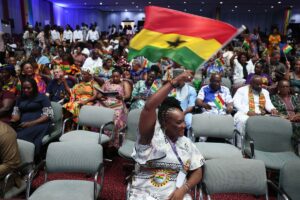
Senior government officials, including Vice President Jane Naana Opoku-Agyemang and Interior Minister Muntaka Mubarak Mohammed, presided over the event as the new citizens took an oath of allegiance and received their certificates.
Addressing the gathering, Opoku-Agyemang emphasised Ghana’s commitment to welcoming people of African descent. “Distance may separate our people, but it does not erase identity,” she said. “Ghana continues to be a home for the global African family.”
Ghana’s outreach to the diaspora gained global attention through the Year of Return initiative launched in 2019, which commemorated 400 years since enslaved Africans were first taken to North America. The programme encourages descendants of Africans abroad to visit, invest and reconnect with the continent.
For many new citizens, the decision to apply went beyond symbolism. Robert and Serita Faison said their journey began after visiting Ghana and forming a deep connection with the country’s history.
“It feels like we’ve come full circle,” Robert Faison said, explaining that learning about the links between Ghana and the transatlantic slave trade made the move feel meaningful.
Others cited safety and quality of life as important factors. Kevin Harris, who grew up in Washington, D.C., described receiving his Ghanaian citizenship as “earth-shaking.” He said he hopes future generations of his family will benefit from the sense of community he sees around him. “In America, you always feel like you have to watch your children,” Harris said.
For the Ghanaian government, the initiative is also forward-looking. Officials say welcoming the diaspora not only acknowledges historical injustices but also brings investment, expertise and global networks that can contribute to the country’s long-term development.