Trending


The Nigerian Government says deeper cooperation with China in the power sector will improve electricity supply, expand renewable energy and increase local production of power equipment.
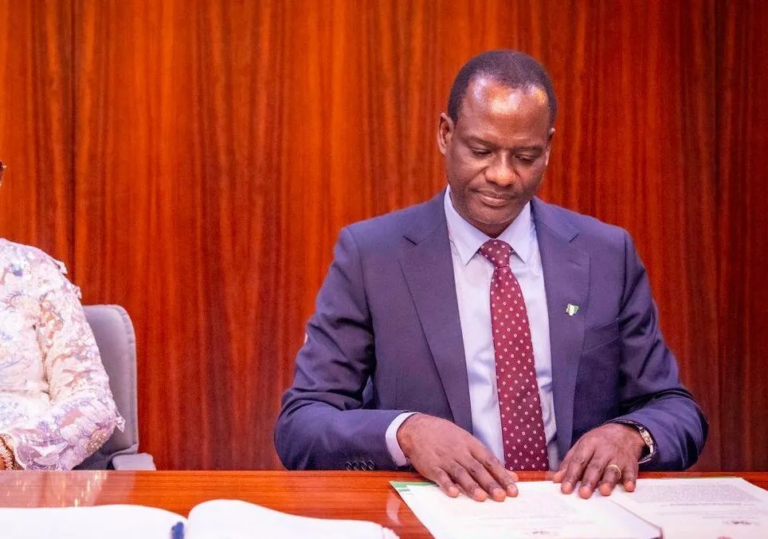
Minister of Power Joseph Tegbe made this known on Wednesday night in Abuja at a reception marking the 77th anniversary of the founding of the People’s Republic of China.
Tegbe said the benefits of increased Chinese investment would be greater if the partnership also focused on developing Nigerian technical expertise and strengthening local businesses.
He said cooperation with China offered particular opportunities to improve electricity reliability, expand renewable energy and support the manufacture of power equipment in Nigeria.
According to the minister, such investment should also help develop Nigerian engineers and technicians, strengthen local enterprises and build the capacity to operate and maintain locally developed infrastructure.
“As Minister of Power, I see particular promise in deeper cooperation on achieving reliable electricity, renewable energy, and manufacture of power equipment in Nigeria with our cooperation with China.
“The benefits will be the greatest when investment also develops Nigerian engineers, technicians, and strengthens local enterprises and equips us to operate and maintain what we build in Nigeria,” he said.
Tegbe said Nigeria and China had expanded their relationship from diplomatic ties into a broader partnership covering infrastructure, healthcare, technical exchanges, trade and investment.
He recalled that the two countries established diplomatic relations on February 10, 1971, before the relationship was elevated to a comprehensive strategic partnership by President Bola Tinubu and Chinese President Xi Jinping in September 2024.
The minister listed Chinese contributions through investment, financing and engineering to projects including the Lekki Deep Seaport, railway modernisation and the Zungeru Hydropower Station.

Tegbe, who is also Director General of the Nigerian-China Strategic Partnership, also praised China’s development in manufacturing, science, high-speed rail and clean energy.
He said China’s zero-tariff programme for Nigerian products presented opportunities for local producers and could support increased exports.
Tegbe said bilateral trade stood at $28 billion at the end of 2025 and had reached $17 billion in the first half of 2026.
He said the priority should now be to convert the growth in trade into higher Nigerian production and exports to China.
The minister also reaffirmed Nigeria’s commitment to the one-China principle and said the government recognised the People’s Republic of China as the sole legal government representing China.
Chinese Ambassador to Nigeria Yu Dunhai said relations between both countries had entered what he described as the “fast lane” under the leadership of President Xi Jinping and President Tinubu.
Dunhai said recent agreements on economic partnership and aquatic exports had strengthened the framework for expanding trade and economic cooperation.
He said bilateral trade reached $18 billion in the first half of 2026, representing a 35 per cent increase, while Chinese imports from Nigeria rose by 81 per cent.
The ambassador said China was prepared to align its 15th Five-Year Plan with the Nigerian Government’s Renewed Hope Agenda in areas including industrialisation, digital development, and the green and blue economies.
“Our future cooperation holds boundless potential. China stands ready to align its 15th Five-Year Plan with President Tinubu’s ‘Renewed Hope’ Agenda across industrialisation, digital, green, and blue economies,” he said.
He also invited Nigeria to join the World Artificial Intelligence Cooperation Organisation, saying this would allow the country to participate in global technology development.
Read More : Oyedele Seeks Cheaper Capital for Africa
Dunhai said China’s zero-tariff treatment for 53 African countries, which began on May 1, contributed to a 24 per cent increase in Chinese imports from Africa in May and June.
He added that Chinese innovations in artificial intelligence, digital payments and solar energy were helping address development challenges across Africa.
The ambassador said China and Nigeria, which are marking 55 years of diplomatic relations, should continue to deepen cooperation based on mutual respect, shared development and practical benefits.