Trending
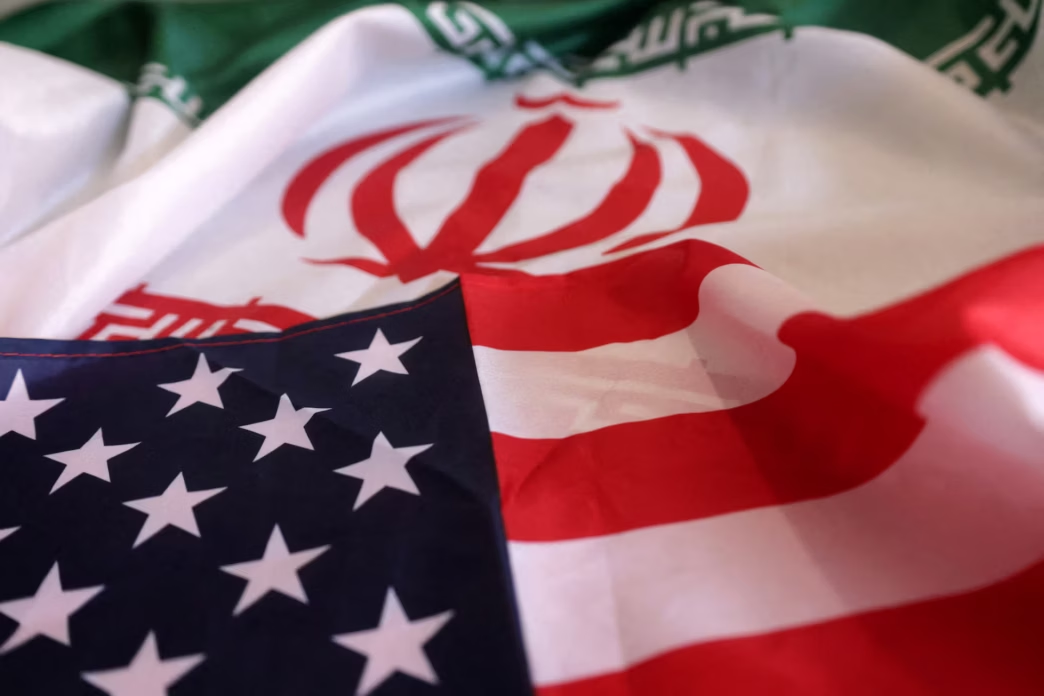
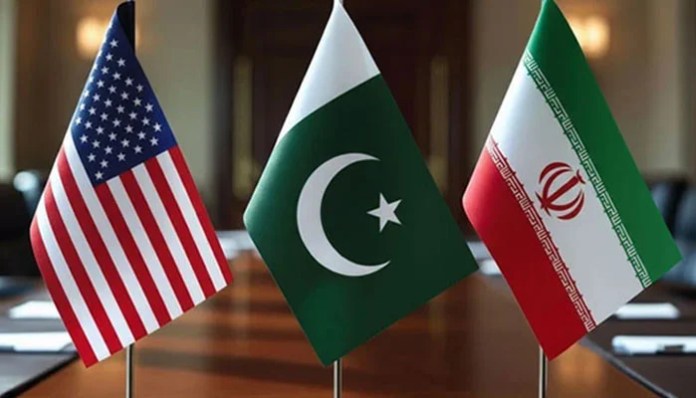
In a landmark shift in global diplomacy, high-level officials from the United States and Iran met face-to-face in Islamabad on Saturday for their most significant direct engagement since the 1979 Islamic Revolution.
Hosted by Pakistan, these trilateral negotiations aim to end a devastating conflict that has destabilised the Middle East and severely impacted the global economy.
The U.S. delegation, featuring Vice President JD Vance and Jared Kushner, represents the highest level of American contact with Tehran in decades, while Iran sent a massive 70-member team led by parliamentary speaker Mohammad Bagher Ghalibaf.
The talks are unfolding against a backdrop of intense military and economic pressure.
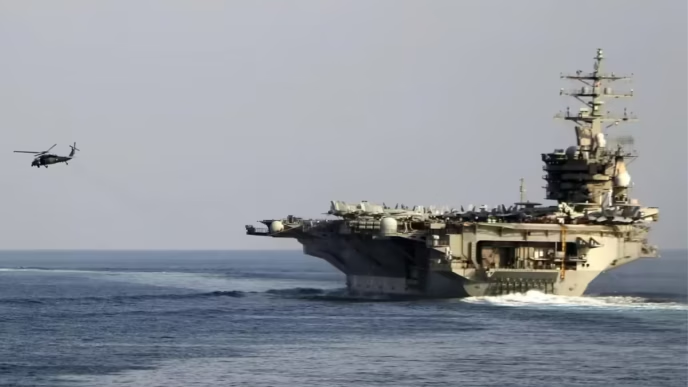
President Donald Trump recently announced that the U.S. has begun “clearing out” the Strait of Hormuz, a vital maritime artery for global oil that has been largely obstructed during the hostilities.
While American officials reported that two warships successfully transited the waterway on Saturday, Iranian military sources have disputed these claims.
The reopening of this strategic passage remains a primary American demand for a lasting peace agreement.
Despite the historic nature of the meeting, significant obstacles remain.
Iran has tied a potential peace deal to the unfreezing of sanctioned assets and the cessation of Israeli military operations against Hezbollah in Lebanon.
Conversely, the U.S. has maintained that its top priority is ensuring Iran never acquires a nuclear weapon, with Vice President Vance cautioning that the American “open hand” is contingent on Iran negotiating in good faith.
The mediation efforts, led by Pakistani Prime Minister Shehbaz Sharif, have been described as a “make-or-break” moment for regional stability.
While both sides expressed deep-seated mutual suspicion—with Ghalibaf citing a history of broken promises—experts suggest the sheer size and seniority of the Iranian delegation indicate a serious commitment to resolving it.
As the ceasefire remains fragile due to ongoing strikes in Lebanon, the international community is closely watching the “Red Zone” in Islamabad for any signs of a definitive breakthrough.