Trending
The International Monetary Fund (IMF) on Monday upgraded its forecast for global economic growth in 2026, pointing to a surge in artificial intelligence and technology investment while warning that renewed trade tensions or a reassessment of AI-driven productivity gains could still derail the outlook.
The IMF said the world economy is now expected to grow 3.3 per cent this year, an increase of 0.2 percentage points from its October projection. Growth would match the pace recorded in 2025, according to the fund’s latest update to its World Economic Outlook.
Despite the upgrade, the Washington-based lender cautioned that the expansion remains uneven. IMF chief economist Pierre-Olivier Gourinchas said recent trade and tariff disruptions had not disappeared, even as headline growth held up.
“The resilience exhibited so far is driven largely by a few sectors,” the IMF said, underscoring the economy’s exposure to shocks.
The global economy is shaking off the trade and tariff disruptions of 2025, he said, adding that the impact had been offset by “tailwinds from the AI and tech investment boom.”
The fund said those tailwinds were most visible in North America and parts of Asia, while private companies also adapted to trade shocks with help from fiscal and monetary support.
Trade risks remain a major issue. Donald Trump disrupted markets and supply chains by imposing broad tariffs on both allies and rivals after returning to office in January 2025.
Tensions eased later in the year as Washington struck tariff deals with several partners and reached a temporary truce with China.
More recently, Trump has threatened new tariffs on several European countries in a dispute over Greenland, raising fresh uncertainty.
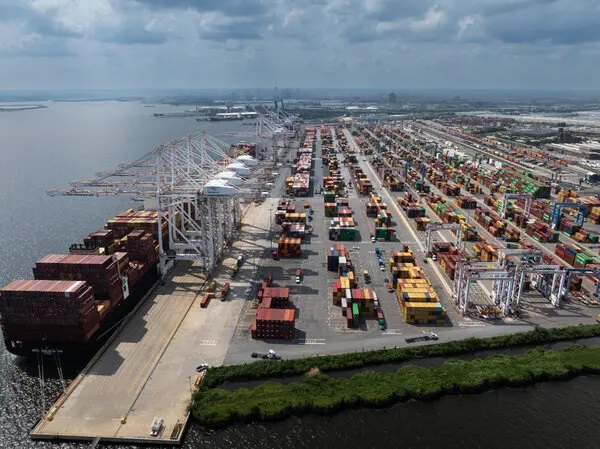
The IMF said trade policy uncertainty remains far higher than in early 2025, with the potential for additional flare-ups. It also flagged an upcoming US Supreme Court ruling on the legality of Trump’s use of emergency economic powers to impose tariffs on imports from most trading partners. A decision is expected in early 2026.
If the court strikes down some of the duties, it could inject “another dose of trade policy uncertainty” into the global economy, Gourinchas said, while also complicating fiscal planning if tariff revenues fall.
Inflation is expected to continue easing, with global inflation projected to decline from an estimated 4.1 per cent in 2025 to 3.8 per cent in 2026.
IMF also warned that the AI boom itself carries risks. Gourinchas said a sharp market correction could occur if expectations around AI-driven productivity and profits fail to materialise.
Strong enthusiasm for artificial intelligence has been a major factor behind recent record highs on Wall Street, and a sudden reversal could hit consumer spending and growth.
The fund said increased tech investment added about 0.3 percentage points to average annualised US GDP growth in the first three quarters of 2025, offsetting the economic drag from a prolonged government shutdown later in the year.